Can I Drive with Worn Brake Pads? Risks & How Long You Really Have
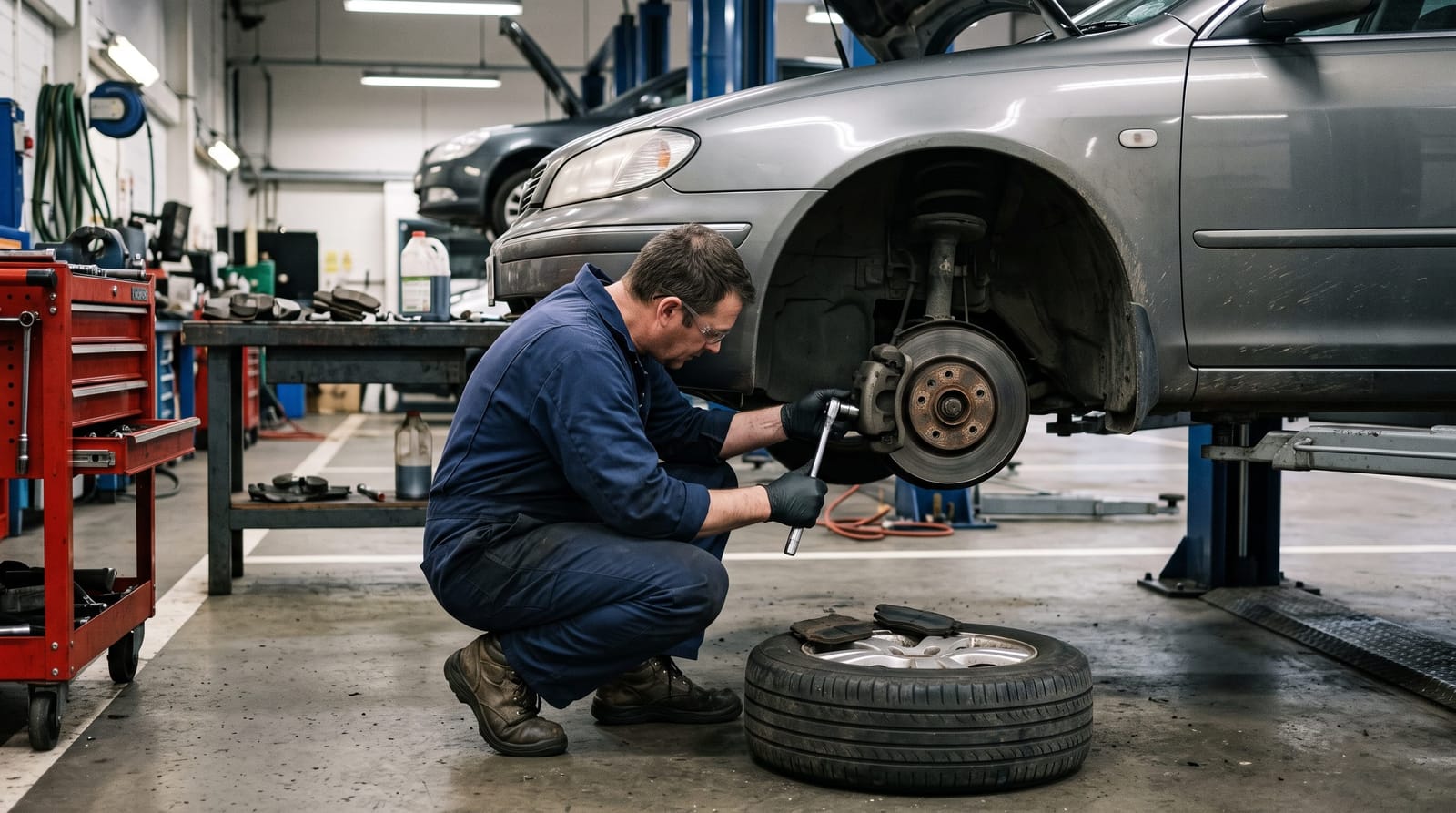
It's one of the most common questions vehicle owners ask when they hear that telltale squeal: Can I keep driving, or do I need to stop right now? If you're searching "driving with worn brake pads how long Colorado," you're probably hoping the answer is "a little longer." The honest answer is: it depends, but the window is shorter than most people think, and driving in Colorado adds extra pressure to that timeline. Here's what's actually happening inside your brake system, and how to know when you've run out of road.
How Long Do Brake Pads Actually Last in Colorado?
Under typical driving conditions, brake pads generally last between 30,000 and 70,000 miles for most passenger vehicles, and on trucks like the Chevy Colorado or GMC Canyon, factory pads can stretch to 90,000-100,000 miles with predominantly highway driving. The national average that most mechanics reference lands around 50,000 miles.
But those numbers assume relatively flat terrain and predictable conditions. Colorado rewrites the equation in a couple of key ways:
- Mountain grades force constant braking. Descending Lookout Mountain, the foothills west of Fort Lupton, or any stretch of I-70 through the canyon means your brakes are working hard for extended periods, not the quick, rolling stops of flat highway driving.
- Temperature swings accelerate wear. Colorado's dramatic day-night temperature shifts cause brake components to expand and contract repeatedly, which can accelerate material fatigue over time.
- Hail and moisture. Colorado sits in "Hail Alley," and moisture intrusion can cause rotors to surface-rust faster, which in turn causes uneven pad wear.
For drivers in and around Fort Lupton who make regular trips toward the mountains or deal with stop-and-go traffic on Highway 85, inspections every 12 months or 12,000 miles are a practical baseline, not a conservative upsell.
The Progression of Damage: What's Actually Happening Mile by Mile
Understanding the damage sequence helps you see why the question isn't just "how long can I drive?" but "how much am I willing to spend later?"
Stage 1: Worn Pads (Squealing)
Most brake pads include a metal wear indicator designed to contact the rotor at around 2-3mm of pad thickness remaining. That's the squeal you hear. At this stage, stopping power is reduced but still functional. You have some time, days to a couple of weeks of normal driving, but you're in warning territory.
Stage 2: Metal-on-Metal Contact (Grinding)
Once the pad material is fully gone, the metal backing plate contacts the rotor directly. That grinding sound is the rotor being scored and gouged with every stop. Rotor damage happens fast: sometimes within 50-100 miles of metal-on-metal contact. A rotor that could have been resurfaced for a modest cost now needs full replacement.
Stage 3: Caliper and Rotor Failure
Continued driving with a worn rotor puts stress on the brake caliper. Calipers can seize, crack, or fail to release properly, causing brake drag, uneven wear, and in extreme cases, brake fade during a critical stop. At this stage, you're no longer talking about a brake pad job: you're looking at a much more substantial repair involving multiple components.
The cost difference between catching it at Stage 1 versus Stage 3 can be significant. Understanding the full picture of brake job cost Colorado drivers typically face at each stage helps make the decision clear.
Colorado-Specific Risks: Why "A Few More Miles" Is Riskier Here
In a flat state with mild weather, a driver running on thin pads faces real risk but might have a slightly more predictable window. Colorado changes that calculus in important ways:
- Emergency stops on grades. If you need to make a sudden stop on a downhill grade, say, behind a slow-moving truck on a mountain road, degraded brake pads may not provide enough stopping force. Stopping distances increase measurably even with moderately worn pads, and that margin disappears fast on a steep descent.
- Wet and snowy roads. Colorado's shoulder seasons bring unpredictable road surfaces. Worn pads take longer to grip on wet pavement, and that fraction of a second matters at highway speeds.
- Load and trailer weight. Many Fort Lupton residents haul trailers, equipment, or livestock. Heavier loads demand more from your brakes, and worn pads under load wear through their remaining material much faster than under normal conditions.
Knowing the signs brakes need replacing Colorado drivers should watch for, beyond just the squeal, can help you catch the problem before it reaches a dangerous threshold.
So How Long Do You Actually Have?
Here's the straightforward answer: if your brakes are squealing (Stage 1), most mechanics estimate you have roughly 1,000-3,000 miles before pad material is fully gone, but that range shrinks dramatically with mountain driving, heavy loads, or frequent stops. If you're hearing grinding (Stage 2), that window collapses to days, not weeks.
There is no universal safe number, and no online article, including this one, can give you a reliable mileage figure for your specific vehicle, driving pattern, and current pad condition. The only way to know is a hands-on inspection. A visual check by a qualified technician takes minutes and removes all the guesswork.
What we can say clearly: the longer you wait past the first warning signs, the more expensive and complicated the repair becomes. A brake pad replacement is one of the most straightforward services a shop performs. A caliper replacement combined with rotor resurfacing or replacement is not.
Frequently Asked Questions
Is it illegal to drive with worn brake pads in Colorado?
Colorado law requires vehicles to be equipped with brakes that are in good working condition. Whether a specific condition rises to the level of a violation depends on the circumstances and the judgment of a law enforcement officer or vehicle inspector. This content is educational: consult a licensed professional or the Colorado DMV for guidance specific to your situation.
What does it cost if I wait too long to replace brake pads?
Brake pad replacement alone is typically the least expensive brake repair. Once rotor damage occurs, you're adding rotor resurfacing or replacement to the bill. If calipers are damaged, the cost increases further. Catching the problem at Stage 1 (squealing) rather than Stage 3 (caliper damage) can represent a substantial savings: sometimes several hundred dollars or more depending on the vehicle and the extent of damage.
Can worn brake pads cause brake failure?
Full brake failure from worn pads is rare, but significantly reduced stopping power is not. Metal-on-metal contact can also overheat brake fluid, leading to brake fade: a condition where repeated braking causes a temporary loss of braking effectiveness. This is a particular concern on long mountain descents. For educational purposes, "brake failure" in most real-world worn-pad scenarios looks like much longer stopping distances, not a complete inability to stop.
How often should I have my brakes inspected in Colorado?
A general guideline recommended by many automotive service professionals is every 12 months or 12,000 miles: whichever comes first. Drivers who regularly travel mountain roads, tow trailers, or drive in heavy stop-and-go traffic may benefit from more frequent checks. A quick visual inspection during an oil change is a good starting point.
The Bottom Line: Don't Gamble with Colorado's Roads
If your brakes are squealing, you're in a narrow window: one that Colorado's mountains and weather can close faster than you'd expect. Driving with worn brake pads isn't always an immediate emergency, but it's always a problem that gets more expensive and more dangerous the longer it goes unaddressed. The damage progression from pads to rotors to calipers is predictable, and each stage costs more than the last. A quick brake inspection at Colorado Truck & Diesel Service in Fort Lupton takes the guesswork out completely, so you know exactly where you stand and what comes next.