Fleet Brake Service in Weld County: Why Brake Maintenance Can't Be Ignored on Work Trucks
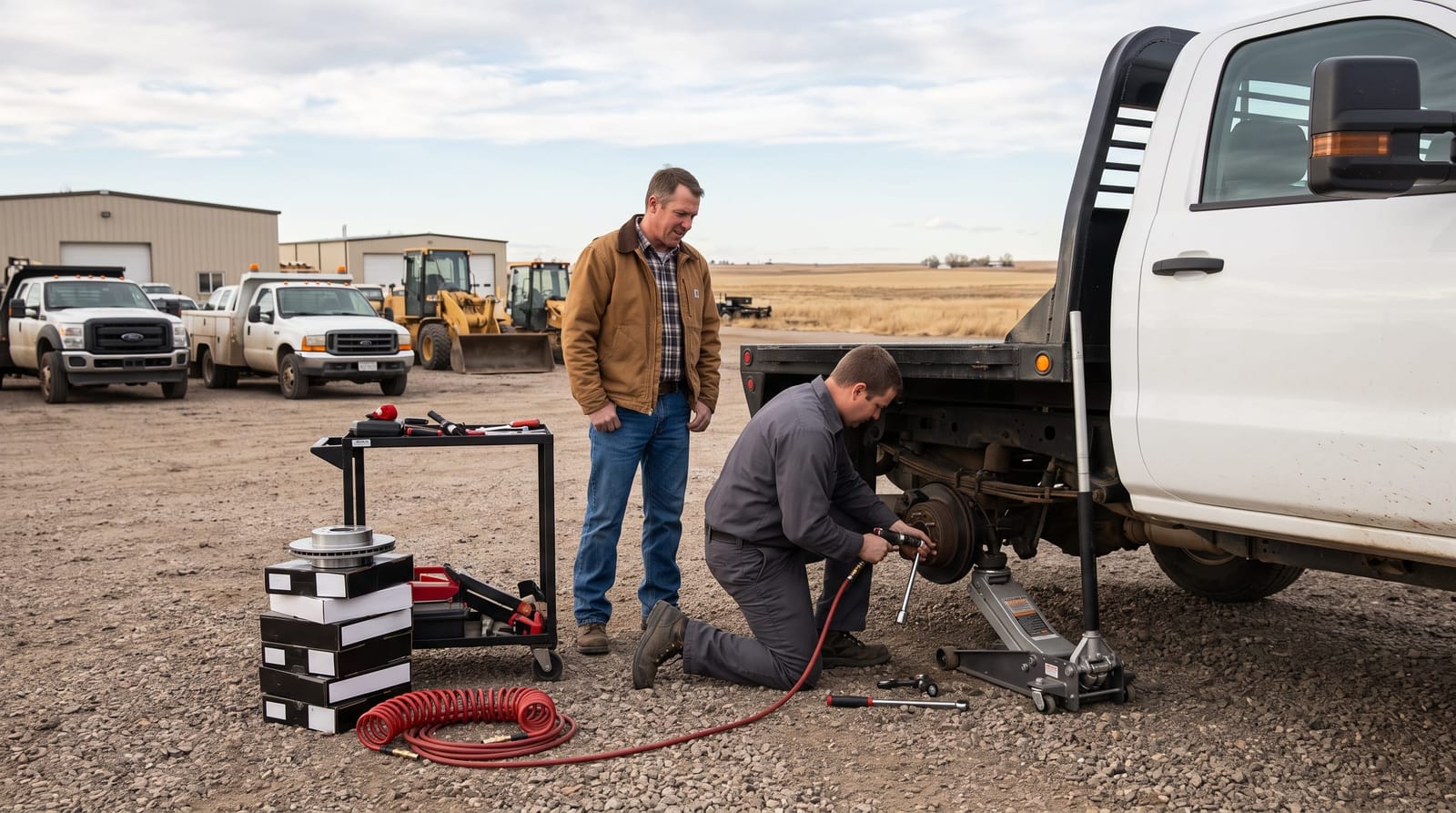
If your business depends on trucks, vans, or heavy equipment rolling through Weld County every day, brake maintenance isn't a line item you can afford to skip. Work trucks face braking demands that are dramatically different from a personal vehicle: more weight, more stops, more wear. This beginner's guide breaks down exactly why fleet brake service in Weld County CO is critical to keeping your vehicles safe, legal, and productive, and what you need to know before your next inspection.
Why Work Trucks Are Harder on Brakes Than Passenger Vehicles
Most drivers understand that brakes wear out over time. What fleet operators sometimes underestimate is how much faster that wear happens on a commercial vehicle compared to a personal car.
The core reason comes down to physics. A fully loaded pickup truck or service van can weigh two to three times more than a standard passenger car. Stopping that mass requires significantly more braking force, and that force is converted into heat every single time the driver presses the pedal. Studies in the commercial trucking industry estimate that brake components on heavy-duty work trucks can wear out up to 60% faster than the same components on a light-duty passenger vehicle operating the same number of miles.
Weld County's work environment makes this even more demanding. Contractors hauling equipment on I-25, delivery drivers navigating stop-and-go traffic in Greeley and Fort Lupton, and oil field service vehicles carrying heavy payloads on unpaved roads, all of these use create extreme braking conditions. Add towing a trailer or equipment skid and you've multiplied the demand on every brake component in the system.
For fleet managers, this means brake inspections can't run on the same calendar as a family sedan. A personal vehicle might go 50,000 miles between brake jobs. A commercial work truck in heavy service may need attention every 15,000 to 25,000 miles depending on load, terrain, and driver habits.
The Four Components That Wear Fastest on Fleet Vehicles
Understanding which parts take the most abuse helps fleet managers prioritize inspections and budget maintenance realistically. Here are the four components most commonly affected by heavy-duty use:
- Brake Pads: These are the friction material that clamps against the rotor to slow the vehicle. On a loaded work truck, pads can reach temperatures exceeding 400°F during normal operation: far above what a standard passenger vehicle experiences. When pads wear below approximately 2mm of remaining material, stopping distances increase dramatically.
- Rotors: Rotors absorb the heat generated during braking. Repeated heavy stops cause warping, grooves, and surface cracking. A warped rotor creates the familiar steering wheel vibration under braking and signals a safety concern that needs attention promptly.
- Brake Fluid: Brake fluid is hygroscopic: it absorbs moisture from the air over time. As moisture content increases, the fluid's boiling point drops. On a work truck making repeated heavy stops, degraded fluid can boil inside the brake lines, causing a spongy pedal or temporary brake fade. The Department of Transportation recommends checking brake fluid condition at least annually, though fleet vehicles in heavy service often benefit from more frequent testing.
- Calipers and Hardware: Caliper slides, pins, and springs can seize or corrode, especially on vehicles exposed to mud, salt, or off-road conditions common across Weld County job sites. A seized caliper causes uneven wear and can lead to one side of the vehicle braking harder than the other: a pulling sensation that signals a real safety problem.
The Safety and Liability Implications of Neglected Fleet Brakes
Beyond the mechanical reality, brake neglect on commercial vehicles carries serious safety implications for drivers, other road users, and your business. According to the Federal Motor Carrier Safety Administration (FMCSA), brake system violations are consistently among the top causes of commercial vehicle out-of-service orders during roadside inspections: accounting for roughly 47% of all vehicle out-of-service violations in recent inspection cycles.
For fleet operators in Weld County, a vehicle pulled from service during a roadside inspection means immediate downtime, potential fines, and disruption to job schedules. More importantly, a brake failure on a public road creates risk of serious accidents.
Maintaining documented brake service records also matters for your business operations. If an incident occurs involving a fleet vehicle, service documentation demonstrates that your company follows a reasonable maintenance program. Always consult with a licensed professional, such as a qualified fleet safety consultant or legal advisor, for guidance specific to your fleet's compliance obligations, since requirements vary based on vehicle class, gross vehicle weight rating, and operating type.
Part of a responsible maintenance approach includes pairing brake inspections with a thorough commercial vehicle inspection checklist Colorado fleet managers can use to track all critical systems, not just brakes, across multiple vehicles.
How to Build a Brake Maintenance Schedule for Your Fleet
There's no universal answer to "how often should fleet brakes be serviced": it depends on your vehicles, loads, terrain, and routes. But here's a practical starting framework for Weld County fleet operators:
- Establish a baseline inspection at every oil change. A visual brake check at each service interval (typically every 5,000 to 7,500 miles for most commercial vehicles) lets technicians catch accelerating wear early without adding significant cost.
- Set mileage-based brake inspection triggers. For heavily loaded vehicles, think contractors, oil field service, or landscaping trucks, consider a dedicated brake inspection every 15,000 to 20,000 miles regardless of whether warning signs are present.
- Track brake fluid condition annually. Have fluid tested for moisture content at least once per year. Vehicles operating in wet or dusty conditions may benefit from more frequent checks.
- Log everything. Document each brake inspection, what was found, and what was serviced. This protects your business, helps identify vehicles that are consistently harder on brakes, and supports resale value on fleet units.
- Train drivers to report early symptoms. Brake squeal, pedal pulsation, pulling to one side, and longer stopping distances are all early warnings. Building a simple driver reporting habit catches problems before they become expensive failures.
Getting Fleet Brake Service Right in Weld County
Fleet brake service in Weld County CO is a specialized area, not every shop has the equipment, lift capacity, or technical familiarity to properly service a loaded service truck, a diesel pickup with a gooseneck hitch, or a multi-vehicle commercial fleet on a managed maintenance schedule.
Central Truck & Diesel Service (CTDS) in Fort Lupton serves Weld County fleet operators with brake inspections and full brake system service designed specifically for work trucks and commercial vehicles. The ability to handle heavy-duty vehicles, perform diagnostic brake assessments, and work within a fleet's maintenance schedule, rather than just fitting you in as a walk-up appointment, is what separates a commercial vehicle specialist from a general auto shop.
CTDS's location in Fort Lupton makes it a practical service point for contractors, agricultural businesses, and commercial operators across southern Weld County who can't afford to drive vehicles 30 or 40 minutes each way for routine service.
Frequently Asked Questions: Fleet Brake Service in Weld County
How do I know if my work truck's brakes need immediate attention?
Warning signs that warrant a prompt inspection include: a grinding or metal-on-metal sound when braking, a pulsating or spongy brake pedal, the vehicle pulling to one side during braking, a burning smell after stopping, or noticeably longer stopping distances than normal. Any of these symptoms on a loaded work truck should be evaluated by a qualified technician as soon as possible rather than monitored over time.
Can I use the same brake pads on my fleet trucks that a dealership uses on a passenger car?
Not all brake pads are rated equally. Commercial and heavy-duty work trucks typically require pads with a higher heat tolerance and friction rating than standard passenger vehicle pads. Using undersized or incorrectly rated pads on a vehicle that regularly carries heavy loads can lead to accelerated wear and reduced braking performance. Always confirm that parts are rated for the vehicle's GVWR and use case.
How long does a fleet brake inspection typically take?
A thorough brake inspection on a single work truck generally takes 45 minutes to an hour when performed by an experienced commercial vehicle technician. If brake service is needed, pad replacement, rotor resurfacing, or caliper work, that adds time depending on what's found. Scheduling inspections as part of a planned maintenance visit minimizes total downtime per vehicle.
Does fleet brake service cost more than brake service on a personal vehicle?
The components involved in heavy-duty brake service, larger rotors, higher-grade pads, and heavier calipers, do carry a higher parts cost than passenger vehicle equivalents. However, catching brake wear early through regular inspections almost always results in lower total costs than replacing components that have been worn past serviceable limits or that have caused secondary damage to other brake system parts.
Conclusion: Brake Maintenance Is a Business Decision, Not Just a Safety One
For Weld County fleet operators, brake maintenance is ultimately about keeping revenue-generating vehicles on the road. The demands that heavy loads, frequent stops, and tough job site conditions place on brake systems are real, and the costs of ignoring them, whether through vehicle downtime, out-of-service violations, or unexpected repair bills, are measurable. Building fleet brake service in Weld County CO into a consistent maintenance program is one of the most straightforward ways to protect both your drivers and your bottom line. CTDS in Fort Lupton is here to help make that happen.