Fleet Preventative Maintenance Schedules: How to Build a Program That Prevents Breakdowns
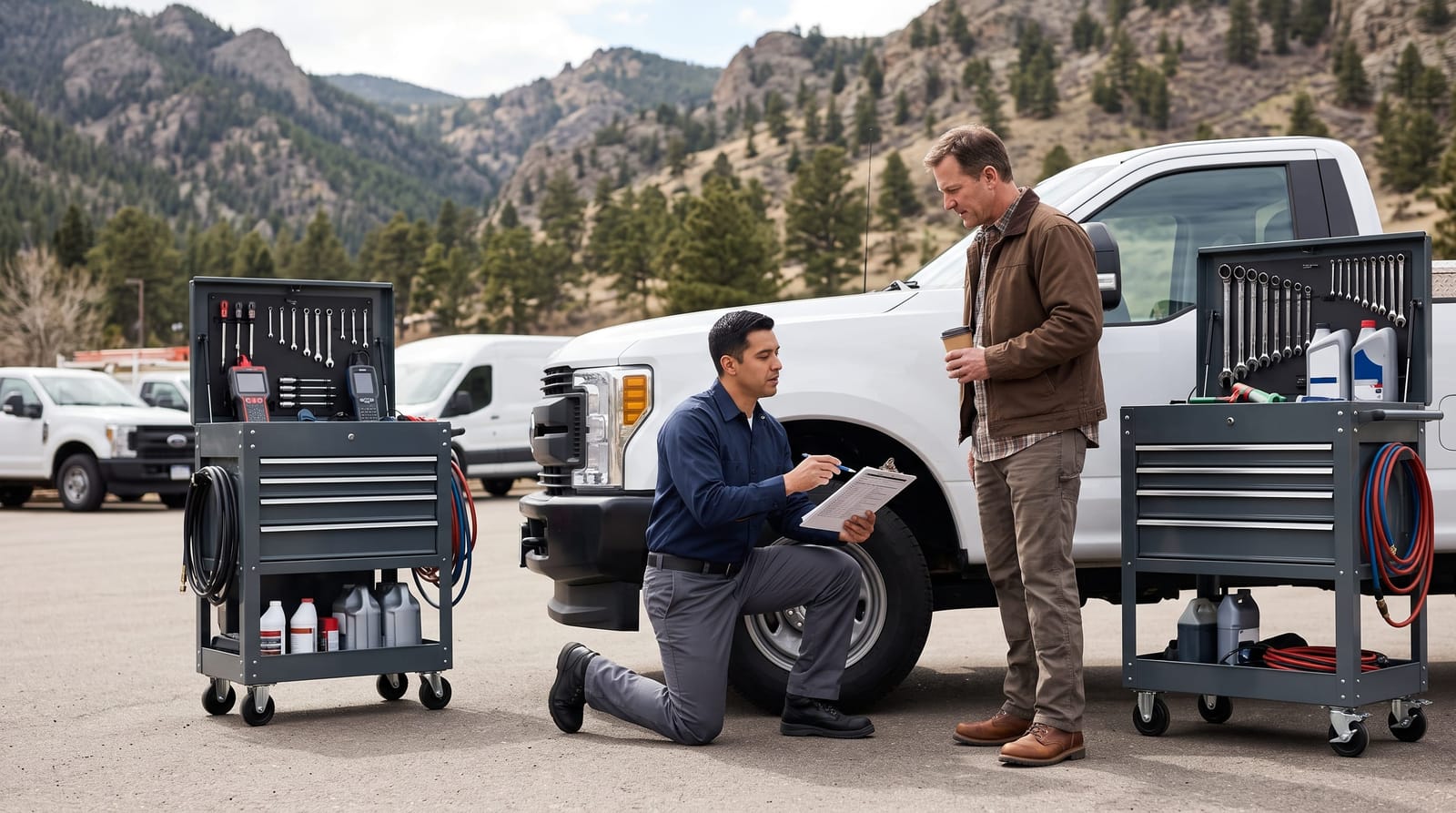
If you operate work trucks in Weld County, your vehicles aren't just equipment: they're the engine of your business. A breakdown on a job site or a delivery route doesn't just mean a repair bill; it means lost revenue, missed commitments, and frustrated customers. That's why fleet preventative maintenance is one of the most important operational decisions a small business owner or fleet manager can make. As part of our broader focus on fleet maintenance services in Fort Lupton, CO, this guide walks you through the best practices for building a structured preventative maintenance program: one that keeps your Colorado work trucks running reliably through every season, every mile, and every job.
1. Start With a Fleet Audit Before You Build Any Schedule
Before you can build a meaningful fleet preventative maintenance schedule, you need a clear picture of what you're actually working with. A fleet audit is the foundation of any effective program, and skipping this step is one of the most common mistakes small business owners make.
A proper audit captures the following for every vehicle in your fleet:
- Year, make, model, and engine type
- Current mileage and estimated annual mileage
- Vehicle use type (hauling, towing, long-haul, short-stop delivery, etc.)
- Current condition: tires, brakes, fluids, belts, filters
- Maintenance history, including any deferred repairs
- DOT compliance status, if applicable
Why does this matter so much? Because a mixed fleet, say, a combination of half-ton pickups, diesel flatbeds, and cargo vans, doesn't run on a one-size-fits-all schedule. A 6.7L Powerstroke diesel has dramatically different oil change intervals than a gasoline-powered 5.3L Silverado. A vehicle that runs 100 miles per day accumulates wear at a fundamentally different rate than one that sits idle on a job site three days a week.
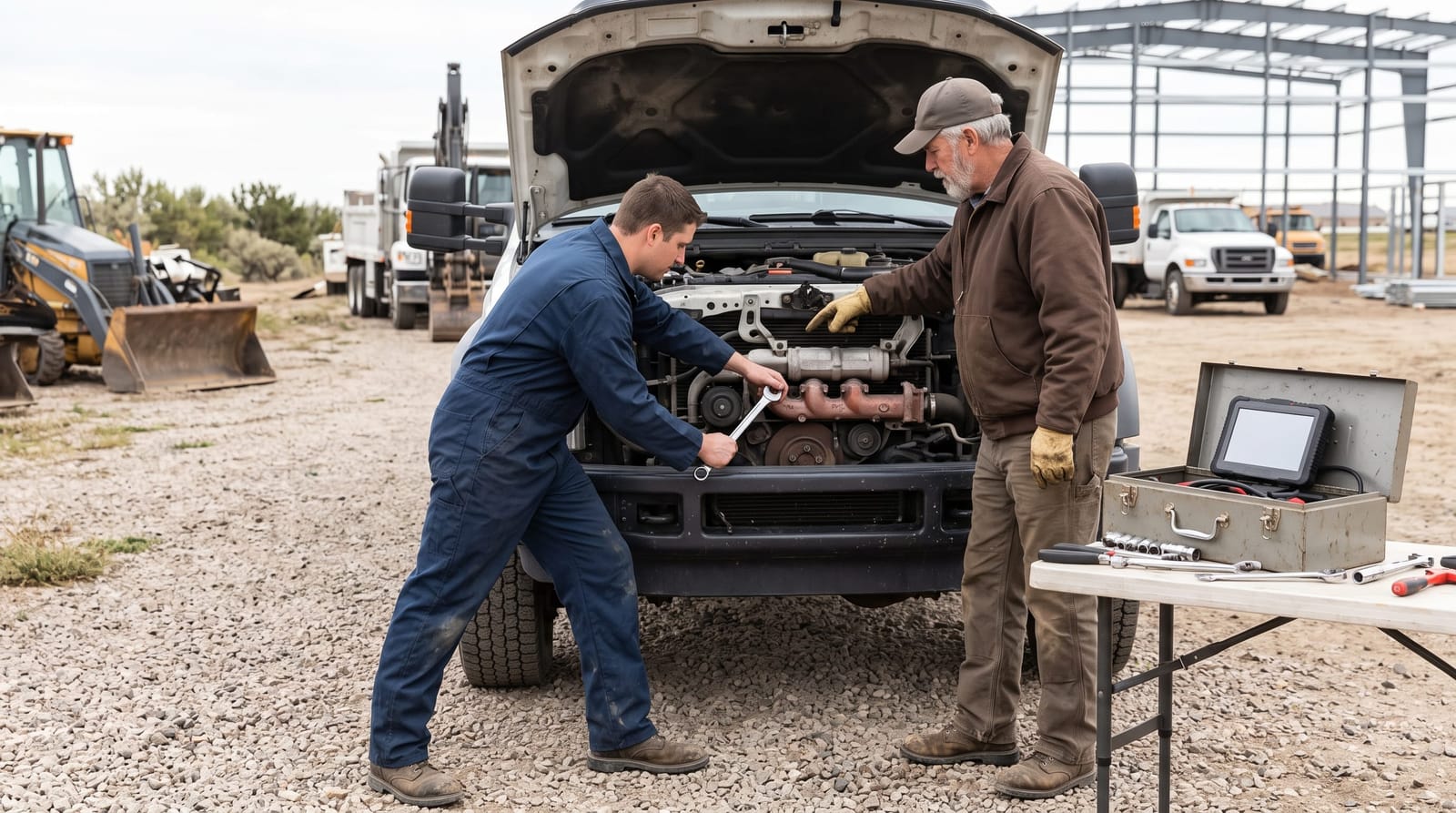
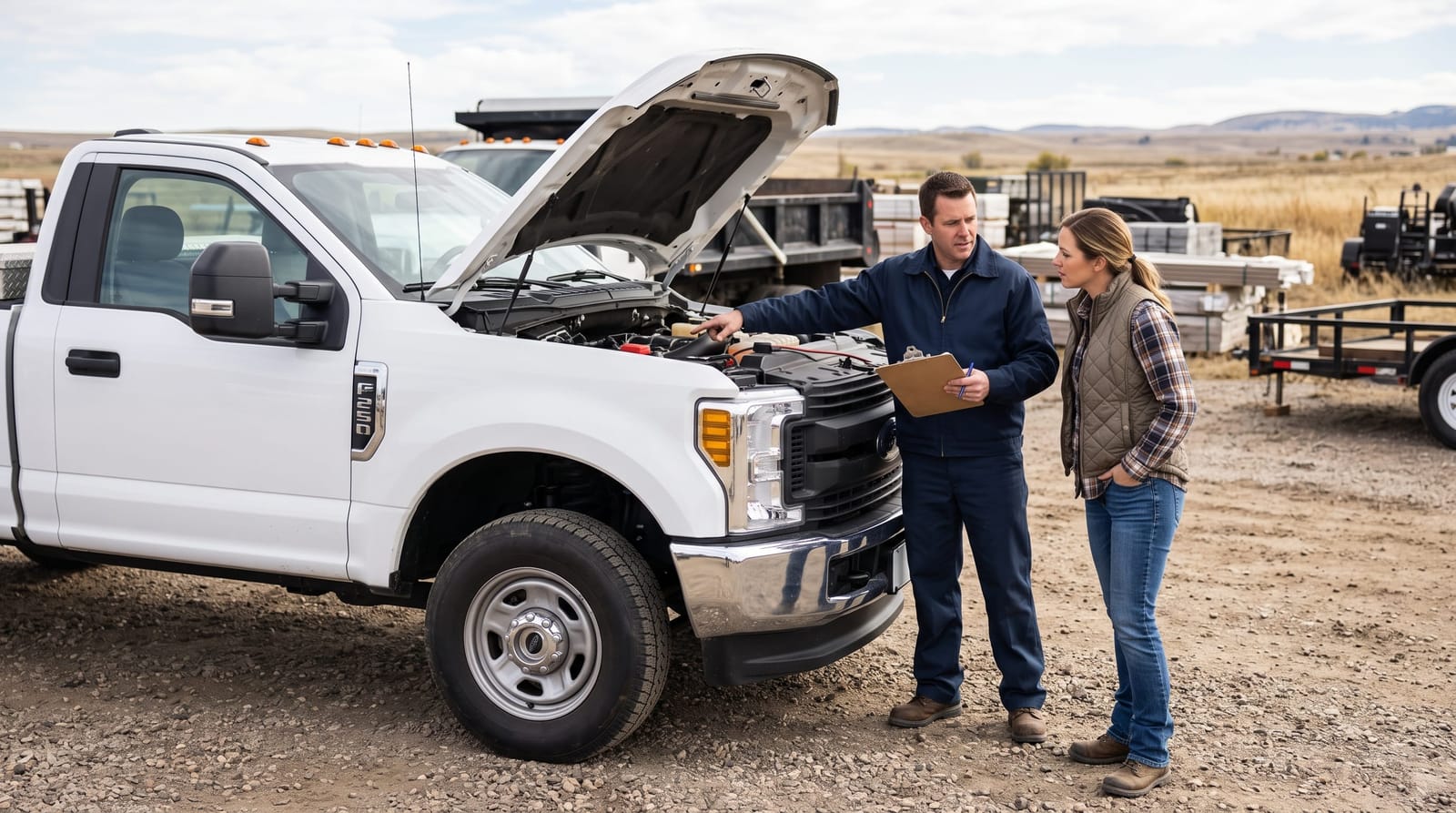
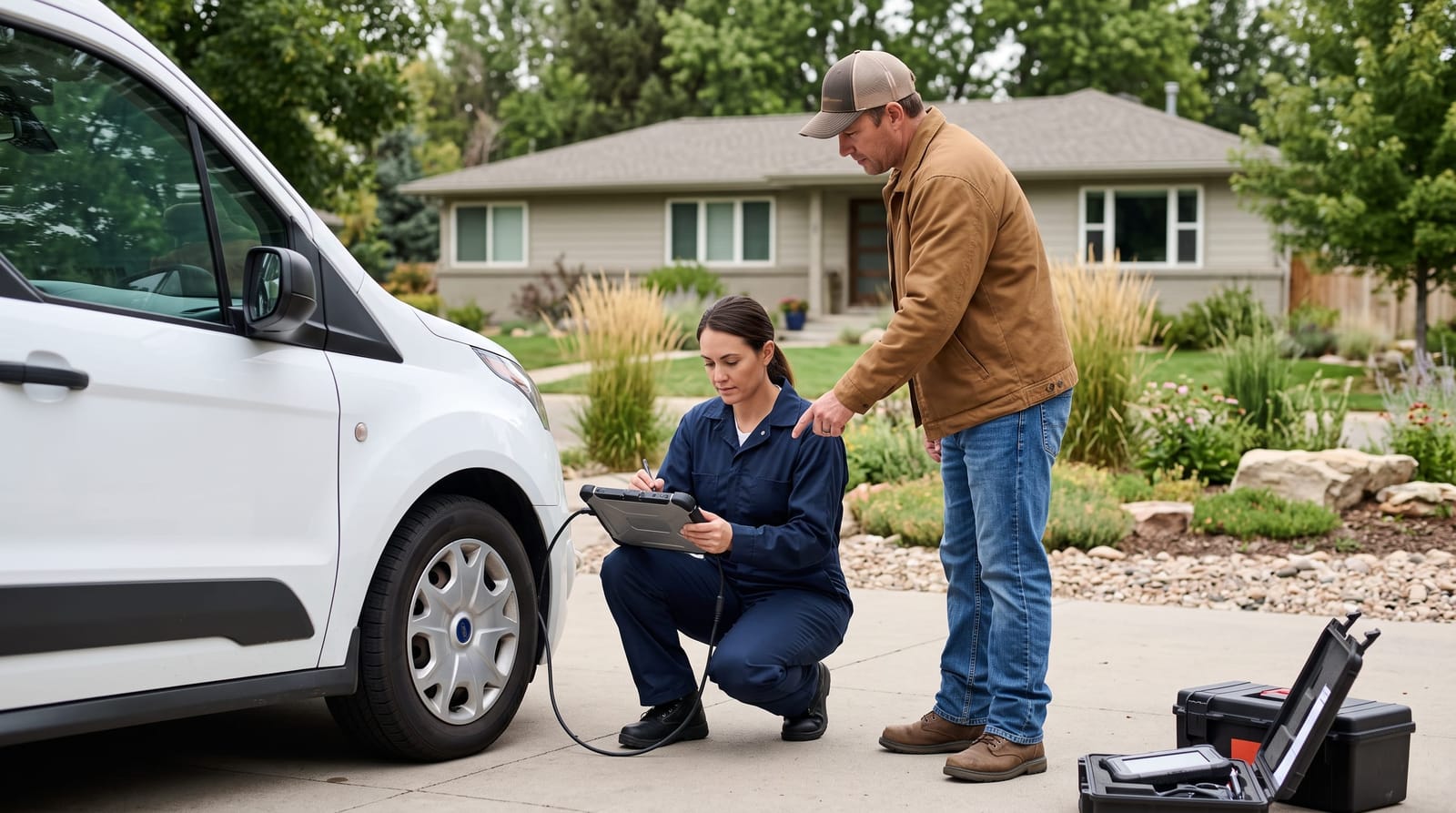
This audit also helps you identify vehicles that are already behind on service: what the industry calls "deferred maintenance debt." Catching these before you implement a new schedule prevents you from building a program on top of a fleet that's already compromised. At CTDS, our technicians perform thorough multi-point inspections that serve as exactly this kind of baseline when we onboard new fleet clients in Fort Lupton and the surrounding Weld County area.
2. Build Intervals Around Mileage AND Time: Not Just One
One of the most overlooked principles in fleet preventative maintenance scheduling is the dual-trigger approach: using both mileage thresholds and calendar intervals to determine when service is due. Relying on mileage alone leaves vehicles that sit frequently under-serviced. Relying on time alone can push high-mileage vehicles dangerously past their service windows.
Common Interval Guidelines for Colorado Work Trucks
Every manufacturer publishes recommended service intervals, and those should always be your starting point. That said, Colorado's operating environment, high altitude, extreme temperature swings, dusty plains, mountain grades, can accelerate wear and justify tightening those intervals. Here are general categories to build around (always verify against manufacturer specifications for your specific vehicles):
- Engine oil and filter: Typically every 5,000-7,500 miles for conventional oil, or every 10,000-15,000 miles for full synthetic, though heavy towing, dusty conditions, and diesel engines often warrant shorter intervals
- Tire rotation: Every 5,000-7,500 miles, or at every other oil change
- Brake inspection: Every 12,000-15,000 miles, or more frequently for vehicles that haul heavy loads on grades
- Air filter: Every 15,000-30,000 miles, or annually: more frequently for vehicles operating on unpaved Weld County roads
- Transmission fluid: Every 30,000-60,000 miles depending on the transmission type and load demands
- Coolant flush: Every 2-3 years, regardless of mileage, particularly important for Colorado's wide temperature range
- Fuel filters (diesel): Every 15,000-30,000 miles, critical for diesel performance and injector longevity
Building a dual-trigger matrix for your fleet, where "whichever comes first" determines the service date, protects you from the gaps that single-metric scheduling creates.
3. Prioritize Brake and Tire Maintenance Above Everything Else
If you're triaging where to focus first on a limited budget, brakes and tires are non-negotiable. These two systems are your primary safety interface with the road, and their failure doesn't just mean a breakdown: it creates serious liability and safety exposure. This is especially true for commercial vehicles operating under DOT regulations, where brake and tire standards are closely scrutinized during inspections.
Brake Inspection Best Practices
For fleet trucks, brake inspections should go beyond a visual check. A complete brake inspection covers pad thickness, rotor condition, brake fluid quality (moisture content degrades hydraulic performance), caliper function, and brake hose integrity. Trucks that regularly haul heavy payloads or navigate grades in the Colorado foothills and mountains accelerate brake wear significantly faster than manufacturer averages predict.
Establish a brake-specific log for each vehicle that tracks pad measurements at each inspection. This gives you trend data, so you can anticipate a replacement before it becomes an emergency, rather than reacting to a metal-on-metal situation on a job site.
Tire Rotation and Wear Monitoring
Irregular tire wear is often a symptom, not just a problem in itself: it signals alignment issues, suspension wear, or improper inflation habits. Fleet tires are expensive, and maximizing tread life through consistent rotation and alignment checks delivers real cost savings over time. Track tire depth at each rotation and flag any vehicle showing uneven wear patterns for a suspension and alignment evaluation. For more detail on preparing your fleet's tires and other systems for Colorado's extreme seasonal shifts, the seasonal fleet maintenance Colorado checklist is a practical companion resource.
4. Create a Fluid Monitoring Protocol: Not Just Fluid Change Schedules
Fluid changes are the backbone of any preventative maintenance program. But fluid monitoring, checking levels and quality between scheduled service intervals, is the layer that catches problems before they become failures. These are two different habits, and effective fleet programs require both.
Assign a simple driver-level inspection checklist that gets completed on a weekly or bi-weekly basis for each vehicle. This doesn't require a technician: a trained driver or supervisor can perform it in minutes. The checklist should include:
- Engine oil level and color check (on dipstick)
- Coolant reservoir level
- Power steering fluid level
- Brake fluid reservoir level
- Windshield washer fluid (especially critical in Colorado winters)
- DEF (Diesel Exhaust Fluid) level for diesel trucks with SCR systems
- Visual check for fluid leaks under the vehicle
This between-service monitoring is what catches the slow oil leak that doesn't trigger a warning light until the engine is already damaged. It's a low-cost habit that closes the gap between scheduled maintenance visits and real-world operating conditions.
5. Incorporate Colorado-Specific Seasonal Checks Into Your Calendar
A fleet maintenance schedule that ignores Colorado's climate isn't a complete schedule. The transition between summer heat and winter cold in Weld County creates specific stress points that need dedicated attention twice per year: typically in October before freeze season and in April as temperatures stabilize.
Pre-Winter Priorities
- Battery load testing: cold cranking performance drops significantly below freezing
- Coolant freeze point verification
- Heater and defroster function checks
- Tire tread depth and potential switch to winter-rated tires for specific routes
- Four-wheel drive / AWD system engagement test
- Wiper blade replacement for winter-rated blades
Pre-Summer Priorities
- A/C system performance and refrigerant check
- Cooling system pressure test and thermostat function
- Belts and hoses inspection: heat accelerates rubber degradation
- Tire pressure recalibration: pressure increases with temperature
These seasonal windows also serve as natural checkpoints to review your entire maintenance log and identify any vehicles approaching a major service milestone. Building seasonal check-ins into your annual calendar prevents the scramble of reactive maintenance when a vehicle fails heading into a high-demand season.
6. Understand the ROI of Preventative vs. Reactive Maintenance
Fleet managers who resist investing in preventative maintenance programs often underestimate what reactive maintenance actually costs. It's rarely just the repair bill. The full cost of an unplanned breakdown typically includes:
- Towing fees
- Emergency repair labor rates (often higher than scheduled service)
- Parts sourced urgently rather than planned (also often more expensive)
- Lost revenue from the vehicle being out of service
- Potential overtime for other drivers or rerouting costs
- Customer relationship damage from missed or delayed deliveries
Industry data consistently supports that the cost-per-mile of maintaining a vehicle proactively is significantly lower than the cost of addressing failures reactively. For small businesses with two to ten commercial vehicles, a single major engine or transmission failure can cost more than an entire year of structured preventative maintenance across the full fleet.
Understanding the financial picture of your fleet's maintenance program in detail, including how to budget effectively for it, is something the fleet maintenance cost small business Colorado resource addresses directly. And if you're evaluating which service provider to trust with your vehicles, the guide on fleet mechanic Fort Lupton Brighton CO covers what to look for in a qualified commercial vehicle shop.
At CTDS, we work with fleet operators to develop individualized maintenance schedules that account for each vehicle's use patterns, mileage accumulation, and operating environment. A customized schedule means you're not over-servicing low-use vehicles or under-servicing your hardest-working trucks: both of which waste money in different ways.
Related Details Worth Exploring
A preventative maintenance program touches several areas worth understanding in greater depth. If you're building out a comprehensive fleet management approach, consider also reviewing:
- How to budget accurately for fleet maintenance as a small Colorado business
- What Colorado's seasonal climate demands from your vehicles in winter and summer
- How to evaluate a fleet mechanic's qualifications and shop capabilities before committing to a service relationship
Building the Program Is the First Step: Sticking to It Is the Job
A fleet preventative maintenance schedule only works if it's actually followed. That means assigning clear responsibility for tracking service due dates, maintaining records for each vehicle, and partnering with a shop that understands the demands placed on commercial work trucks in Colorado's climate and terrain. The best programs combine disciplined scheduling with a trusted service partner who knows your fleet.
CTDS serves fleet operators throughout Fort Lupton, Brighton, and Weld County with customized maintenance programs designed to minimize downtime and extend vehicle life. If you're ready to move from reactive repairs to a structured preventative approach, contact our team to schedule a fleet assessment and discuss a maintenance plan built around your specific vehicles and operation.