Fleet Maintenance Services in Fort Lupton, CO: Keeping Weld County's Work Trucks on the Road
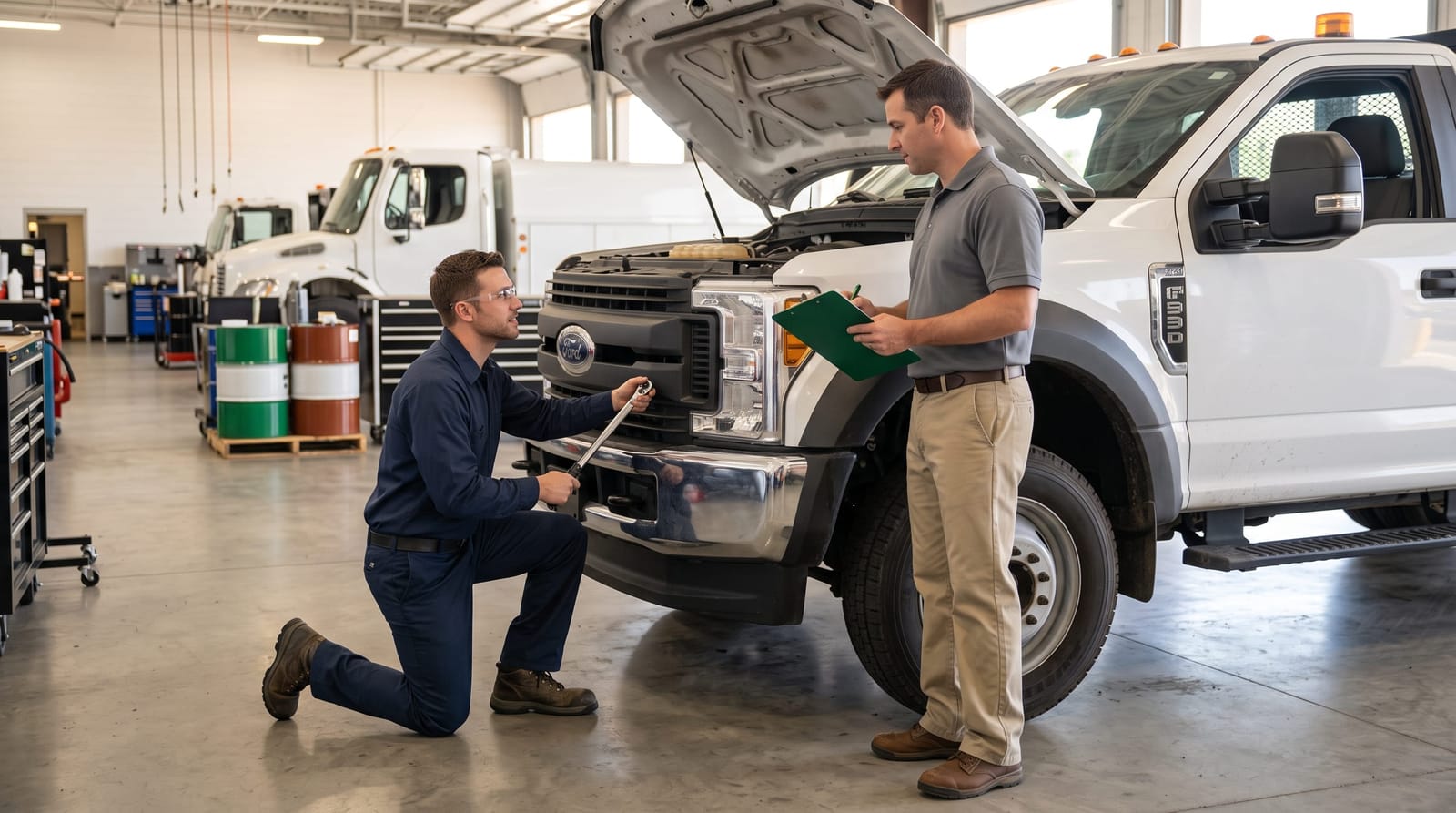
Picture this: it's 5:30 AM on a Monday morning in Weld County. Your crew is geared up, your jobs are scheduled, and then the call comes in: one of your work trucks won't start. By 7:00 AM, you're already looking at a missed deadline, an idle crew burning hourly wages, and a tow bill on top of whatever the actual repair costs. If that scenario sounds familiar, you already understand why fleet maintenance in Fort Lupton, CO isn't just a line item on a budget: it's a business survival strategy.
Weld County's economy runs on commercial vehicles. From irrigation contractors and oil field service companies to municipal crews and HVAC businesses serving the North Denver suburbs, the region's workforce depends on trucks that show up and perform every single day. Yet the vast majority of costly fleet breakdowns are preventable. Industry data consistently shows that unplanned vehicle downtime costs fleets two to three times more than the equivalent scheduled maintenance would have cost upfront.
This guide is built for fleet managers, business owners, and independent contractors in Fort Lupton, Brighton, Greeley, Erie, and surrounding Weld County communities who want a clear, actionable picture of what professional fleet maintenance looks like, and how Colorado Transmission & Diesel Service (CTDS) delivers that service locally. You'll learn how to build a proactive maintenance program, what to look for in a fleet service provider, how diesel expertise makes a real difference, and how to calculate whether your current maintenance approach is actually saving you money or quietly costing you more.
Why Fleet Maintenance Is a Business Investment, Not Just a Cost
Many small business owners treat vehicle maintenance the way most people treat going to the dentist: they wait until something hurts. The problem with that approach is that commercial vehicles don't give you much warning before a catastrophic failure, and the cost of that failure almost always dwarfs what scheduled service would have run.
According to the American Transportation Research Institute (ATRI), unplanned truck breakdowns cost fleets an average of $448 to $760 per hour in lost productivity, depending on the industry and vehicle type. That figure doesn't include the tow bill, the after-hours repair premium, or the cost of reshuffling your crew. For a small contractor running a five-truck fleet, a single major unplanned failure could easily represent a week's worth of profit: gone.
Contrast that with a well-executed preventative maintenance program. The Federal Motor Carrier Safety Administration (FMCSA) has long documented that vehicles kept on regular PM schedules experience significantly fewer roadside breakdowns and out-of-service violations. For commercial vehicles operating in Colorado, where elevation, temperature swings, and road conditions place additional strain on drivetrain and engine components, that gap grows even wider.
Total Cost of Ownership: The Real Math
Total Cost of Ownership (TCO) is the framework fleet managers use to evaluate whether their vehicle assets are truly performing financially. TCO accounts for acquisition cost, fuel, insurance, labor, and, critically, maintenance and downtime. Fleets that invest in proactive maintenance typically see lower fuel consumption (a poorly maintained diesel engine can lose 3-5% fuel efficiency from neglected air filters and injectors alone), extended vehicle life, higher resale values, and dramatically lower emergency repair costs.
For Weld County businesses, where a work truck might log 30,000 to 60,000 miles per year across a combination of highway, gravel, and job site terrain, TCO management isn't theoretical: it's the difference between a profitable year and a painful one.
What Professional Fleet Maintenance in Fort Lupton, CO Actually Includes
Not all "fleet maintenance" is created equal. A general auto shop that handles fleet work on the side offers a very different level of service than a shop built specifically around commercial vehicle needs. Here's what a comprehensive fleet maintenance program from a dedicated provider like CTDS covers:
Scheduled Preventative Maintenance
The foundation of any fleet program is a structured PM schedule tied to mileage, engine hours, or calendar intervals: whichever trigger comes first. This includes oil and filter changes, fluid inspections and top-offs, belt and hose checks, brake inspections, tire rotations and pressure checks, battery and charging system tests, and air filter service. For diesel trucks, fuel filter replacement intervals are especially critical because diesel fuel quality in Colorado can vary, and clogged fuel filters are a leading cause of injector damage.
Bumper-to-Bumper Safety Inspections
A full vehicle inspection goes far beyond the basics. A thorough pre-scheduled inspection looks at steering and suspension components, wheel bearings, brake pad and rotor condition, lighting systems, exhaust integrity, frame condition, and body-mounted equipment. For vehicles that need to pass DOT inspections or Colorado commercial vehicle inspections, a professional pre-inspection by a qualified technician can prevent costly out-of-service citations at roadside checkpoints.
Diagnostics and Systems Monitoring
Modern commercial trucks are equipped with sophisticated onboard diagnostic systems. A properly equipped fleet shop can pull fault codes, interpret data from engine control modules, read transmission performance logs, and identify developing problems before they become roadside emergencies. CTDS's diagnostic capabilities extend to both gasoline and diesel commercial vehicles, covering everything from DPF (Diesel Particulate Filter) regeneration issues to complex transmission fault codes.
Fleet Records and Maintenance Tracking
Professional fleet service includes maintaining detailed service records for each unit in your fleet. This documentation matters for warranty compliance, resale value, insurance purposes, and FMCSA compliance if your vehicles are subject to federal oversight. A good fleet service partner keeps your records organized so you're never guessing when Unit 4 last had its brakes inspected.
Diesel Truck Expertise: Why It Matters for Weld County Fleets
The majority of commercial work trucks operating in Weld County, pickups, service trucks, flatbeds, dump trucks, and equipment haulers, are diesel powered. Diesel engines are fundamentally different from gasoline engines in their design, maintenance requirements, and failure modes, and they demand technicians with specific training and experience.
Here's why diesel expertise isn't a nice-to-have: it's a requirement for effective commercial fleet maintenance in this region:
- Emissions system complexity: Modern diesel trucks built after 2010 are equipped with Diesel Exhaust Fluid (DEF) systems, Diesel Particulate Filters (DPF), and Exhaust Gas Recirculation (EGR) systems. These components require specialized knowledge to diagnose and service correctly. Incorrect service can trigger derate modes that limit your truck's power output and speed: essentially making it unusable for work.
- Fuel system sensitivity: High-pressure common rail injection systems operate at pressures exceeding 30,000 PSI. Contaminated fuel or missed filter changes can destroy injectors that cost $400-$600 each to replace, and a diesel truck has six to eight of them.
- Transmission and drivetrain demands: Heavy-duty diesel trucks used for towing, hauling, or off-road access put enormous stress on transmissions, transfer cases, and differentials. Fluid service intervals and component inspections are critical for these high-stress applications.
- Cold weather performance: Colorado winters create unique challenges for diesel fuel systems. Gelling, water contamination, and cold-start issues require a technician who understands diesel fuel chemistry and the proper service response.
CTDS has built its reputation in Fort Lupton specifically around diesel and transmission expertise: making it a natural fit for the heavy-duty commercial vehicles that define Weld County's working fleets.
Who Needs Fleet Maintenance Services in Weld County?
Fort Lupton sits at the intersection of several major industries, all of which depend heavily on reliable commercial vehicles. Understanding which fleet profiles benefit most from professional fleet maintenance services helps clarify why this isn't just a large-company concern.
Contractors and Construction Companies
General contractors, electricians, plumbers, HVAC technicians, and landscaping companies operating in Weld County and the North Denver suburbs typically run fleets of 3-15 vehicles. These trucks carry tools, haul materials, and tow trailers daily. Missed maintenance on a contractor's primary service vehicle can mean lost job site time that cascades into project delays, client dissatisfaction, and penalty clauses. Priority scheduling through a dedicated fleet service provider means a contractor can get a truck in and out the same day, not waiting a week at a general repair shop.
Agricultural Operations
Farming and ranching operations in Weld County rely on diesel pickups, grain trucks, and specialty ag vehicles that operate in some of the most demanding conditions imaginable: dusty field roads, heavy loads, extreme temperature ranges, and long hours at high engine load. Agricultural fleets often have seasonal maintenance windows that need to be carefully coordinated around planting and harvest schedules. A fleet service partner who understands that dynamic and can work within those windows is invaluable.
Oil and Gas Service Companies
Weld County is home to one of the most active oil and gas production regions in Colorado. Service companies operating in this sector, well maintenance, water hauling, equipment transport, run heavy trucks in demanding environments where vehicle reliability is a safety concern as much as a business concern. These fleets often require frequent inspections and tighter maintenance intervals due to the nature of the work.
Municipalities and Government Fleets
Small municipalities, utility districts, and county departments operating vehicles in and around Fort Lupton, Brighton, and Platteville need consistent, documented fleet maintenance that meets public accountability standards. Scheduled service with detailed records supports budget planning and regulatory compliance.
Small Business Delivery and Service Fleets
Even a two-truck or three-truck fleet, a local delivery company, a mobile service business, or a property management firm, benefits from professional fleet maintenance. When you only have a few vehicles, losing one to an unplanned breakdown represents a much larger percentage of your operational capacity than it would for a large fleet. The stakes per vehicle are actually higher for small operators.
How Priority Turnaround Protects Your Bottom Line
One of the most significant differences between a general auto shop and a dedicated fleet maintenance provider is turnaround time. A standard repair shop operating on a first-come, first-served basis may have a two- to four-day backlog on any given week. For a business owner whose truck generates revenue every working hour, that waiting period is a direct financial hit.
Fleet service programs through CTDS are structured to minimize that gap. When your vehicle is on an established maintenance schedule, work can be booked in advance during non-peak hours: early morning, or timed around your crew's schedule. There's no scramble to squeeze in between retail customers. Your truck gets in, gets serviced, and gets back to work, often the same day for routine maintenance.
For urgent repairs, having an established relationship with your fleet service provider matters enormously. A shop that knows your vehicles, knows your history, and knows your business is far more likely to prioritize your situation than an anonymous walk-in customer at a shop that's never seen your trucks before.
The Value of a Single-Source Fleet Relationship
Managing your fleet's service through one trusted provider rather than scattering vehicles across multiple shops also creates operational efficiency. One set of records. One point of contact. One billing relationship. One shop that accumulates institutional knowledge about your specific vehicles: their quirks, their history, the repair that was done six months ago that now might be relevant to today's symptom. That continuity of knowledge is a genuine competitive advantage for your fleet.
Building a Fleet Maintenance Program: What the Process Looks Like
Getting a fleet onto a structured maintenance program doesn't require a massive fleet management software investment or a dedicated in-house fleet coordinator. For most small and mid-size fleets in Weld County, the process is straightforward:
- Fleet Assessment: The process starts with a baseline inspection of every vehicle in your fleet. This establishes current condition, identifies any deferred maintenance, and flags any immediate safety or performance concerns. Think of it as a health screening: you need to know where you're starting from.
- Schedule Development: Based on each vehicle's make, model, mileage, engine type, and how it's used, a customized maintenance schedule is developed. A pickup truck that pulls a trailer every day has different needs than one that's used for job-site run-around. The schedule accounts for those differences.
- Interval Coordination: Service intervals are mapped to your business calendar. If you can't have a truck out of commission on Mondays and Tuesdays because those are your heaviest haul days, that gets built into the scheduling approach.
- Execution and Documentation: Each service visit is performed, documented, and logged to each vehicle's service record. Technicians note any items observed during service that may need attention at a future interval.
- Review and Adjustment: A good fleet maintenance program is a living document. As vehicles age, as your business changes, or as seasonal demands shift, the program adapts.
This is the framework that separates reactive "fix it when it breaks" fleet management from the proactive approach that consistently delivers lower total operating costs.
What to Look for in a Fleet Maintenance Partner Near Fort Lupton
Not every shop that advertises fleet services has the staff, equipment, or commitment to deliver fleet-caliber results. Here are the key criteria to evaluate when choosing a fleet maintenance provider in the Fort Lupton and Weld County area:
- Diesel and heavy-duty expertise: The majority of commercial work vehicles in this region are diesel-powered. Your service provider needs technicians with genuine diesel engine, emissions system, and heavy-duty drivetrain experience, not just general automotive training.
- Diagnostic equipment: Modern commercial vehicles require professional-grade scan tools capable of reading manufacturer-specific codes, not just generic OBD-II readers. Ask whether the shop has the equipment to properly diagnose your specific vehicle makes and models.
- Scheduling flexibility: Can the shop accommodate your business's operational schedule? Early morning drop-offs, same-day routine service, and advance appointment booking for planned maintenance are hallmarks of a true fleet service provider.
- Transparent communication: You should receive clear explanations of what was done, what was found, and what's recommended, without pressure tactics. A trustworthy fleet partner communicates proactively when something is found during service.
- Local presence and accountability: A locally operated shop has a reputation to protect in your community. CTDS at 1021 Denver Ave in Fort Lupton has been serving Weld County businesses and is reachable by phone at (720) 637-5790 during regular business hours, Monday through Friday, 8AM-5PM.
Deep Dive Topics: Explore Every Dimension of Fleet Maintenance
This guide covers the foundation of commercial fleet maintenance in Fort Lupton and Weld County, but each major aspect of fleet management deserves a closer look. The following resources go deeper on specific topics to help you build a more complete fleet maintenance strategy for your operation:
- Building a Preventative Maintenance Schedule: A structured PM program is the cornerstone of cost-effective fleet management. Learn how to build intervals, assign responsibilities, and track compliance in our detailed guide to fleet preventative maintenance schedule Colorado: covering everything from mileage triggers to seasonal adjustments specific to Colorado operating conditions.
- Streamlined Oil Changes and Fluid Maintenance: For small fleets, keeping up with oil changes across multiple vehicles can become a logistical challenge. Explore how structured fleet oil change service Fort Lupton CO works for local businesses, including how batch scheduling saves time and ensures nothing slips through the cracks.
- Diagnostics and Vehicle Inspections: Knowing what's wrong with a vehicle before it breaks down is the goal of modern fleet diagnostics. Our detailed resource on fleet vehicle inspection diagnostics Brighton CO explains what a professional inspection covers, what codes and data points technicians evaluate, and how regular inspections protect your fleet investment.
- Commercial Diesel Fleet Repair: When a work truck needs more than routine maintenance, diesel-specific repair expertise makes all the difference in both quality and turnaround time. Learn what sets specialized commercial diesel fleet repair Weld County CO apart from general automotive service, including emissions system repairs, injection system work, and heavy-duty drivetrain service.
- Minimizing Fleet Downtime: Downtime is the enemy of every fleet-dependent business. Our contractor-focused guide to minimize fleet downtime Weld County Colorado walks through practical strategies, from scheduling tactics to driver inspection habits, that keep your trucks running and your revenue flowing.
CTDS Fleet Services: Serving Fort Lupton and Weld County
Colorado Transmission & Diesel Service (CTDS) is located at 1021 Denver Ave, Fort Lupton, CO 80621, serving fleet customers throughout Weld County and the North Denver suburbs including Brighton, Greeley, Erie, Platteville, and surrounding communities. The shop is open Monday through Friday, 8AM-5PM, and fleet service appointments can be booked by calling (720) 637-5790.
CTDS specializes in scheduled fleet maintenance, diesel truck diagnostics and repair, transmission service, and full-service vehicle inspections for commercial fleets of all sizes, from a single work truck to multi-unit contractor and municipal fleets. Fleet accounts receive priority scheduling and transparent, documented service records for every vehicle in their program.
Whether you're looking to put a new fleet program in place, improve turnaround time on your current vehicles, or get a diagnostic answer on a truck that's been acting up, CTDS is equipped to help.
Conclusion: Proactive Fleet Maintenance Pays for Itself
The math on fleet maintenance is straightforward once you look at the full picture. Reactive maintenance, fixing trucks after they break, costs more per incident, creates unpredictable cash flow demands, and generates the kind of operational disruption that ripples through your entire business. Proactive fleet maintenance in Fort Lupton, CO, structured around a real schedule and executed by technicians with genuine commercial vehicle expertise, reduces those costs, extends vehicle life, and keeps your operation predictable.
For Weld County contractors, agricultural operators, municipalities, and small business owners, the vehicles in your fleet aren't just assets on a spreadsheet: they're the tools your livelihood depends on. Treating them accordingly, with professional maintenance from a local provider who understands the demands of this region and these industries, is one of the highest-return decisions you can make for your business.
CTDS is ready to build a fleet maintenance program around your operation. Call (720) 637-5790 or visit the shop at 1021 Denver Ave, Fort Lupton, CO to schedule a fleet assessment and find out what a proactive maintenance program can do for your bottom line.