How Often Should You Change Transmission Fluid in a Diesel Truck?
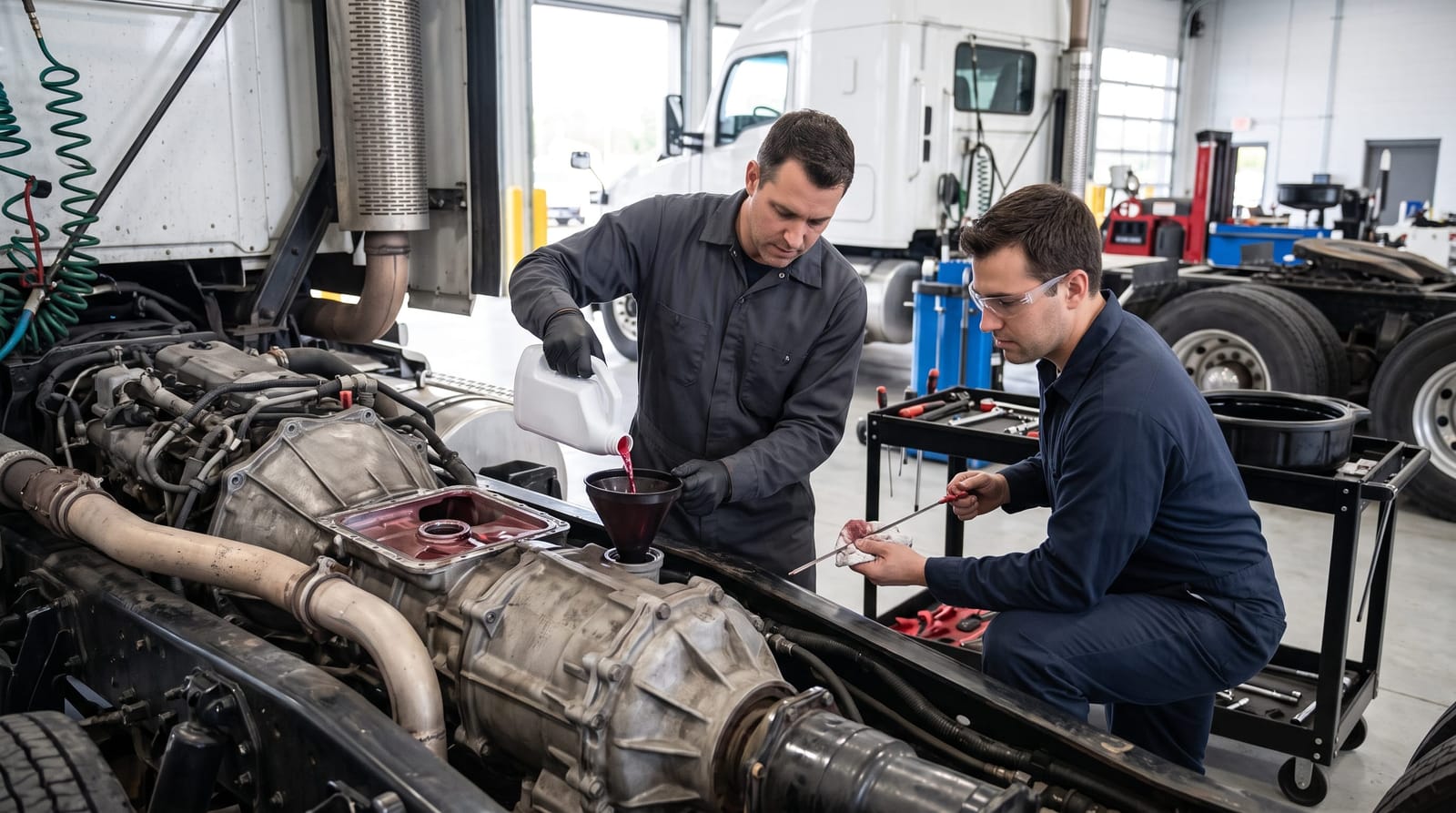
If you own a diesel pickup, whether it's a Powerstroke, Cummins, or Duramax, you already know these trucks are built to work hard. But hard work takes a toll on your transmission fluid, and knowing when to change it can mean the difference between a truck that runs strong for 300,000 miles and one that leaves you stranded on the side of I-25 with a $4,000 repair bill. This guide breaks down transmission fluid change intervals in plain language, explains how Colorado's unique driving environment accelerates fluid wear, and helps you build a service schedule that actually matches how you use your truck.
Why Transmission Fluid Matters More in a Diesel Truck
Diesel trucks generate significantly more torque than their gas-powered counterparts, and that torque has to pass through the transmission every time you accelerate, shift, tow, or climb a grade. Transmission fluid does several critical jobs at once: it lubricates moving parts, transfers hydraulic pressure to engage gears, cools internal components, and carries away microscopic metal particles produced by normal wear.
Over time, heat and mechanical stress break down the fluid's molecular structure. Additives that prevent oxidation and corrosion get depleted. The fluid darkens, thickens, and loses its ability to protect the components it's meant to preserve. When that happens, clutch packs and bands wear faster, shift quality deteriorates, and internal seals begin to fail. In a diesel truck that regularly hauls heavy loads, this degradation happens much faster than the factory maintenance schedule, often written for mild driving conditions, might suggest.
Think of transmission fluid the way you think about engine oil: you wouldn't run the same oil for 100,000 miles in a truck that tows every week, and you shouldn't treat your transmission fluid any differently.
Recommended Change Intervals by Truck Platform
Factory recommendations vary widely depending on the engine and transmission combination in your truck. Here's a practical starting point for the three most common diesel platforms:
Ford Powerstroke
Powerstroke trucks span several generations with very different service needs. Older 7.3L-powered trucks, known for their durability, had relatively conservative fluid change intervals around 15,000 miles under severe use. The 6.0L and 6.4L Powerstroke generations call for intervals in the 45,000-50,000 mile range under normal conditions. If you're towing regularly or operating in demanding terrain, cutting those intervals roughly in half is a smart practice.
GM Duramax
The 6.6L Duramax is paired with Allison transmissions in most configurations: transmissions that are exceptionally durable but still fluid-dependent. GM's official recommendation sits around 150,000 miles under "normal" conditions, but that figure assumes highway driving with minimal towing. Real-world Duramax owners who tow frequently report much better long-term reliability when they change fluid every 50,000 to 60,000 miles, or every 30,000 miles under severe duty.
Ram Cummins
Cummins-powered Ram trucks typically use Aisin or 68RFE transmissions. For trucks doing regular heavy towing, 7 to 10 tons, multiple times per week, many experienced diesel technicians recommend changing fluid every 30,000 to 40,000 miles. The 68RFE in particular is known to run hot under sustained load, which accelerates fluid degradation faster than the OEM schedule anticipates.
As a general rule across all platforms: light-duty use falls in the 30,000-60,000 mile range, mid-duty use in the 40,000-80,000 mile range, and severe heavy-duty operation warrants the most conservative intervals, sometimes as low as 30,000 miles.
How Colorado's Elevation and Climate Change the Equation
If you're driving in Colorado, especially in the Front Range, Weld County, and surrounding areas, your transmission faces stressors that drivers in flat, temperate states simply don't deal with.
Elevation and Engine Load
At higher elevations, your engine works harder to produce the same power output. That means more torque demand on the transmission over sustained climbs, higher operating temperatures, and more frequent downshifting on mountain grades. Routes through the Rockies, whether you're hauling equipment west of Denver or running loads up and down Hwy 34, put your transmission under continuous stress that flat-road driving never replicates.
Temperature Swings
Colorado's climate shifts dramatically between seasons and even within a single day. Cold morning starts in winter force the transmission to operate with thickened, sluggish fluid before it reaches operating temperature. In summer, sustained heat combined with towing loads pushes fluid temperatures well above the threshold where oxidation accelerates. Every 20°F increase in fluid temperature above the ideal operating range can cut fluid life roughly in half.
What This Means for Your Service Schedule
Colorado drivers, particularly those in Fort Lupton and the surrounding Weld County area who use their trucks for agriculture, oil field work, construction, or recreation, should treat their transmission service intervals as severe-duty by default. That means leaning toward the shorter end of any recommended range and checking fluid condition visually and with a nose test (burnt fluid has a distinctly different smell than fresh fluid) at regular intervals between changes.
Signs Your Transmission Fluid Needs Changing Now
Mileage intervals are a guide, not a guarantee. Your truck will often tell you when fluid has degraded beyond its useful life before you hit the service milestone. Watch for these warning signs:
- Delayed or rough shifting: Hesitation when changing gears, or shifts that feel harsh or "clunky" instead of smooth.
- Slipping between gears: The engine revs up but the truck doesn't accelerate proportionally: a classic sign of fluid breakdown or low fluid level.
- Dark or burnt-smelling fluid: Fresh transmission fluid is typically a clear red or light pink. Dark brown or black fluid with a burnt odor has lost its protective properties.
- Transmission running hotter than normal: If you have a transmission temperature gauge (and every truck that tows should), fluid consistently running above 200°F under normal load is a red flag.
- Visible debris in the fluid: Metal particles or sludge in the fluid indicate internal wear that needs professional evaluation immediately.
If you notice anything that looks like a leak, spots under your truck, low fluid levels, or fluid on the transmission housing, that's a separate but related issue. Understanding the causes and risks of a transmission fluid leak is important context for any diesel truck owner managing their drivetrain health.
Building a Realistic Service Schedule for Your Diesel
Rather than relying on a single mileage number, build your service schedule around how your truck actually gets used. Ask yourself these questions:
- Do I tow more than 50% of my driving miles?
- Do I regularly haul loads over 10,000 lbs?
- Do I frequently drive mountain grades or unpaved roads?
- Does my truck sit and idle for long periods (common in agriculture and oil field work)?
- Do I operate in extreme cold or heat regularly?
If you answered yes to two or more of these questions, you're in severe-duty territory. Plan your transmission fluid service every 30,000 to 40,000 miles and have a qualified diesel transmission technician inspect your fluid condition annually, even if you haven't hit your mileage target.
It's also worth using the right fluid. Not all transmission fluids are equal, and using the wrong specification, especially in trucks with Allison or Aisin transmissions, can void warranty coverage and cause real damage. When in doubt, defer to a shop that specializes in diesel transmissions rather than a general quick-lube service.
Frequently Asked Questions
Can I check my own transmission fluid level at home?
Many modern diesel trucks, particularly those with sealed transmission systems, don't have a traditional dipstick. On trucks that do have one, you can check fluid level and condition yourself, but interpreting what you see takes some experience. If the fluid is dark, has a burnt smell, or looks milky (a sign of coolant contamination), take it to a specialist before your next scheduled interval.
Does transmission fluid type matter for diesel trucks?
Yes, significantly. Allison transmissions require specific TES-295 or TES-668 rated fluids. Ford's 6R140 calls for Mercon LV. Using incorrect fluid can cause shift quality problems and internal damage over time. Always verify the correct fluid specification for your specific truck year, make, and transmission before any service.
Is a transmission flush the same as a fluid change?
Not exactly. A standard fluid change drains the pan and replaces the fluid you can access by gravity. A flush uses equipment to push new fluid through the entire system, replacing nearly all of the old fluid including what remains in the torque converter. Flushes are more thorough, but on high-mileage transmissions with degraded fluid, some technicians prefer a drain-and-fill approach to avoid disturbing accumulated deposits. Ask your technician which method is appropriate for your truck's condition and history.
What happens if I skip a transmission fluid change entirely?
Skipping service doesn't cause immediate failure in most cases, but the damage accumulates quietly. Degraded fluid leads to accelerated clutch pack wear, solenoid deposits, and eventually seal failures. By the time symptoms appear, the repair cost is typically far greater than the cost of multiple fluid changes. Transmission rebuilds for diesel trucks commonly run $3,000 to $6,000 or more: a price that proactive maintenance can help you avoid entirely.
Keep Your Diesel's Transmission Running Strong
There's no single universal answer to how often you should change your diesel truck's transmission fluid, but there is a right answer for how you use your truck. For most diesel owners in the Fort Lupton and North Denver Metro area, especially those towing regularly through Colorado's demanding terrain, a conservative service interval of 30,000 to 50,000 miles is the smartest approach. Proactive fluid service is one of the most cost-effective things you can do to extend the life of your transmission and avoid the far more painful expense of a rebuild or replacement.
At CTDS, our team specializes in diesel transmission service for exactly the kind of hard-working trucks that operate throughout Weld County and the surrounding region. If you're unsure where your truck stands or want an honest assessment of your transmission's current fluid condition, we're here to help you build a service plan that fits your rig and your driving habits.