What Is a Transmission Flush and Do Diesel Trucks Really Need One?
A transmission flush replaces more old automatic transmission fluid than a typical drain-and-fill. But diesel trucks do not automatically need a flush simply because they tow, work hard, or have high mileage. The right service depends on the transmission, its maintenance history, its condition, and the vehicle manufacturer’s procedure.
For anyone comparing transmission fluid flush services in Fort Lupton, CO, the important question is not “Which service replaces the most fluid?” It is “Which service fits this transmission?” Fluid maintenance is one part of diesel transmission care, not a substitute for diagnosing slipping, delayed engagement, or overheating.
Drain-and-Fill vs. Flush: What Actually Changes?
Shops sometimes use “flush,” “fluid exchange,” and “fluid change” interchangeably. Those terms can describe different work, so a written explanation matters more than the service name.
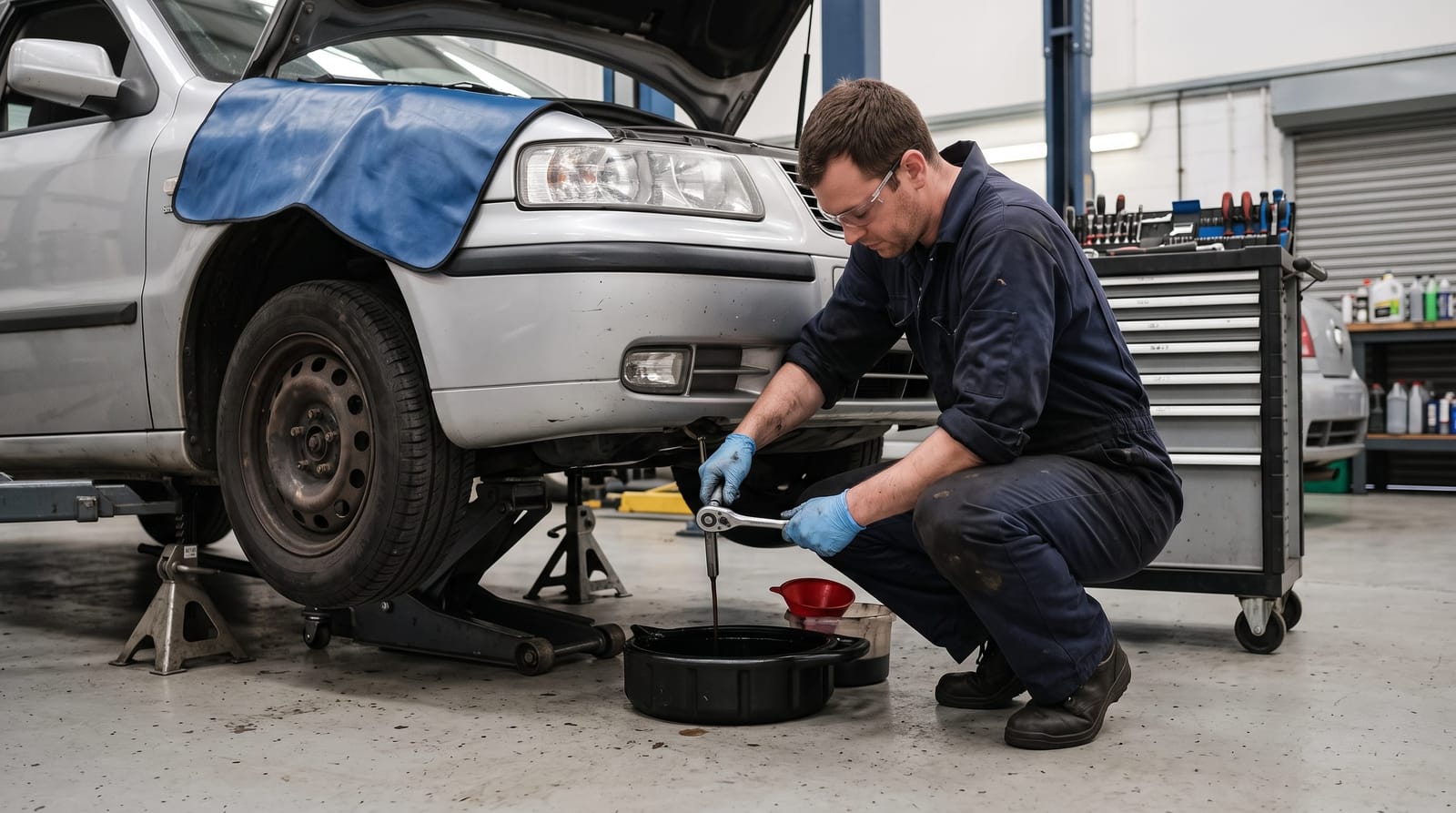
A drain-and-fill replaces the fluid that drains out
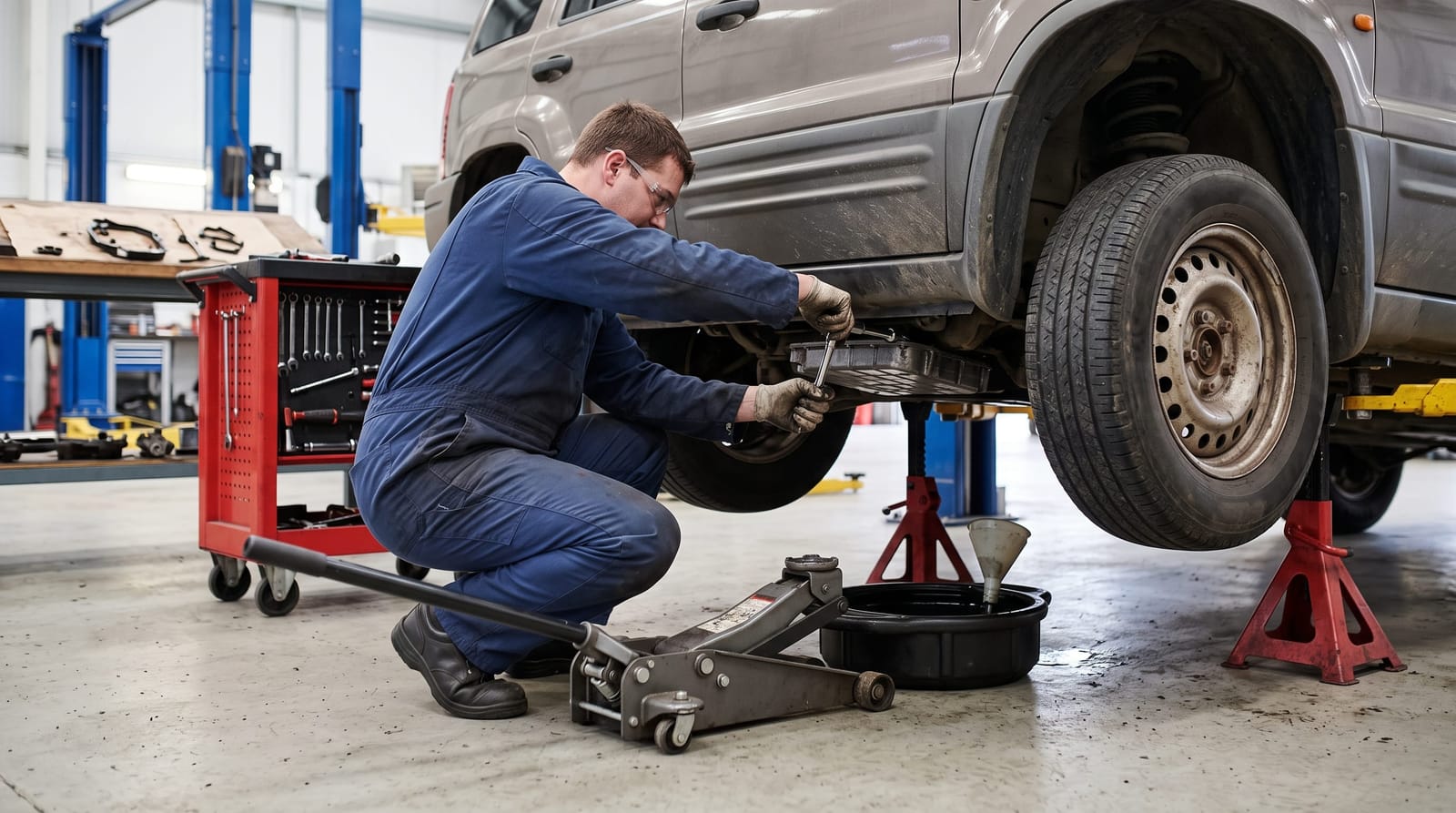
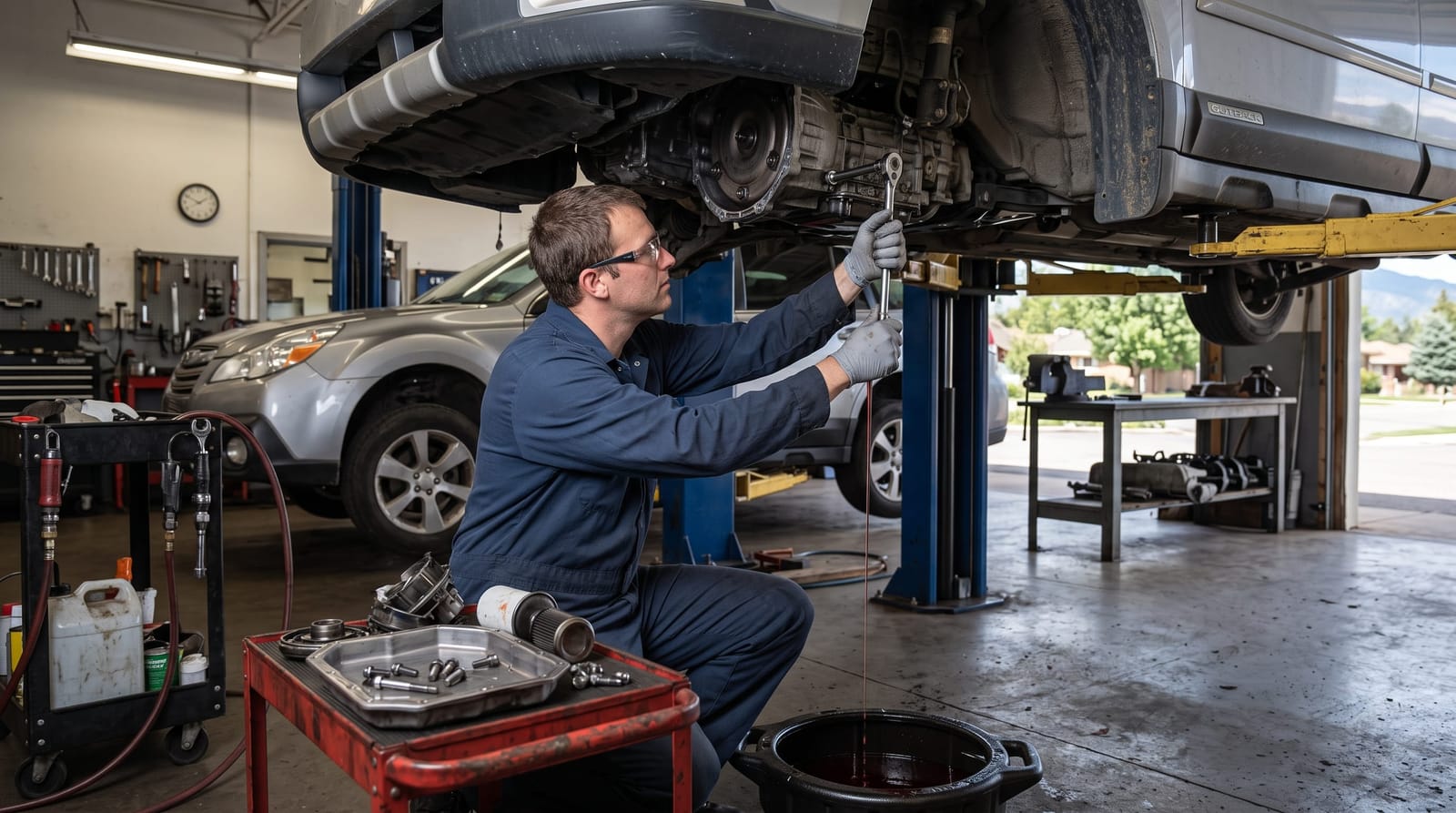
A drain-and-fill removes fluid through a drain plug or by removing the transmission pan, depending on the design. Some old fluid remains in components such as the torque converter, cooler, and fluid passages.
When the procedure includes pan removal, it may also allow inspection of the pan and magnets and replacement of an accessible filter. A basic drain through a plug does not necessarily include those tasks.
The tradeoff is straightforward: less fluid is exchanged at once, but pan service can provide useful information about the transmission’s condition.
A fluid exchange replaces a larger share of the fluid
An exchange uses an appropriate service procedure or equipment to replace a larger portion of the fluid circulating through the transmission. It does not necessarily mean every trace of old fluid is removed.
“Flush” can also refer to services involving cleaning chemicals or externally applied pressure. Those are not interchangeable with a manufacturer-supported fluid exchange. Before approving a flush, useful questions include:
- Does this procedure match the requirements for my specific transmission?
- Will it use cleaning chemicals?
- Does it include pan inspection and filter service, or only fluid replacement?
- What fluid specification will be used?
A more complete exchange is not automatically a more complete maintenance service if an applicable filter replacement is left out.
When Is Each Service Appropriate for a Diesel Truck?
Start with the exact transmission, not just the engine badge. Power Stroke, Cummins, and Duramax trucks span different model years and transmission designs. Fluid specifications, filter arrangements, level-check procedures, and maintenance requirements can differ.
A drain-and-fill or pan-and-filter service can be appropriate when it matches the manufacturer’s maintenance procedure, when filter replacement is due, or when inspecting the pan would help assess condition.
A fluid exchange may be appropriate for a normally operating transmission when the manufacturer supports that method and the required filter work is addressed separately or as part of the service. It is not automatically necessary at every fluid-change interval.
Towing and demanding operation also matter when selecting the maintenance schedule. Compare the truck’s actual use with the owner’s manual descriptions of normal and severe service rather than relying on one mileage interval for every diesel pickup.
Hypothetical example: Two identical trucks reach the same mileage. One mainly commutes unloaded; the other regularly pulls equipment. Their service timing may differ under the manufacturer’s maintenance guidance, but neither truck’s workload alone determines whether it needs a flush.
Is Flushing a High-Mileage Transmission Risky?
High mileage calls for a closer look, not an automatic yes or no. A regularly maintained transmission that shifts normally presents a different situation from one with unknown service history, slipping, or delayed engagement.
The debate often mixes up two issues: whether the transmission already has internal wear and whether the proposed service is appropriate. Fresh fluid cannot repair worn clutches or damaged internal parts. Likewise, old fluid is not a repair strategy for an already-failing unit.
A cautious evaluation considers:
- Service history: What fluid and filter work has been documented?
- Current operation: Are there shift changes, shuddering, slipping, or warning messages?
- Fluid and pan findings: Is there evidence that warrants further investigation?
- Service method: Does the proposed procedure fit the transmission?
Fluid appearance alone cannot establish internal condition. A technician may recommend diagnosis before maintenance when symptoms or inspection findings raise concerns. That is different from assuming that every high-mileage transmission will be harmed by new fluid.
When Diagnosis Comes Before a Flush
A fluid service belongs in a maintenance plan. It is not a reliable answer to every shifting complaint.
Delayed engagement, engine-speed flare during shifts, repeated temperature warnings, or loss of drive can have different causes. Depending on the symptoms, evaluation may include checking fluid level by the specified procedure, scanning for faults, inspecting for leaks, and testing operation.
A leak needs its own explanation, too. Replacing fluid without addressing where it escapes leaves the underlying problem unresolved. Our guide to transmission fluid leak repair in Fort Lupton, CO explains that separate service question.
If the truck loses propulsion or displays a serious temperature warning, consult a qualified automotive professional about safe transport and diagnosis rather than treating a flush as the next step.
What to Clarify About a CTDS Fluid Service
Colorado Transmission & Diesel Specialists offers transmission services. The exact fluid-service method for an individual truck needs confirmation with the shop; “flush” alone does not establish what an appointment includes.
For a useful service discussion, have the model year, mileage, towing use, service records, and any symptoms available. Then ask for the proposed scope:
- Identification of the transmission and required fluid specification.
- Whether symptoms need diagnosis before fluid replacement.
- Drain-and-fill, pan-and-filter service, or fluid exchange, and why.
- Which filters, seals, and inspection tasks are included.
- How the final fluid level and operation will be checked.
Correct fluid selection matters more than a generic “premium fluid” label. RepairPal’s fluid-change guidance also highlights selecting the correct fluid and having appropriate tools, though it is not a diesel-specific service procedure.
Frequently Asked Questions
Does a transmission flush include a new filter?
Not necessarily. A fluid exchange and filter replacement are separate tasks. The estimate can clarify which applicable filters are included and whether pan removal is part of the work.
Can a flush fix slipping?
A flush cannot repair worn internal components. Because slipping can have multiple causes, diagnosis is more useful than approving a fluid service as an assumed cure.
Can I compare quotes by price alone?
Only if the scope matches. Compare the fluid specification, exchange method, filter work, pan service, and diagnostic work. A passenger-car fluid-change estimate is not a dependable comparison for every heavy-duty diesel transmission.
The Right Service Starts With the Transmission
Diesel trucks need appropriate fluid maintenance, not an automatic flush recommendation. For the broader maintenance plan, use the truck’s transmission-specific interval and operating conditions as the starting point. Contact Colorado Transmission & Diesel Specialists to discuss the service scope for your truck; financing is available, with terms to confirm directly.