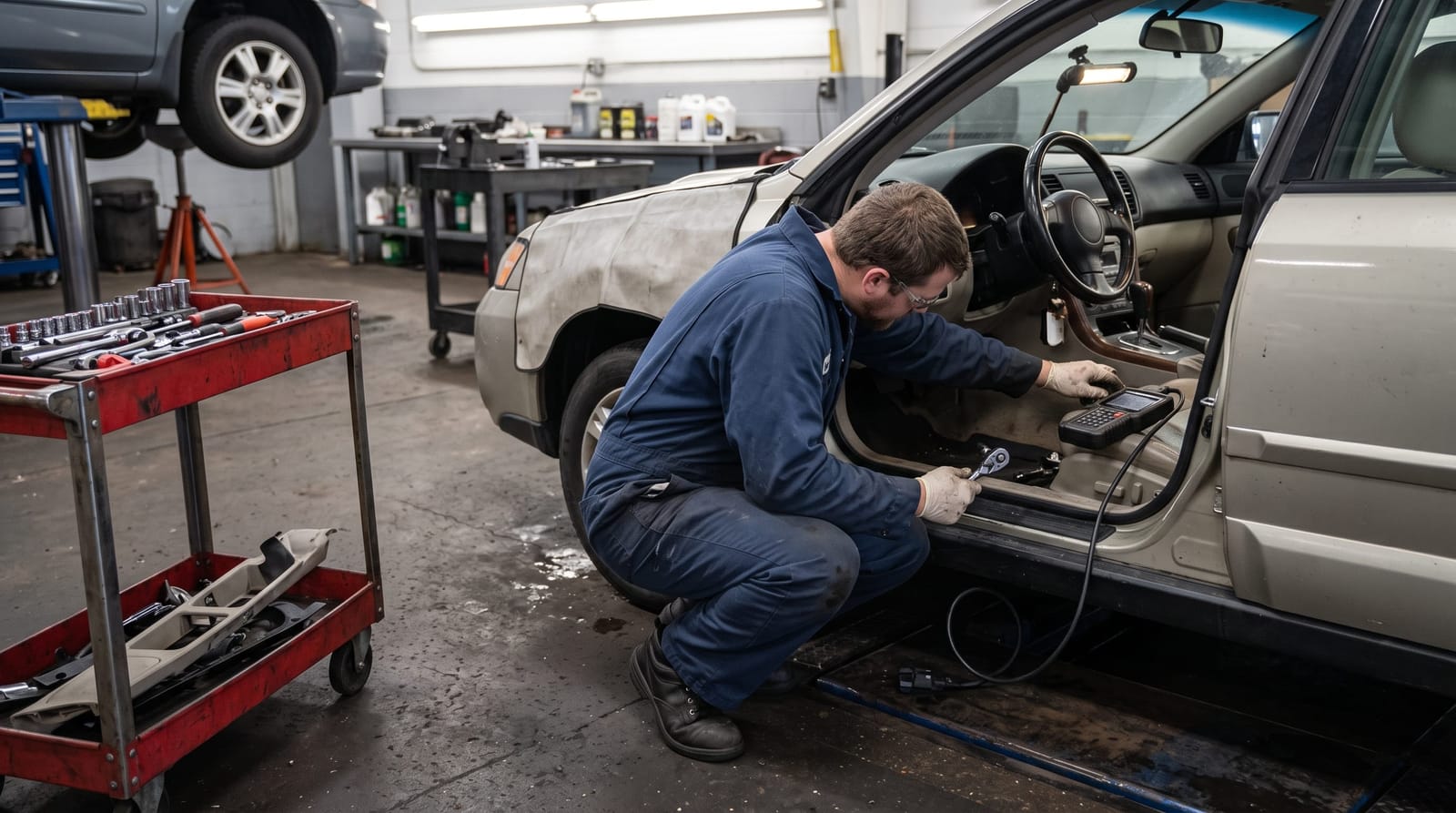
Diesel Truck Transmission Rebuild vs. Replacement: Which Makes Sense in Colorado?

A rebuild generally makes sense when your diesel truck’s existing transmission has usable major components and the work can address the cause of failure. A remanufactured replacement becomes more attractive when internal damage is extensive, rebuild costs approach the replacement quote, or a confirmed delivery date offers a practical downtime advantage.
Neither option wins automatically. For a truck towing around Fort Lupton or working across northern Colorado, the better choice depends on the diagnosis, repair scope, warranty, turnaround time, and condition of the rest of the vehicle. Here is how to compare the options within the broader diesel transmission repair process.
Rebuild vs. Replacement: What Are You Actually Buying?
“Replacement” describes installing another transmission, not necessarily a brand-new one. That distinction matters when comparing estimates.
| Option | What it involves | Main advantage | Main tradeoff |
|---|---|---|---|
| Rebuild your transmission | Remove, disassemble, inspect, and reassemble the existing unit with replacement parts as needed. | The repair scope can address the damage found in your unit. | Final scope and timing may depend on teardown findings. |
| Remanufactured replacement | Install a previously used transmission rebuilt through a supplier’s remanufacturing process. | A defined assembly and written warranty can make comparison easier. | Build standards, included components, and coverage vary by supplier. |
| New replacement | Install a new transmission, if available for the application. | A new assembly rather than a rebuilt used unit. | Availability and total installed cost may limit its appeal. |
| Used replacement | Install a salvage or otherwise previously used transmission. | Potentially lower initial assembly cost. | Service history, internal wear, and warranty protection may be uncertain. |
CTDS’s existing rebuild-versus-replacement overview describes rebuilding as a component-by-component inspection of the original transmission. For either a rebuild or remanufactured unit, the useful question is what parts, inspections, updates, and testing the estimate actually includes.
When Rebuilding the Existing Transmission Makes Sense
A rebuild is worth comparing when inspection indicates that the housing and other major components remain serviceable. It can also provide an opportunity to address application-specific wear or weaknesses rather than simply exchanging assemblies.
- The damage is repairable: Worn friction components and seals present a different scope from extensive damage to major internal assemblies.
- The failure has an identifiable cause: A useful proposal explains what failed and whether related hydraulic, electronic, cooling, or converter issues need attention.
- The build matches the truck’s use: Stock daily driving, frequent towing, and modified engine output are different operating conditions.
- The written scope is competitive: Compare included work and warranty protection, not just the headline price.
Updates need to be relevant to the actual transmission. For example, owners researching an applicable Ford transmission can explore Ford CDF drum bushing failure repair as a specific issue to discuss during diagnosis, not as an explanation for every Ford shifting complaint.
When a Remanufactured Replacement Makes More Sense
A remanufactured unit deserves closer consideration when a teardown reveals enough major-component damage to make rebuilding less competitive. It may also simplify scheduling if the correct assembly is available and the installation requirements are clear.
However, “remanufactured” alone does not establish quality. Useful comparison questions include:
- What does the supplier replace, inspect, and test?
- Is the torque converter included?
- Are relevant design updates documented?
- Does warranty coverage include removal and installation labor?
- Are towing, commercial use, or vehicle modifications subject to exclusions?
- Who handles a claim if a problem occurs away from the installing shop?
A replacement also needs the correct configuration for the truck. Transmission identification, drivetrain configuration, electronics, and programming requirements belong in the estimate. An assembly that appears similar is not enough to establish compatibility.
Colorado Cost Comparison: Compare Complete Jobs, Not Price Ranges
CTDS’s Colorado transmission rebuild cost overview gives a broad range of $1,400-$6,500. That is general published context, not a verified heavy-duty diesel quote. A separate Colorado Springs transmission repair guide also discusses pricing across different repair categories and vehicle types; its figures do not establish CTDS pricing.
For a diesel pickup, a useful comparison starts with itemized estimates for the same truck. There is no reliable universal rule that a rebuild always costs less than a remanufactured replacement.
Both estimates can be checked for:
- Diagnosis, removal, installation, and any teardown charges.
- Internal parts and torque converter work.
- Cooler and line inspection, cleaning, or replacement where needed.
- Fluid, filters, seals, programming, and relearn procedures where applicable.
- Freight, core charges, taxes, and warranty terms.
- Conditions that could change the quote after inspection.
Ask whether a replacement quote assumes your old transmission qualifies for full core credit. Likewise, a rebuild estimate benefits from explaining how additional internal damage would affect authorization and cost.
How Mileage, Truck Condition, and Downtime Change the Decision
Mileage provides context, but it cannot describe the whole truck. Engine condition, corrosion, transfer case and axle condition, service history, and unresolved repairs all affect whether a major transmission job fits the vehicle’s remaining role.
Hypothetical comparison: A higher-mileage truck with documented maintenance and no other major known problems may be a stronger repair candidate than a lower-mileage truck with significant engine concerns and structural corrosion. That does not make either repair automatically worthwhile; it changes what needs evaluation.
Downtime also deserves a separate comparison. A rebuild may depend on teardown and parts sourcing. A remanufactured replacement may depend on stock, shipping, installation capacity, and programming. A confirmed schedule is more useful than assuming replacement is always faster.
Resale value is one reference point, not the entire decision. The condition and uncertainty of a replacement vehicle also matter. These are general cost considerations, not financial advice; a licensed financial advisor can help evaluate financing or affordability for your circumstances.
What a Truck-Specific CTDS Evaluation Needs to Address
For a useful transmission-service discussion with Colorado Transmission & Diesel Specialists, the starting information includes the truck’s year, engine, mileage, symptoms, towing use, modifications, and previous repairs.
An individualized recommendation needs to connect the diagnosis to the proposed work: whether the problem requires a complete rebuild, why a replacement is being considered, what remains uncertain before teardown, and which related issues could affect the repair. A trouble code or shifting complaint alone does not explain the full internal condition.
CTDS offers transmission services and financing. Financing terms are a separate consideration from whether the proposed repair is technically appropriate; neither a payment amount nor an assembly price explains the complete job.
Frequently Asked Questions
Does a slipping diesel transmission always need rebuilding?
No. Slipping is a symptom, not a complete diagnosis. Fluid, control, hydraulic, and internal mechanical problems can require different work. Testing helps establish whether a targeted repair remains an option.
Is a remanufactured transmission automatically better than a local rebuild?
No. The meaningful differences are the inspection and build process, parts, testing, installation quality, and warranty. The label alone does not settle the comparison.
Does towing require a performance transmission build?
Not automatically. Actual loads, engine modifications, transmission condition, and intended use inform that discussion. Transmission upgrades do not change the truck’s manufacturer-rated towing limits.
Choose the Scope That Solves the Problem
The strongest rebuild-versus-replacement decision starts with a diagnosis and two comparable scopes of work, not a mileage cutoff or the lowest advertised price. For a truck-specific comparison, contact Colorado Transmission & Diesel Specialists to discuss transmission service, repair options, and what each estimate includes.