What Are the Signs of a Failing Transmission on a Diesel Truck?
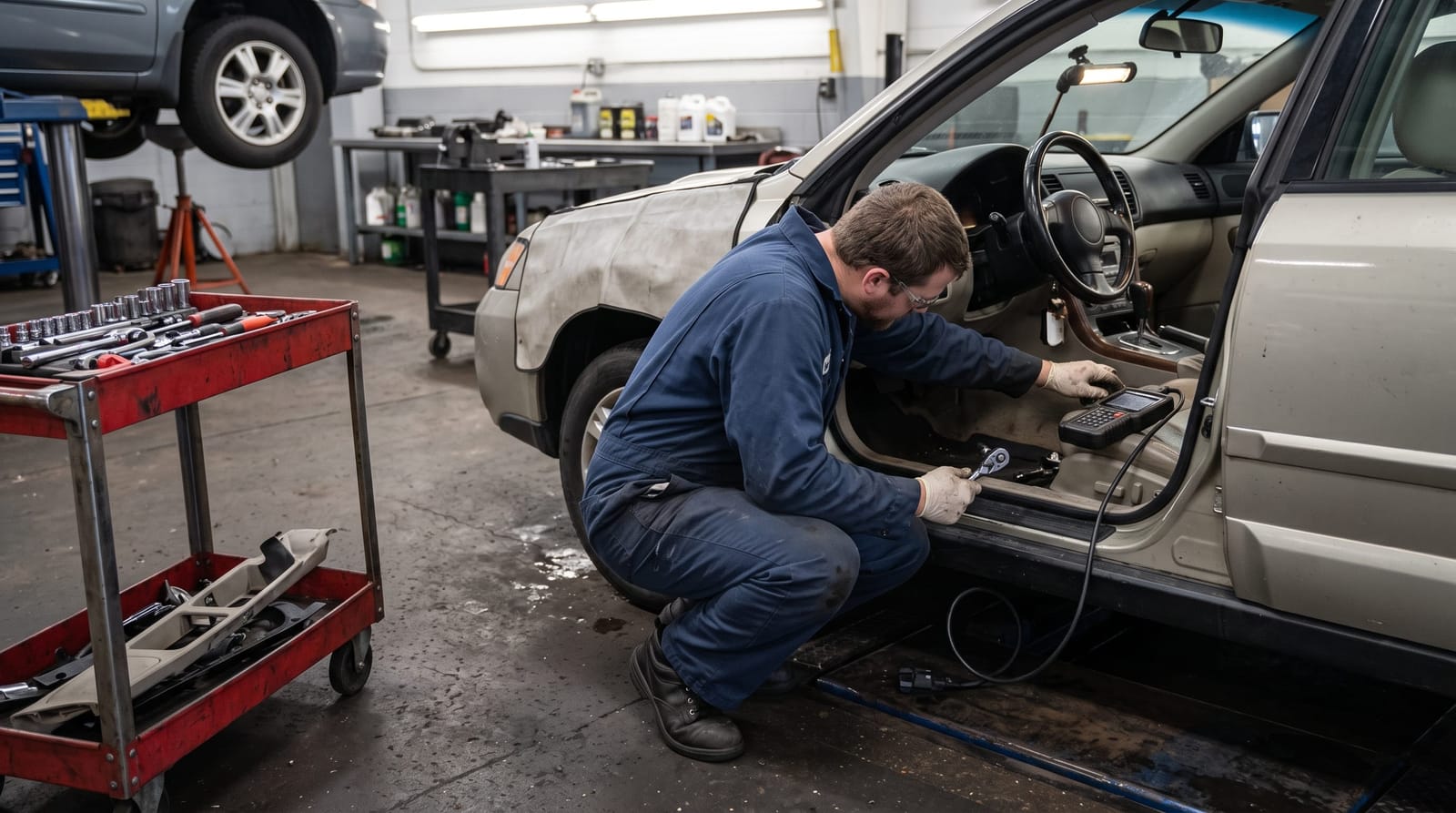
If you haul heavy loads across Colorado's Front Range, your diesel truck's transmission is working harder than most drivers realize. From high-altitude grades on I-25 to gravel county roads in Weld County, the demands on a diesel drivetrain are relentless. Recognizing transmission problems symptoms early, before a minor issue becomes a full rebuild, can save you thousands of dollars and weeks of downtime. This guide walks you through the essential warning signs diesel truck owners need to know, with platform-specific context for Powerstroke, Cummins, and Duramax trucks.
1. Harsh or Erratic Shifting
One of the most common transmission problems symptoms Colorado diesel owners report is harsh, jerky, or unpredictable shifting. This isn't the normal firm shift you'd expect from a heavy-duty transmission: it's a violent clunk or lurch that you feel in the cab.
What it feels like on each platform:
- Powerstroke (6.0L, 6.4L, 6.7L): Hard shifts between 2nd and 3rd are common when the transmission control module receives inconsistent data from a failing solenoid or dirty fluid.
- Cummins (5.9L, 6.7L): Paired with the 68RFE or 48RE, harsh downshifts under load are often the first symptom owners notice, especially when descending grades near Fort Collins or Greeley.
- Duramax (LBZ, LML, L5P): The Allison 1000 typically masks problems longer than other transmissions, but band wear and clutch pack degradation eventually show up as rough 1-2 shifts.
Harsh shifting is often your transmission telling you it's running on degraded fluid, worn clutch packs, or a faulty pressure control solenoid. Don't ignore it: this symptom tends to escalate quickly under towing conditions.
2. Slipping Gears or Delayed Engagement
Transmission slipping is exactly what it sounds like: your engine revs up, but the truck doesn't accelerate in proportion. The torque is there, but something is interrupting its transfer to the wheels. Slipping is one of the most serious transmission problems symptoms because it signals direct mechanical or hydraulic failure inside the unit.
Watch for these specific indicators:
- Engine RPMs climb without a matching increase in vehicle speed
- Delayed engagement when shifting from Park into Drive or Reverse, especially after sitting overnight in Colorado's cold winters
- Momentary loss of power mid-shift, followed by a sudden "catch" that jolts the truck
- The transmission hunting between gears, unable to hold a ratio under load
For diesel trucks doing real work, towing fifth wheels, hauling construction materials, or running loaded on Weld County roads, a slipping transmission is a stop-driving situation. Continuing to operate under load when the transmission is slipping accelerates internal damage rapidly. If you're experiencing these transmission problems symptoms, understanding what causes transmission slipping in diesel trucks is the next step before seeking service.
3. Overheating and Burning Smells
Transmission fluid operates best in a specific temperature range. Diesel trucks towing heavy loads on Colorado's mountain corridors, or even long flat hauls in summer heat, push transmission temps well above that range. When fluid breaks down from heat, it stops lubricating and cooling effectively, and the damage compounds fast.
Key overheating warning signs to look for:
- A sharp, acrid burning smell, often described as "hot oil" or "burnt clutch", coming from underneath the truck
- Transmission temperature gauge (if equipped) reading above normal operating range
- Dark brown or black transmission fluid instead of the correct red or pink color
- The transmission entering limp mode, restricting the truck to a single gear for self-protection
Cummins and Powerstroke owners running stock transmission coolers are especially vulnerable during summer towing season along the I-76 corridor. The Allison behind a Duramax runs cooler by design, but neglected fluid intervals eliminate that advantage quickly. Burned fluid is not a flush-and-fill fix: it indicates that internal components have already been subjected to damaging heat cycles.
4. Fluid Leaks and Low Fluid Levels
Transmission fluid doesn't evaporate. If your level is dropping, there's a leak somewhere in the system. Running low on fluid causes a cascade of transmission problems symptoms: pressure drops, clutch packs run dry, and overheating follows almost immediately.
Where to look for transmission leaks on diesel trucks:
- Pan gasket: The most common leak point: look for red fluid pooling directly under the transmission pan
- Front pump seal: Leaks here show up near the bellhousing and are often misidentified as engine oil
- Cooler lines: On 6.0L Powerstrokes and older 48RE Cummins applications, corroded or cracked cooler lines are a frequent culprit
- Output shaft seal: Fluid leaking toward the rear of the transmission, near the driveshaft yoke
Check your fluid condition and level at every oil change interval. Fresh transmission fluid should be red and nearly transparent. If it looks dark, smells burnt, or has a gritty texture, that's as important a warning sign as the leak itself.
5. Warning Lights and Fault Codes
Modern diesel trucks: particularly post-2007 Powerstrokes, 2007.5+ Cummins, and all Duramax trucks: have sophisticated transmission control systems that log fault codes long before mechanical failure is obvious. A check engine light or transmission warning light isn't something to clear and ignore.
Common transmission-related codes by platform:
- 6R140 (Powerstroke): P0730 (incorrect gear ratio), P0741 (torque converter clutch circuit), P0868 (line pressure low)
- 68RFE (Cummins): P0700 (TCM malfunction), P0871 (OD pressure switch rationality), P2714 (pressure control solenoid)
- Allison 1000 (Duramax): P0218 (transmission over temperature), P0751 (shift solenoid A performance)
The diagnostic scan is one of the most cost-effective steps you can take, it costs a fraction of what a full rebuild runs, and it tells you exactly where the problem is starting. Learning how diesel transmission diagnostics work helps you understand what your shop finds and why the recommended repair makes sense.
Frequently Asked Questions
How do I know if my diesel truck's transmission is slipping or if it's an engine power issue?
Watch your RPM gauge during acceleration. If RPMs climb significantly but vehicle speed doesn't match, especially under load, that's a transmission slip. An engine power issue typically causes both RPMs and speed to respond sluggishly together. A diagnostic scan can confirm which system is at fault.
Can cold weather in Colorado cause transmission problems symptoms that aren't actually serious?
Yes: cold fluid is thicker and takes time to circulate properly. Mild delayed engagement in the first few minutes on a sub-zero morning can be normal. However, if symptoms persist after the truck reaches operating temperature, that's a genuine warning sign worth having checked. Diesel trucks in northern Colorado see wide temperature swings that accelerate fluid degradation.
How often should I service the transmission on my diesel tow rig?
Most diesel truck manufacturers recommend transmission service every 30,000 to 50,000 miles under normal conditions, but "normal" doesn't include regular towing, off-road use, or frequent mountain driving. Many experienced diesel owners and shops in Colorado recommend service intervals closer to every 30,000 miles for trucks doing real work. Consult your owner's manual and discuss your specific usage with a qualified transmission specialist.
Is limp mode a transmission problem or an engine problem?
Limp mode can be triggered by either system, or by the vehicle's control module detecting a conflict between the two. When a transmission enters limp mode, it locks into a single forward gear to prevent further damage. Always pull codes immediately: don't just clear the light and hope it goes away.
Conclusion
The transmission problems symptoms covered here, harsh shifts, slipping, overheating, fluid leaks, and warning codes, are your diesel truck's way of signaling that something needs attention before it becomes catastrophic. Colorado's towing demands and temperature extremes make early detection even more important for Powerstroke, Cummins, and Duramax owners in Weld County and the North Denver area. If you're seeing any of these warning signs, the right move is a professional diagnostic, not a wait-and-see approach. For a full picture of diesel drivetrain service, explore our complete guide to diesel truck transmission service and repair.