Brake Caliper & Brake Line Repair in Fort Lupton: When It's More Than Just Pads
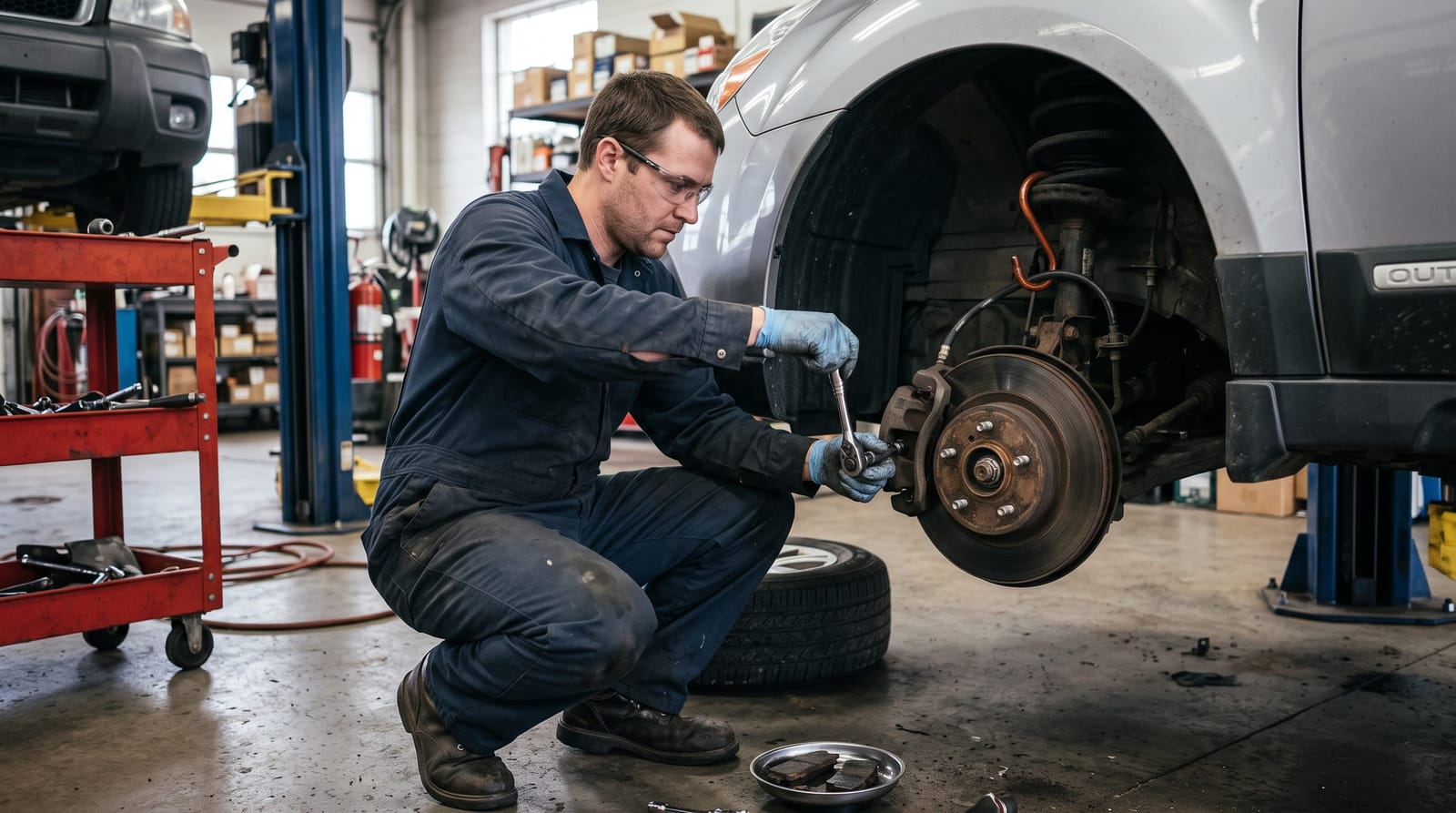
Most drivers think of brake service as a straightforward job: worn pads get swapped out, maybe the rotors get resurfaced, and you're back on the road. That's true in many cases. But the brake system is far more complex than just friction materials and spinning discs. When you need brake caliper repair in Fort Lupton, CO, or when a brake line develops a slow leak or the master cylinder starts failing, the consequences go well beyond a little extra stopping distance. These are hydraulic failures, and hydraulic failures can mean you press the pedal and very little happens. Our broader guide to brake pad rotor replacement Brighton CO covers the components most drivers know. This guide covers the ones most drivers don't, until something goes wrong.
Understanding How the Full Brake System Actually Works
Before diagnosing what's broken, it helps to understand what's supposed to be working. Your vehicle's braking system is a hydraulic circuit. When you press the brake pedal, you're pushing a piston inside the master cylinder, which forces brake fluid through steel and rubber lines to the brake calipers at each wheel. The caliper then squeezes its pistons inward, pressing the brake pads against the rotor. That friction is what slows the vehicle.
This means every component in the chain matters. The pads and rotors get most of the attention because they wear out most frequently: according to industry estimates, brake pads typically last between 30,000 and 70,000 miles depending on driving habits and terrain. But the hydraulic components, calipers, brake lines, and the master cylinder, are just as critical and just as vulnerable to failure. They simply fail in less obvious ways.
Why Colorado Conditions Accelerate These Problems
Fort Lupton and the surrounding Weld County area sit at around 4,900 feet elevation, experience significant temperature swings between seasons, and see road salt and de-icing chemicals applied throughout winter months. These conditions accelerate two of the most common hydraulic brake failures: corrosion in steel brake lines and moisture contamination in brake fluid. Vehicles that primarily see highway driving between communities like Brighton, Greeley, and Denver accumulate high-speed brake stress that also taxes calipers more aggressively than stop-and-go city driving.
Brake Caliper Failure: Stuck, Seized, and Leaking
The brake caliper is a hydraulically actuated clamp. Inside the caliper housing, one or more pistons are pushed outward by brake fluid pressure to clamp the pads against the rotor. When you release the pedal, the pistons retract slightly, releasing clamping pressure. When a caliper fails, it typically fails in one of two ways: it sticks in the applied position (seized caliper) or it leaks fluid past a failed piston seal.
Symptoms of a Stuck or Seized Caliper
A seized caliper is dangerous and deceptive. Because the brake pad stays in constant contact with the rotor, the wheel is effectively being partially braked all the time. Drivers often notice:
- The vehicle pulls strongly to one side while braking or even while simply driving
- One wheel or brake area feels significantly hotter than the others after driving
- A burning smell, particularly from one corner of the vehicle, that intensifies after highway driving
- Accelerated and uneven wear on one set of brake pads (sometimes down to metal within 5,000-10,000 miles)
- Reduced fuel economy, because the engine is fighting constant drag from the dragging brake
In severe cases, a seized caliper can overheat brake fluid, causing temporary brake fade or, in worst-case scenarios, brake failure. It can also warp rotors in as little as a single highway trip under seized-caliper conditions, turning what might have been a caliper-only repair into a caliper-and-rotor job.
Symptoms of a Leaking Caliper
A leaking caliper piston seal allows brake fluid to weep past the piston. Signs include brake fluid visible on the inside of a wheel, a soft or spongy brake pedal that gradually worsens, or a low brake fluid warning light that appears without any obvious external leak source. A leaking caliper also contaminates brake pads: oil-soaked pads lose effectiveness almost immediately and must be replaced along with the caliper.
Caliper Replacement vs. Rebuilding
In most modern shop environments, calipers are replaced as units rather than rebuilt on-site. Replacement calipers are available as new or remanufactured units. It's generally recommended that calipers be replaced in axle pairs, meaning if the left front caliper fails, both front calipers are replaced, to ensure balanced braking performance from side to side. A thorough diagnostic inspection, like the one described in our post on brake inspection what is checked Fort Lupton, will confirm whether one or both calipers on an axle need attention.
Brake Line Corrosion and Leaks: The Hidden Danger Underneath Your Vehicle
Steel brake lines run the length of your vehicle's undercarriage, carrying pressurized brake fluid from the master cylinder to each wheel. These lines are coated and protected from the factory, but that protection degrades over time, especially in climates where road salt is used in winter, as it is throughout northern Colorado. According to the National Highway Traffic Safety Administration (NHTSA), brake line corrosion is one of the leading causes of brake-related safety recalls on vehicles with 10 or more years of service in salt-belt regions.
What Brake Line Corrosion Looks Like
Brake lines corrode from the outside in. Surface rust is common and not immediately dangerous. But when corrosion penetrates the line wall, it creates a pinhole or hairline fracture through which brake fluid escapes under pressure. Because brake lines run along the frame and undercarriage, out of easy view, this type of leak can go undetected for a long time. Symptoms include:
- A gradual drop in the brake fluid reservoir level with no visible external leak at wheel cylinders or calipers
- A spongy or low-feeling brake pedal that slowly gets worse over days or weeks
- Visible fluid residue, staining, or wet spots along the undercarriage frame rails
- Brake warning light illumination due to low fluid
Rubber brake hoses, the flexible sections that connect steel lines to calipers at each wheel, are also vulnerable. They can crack, blister internally, or collapse in a way that restricts fluid flow even when they look intact from outside. A hose that allows fluid out but restricts flow back can actually mimic a seized caliper in behavior.
Repair Approaches for Brake Lines
Short sections of damaged steel line can sometimes be spliced and repaired with new line and compression fittings, though many shops and vehicle manufacturers prefer full line replacement for structural integrity. Flexible brake hoses are replaced as individual sections. Any brake line repair should be followed by a full system bleed to remove air from the hydraulic circuit, and this is also an excellent time to address brake fluid flush service Fort Lupton CO, since lines that have corroded often indicate fluid that's been absorbing moisture for years.
Master Cylinder Problems: When the Failure Starts at the Source
The master cylinder is the hydraulic heart of your brake system. It converts the mechanical force of your foot pressing the pedal into hydraulic pressure that travels to every corner of the vehicle. Most modern vehicles use a tandem (dual-circuit) master cylinder, which maintains two separate hydraulic circuits so that a failure in one circuit doesn't eliminate braking entirely: typically one circuit serves the front brakes and one serves the rear.
Signs the Master Cylinder Is Failing
Master cylinder failures are among the most alarming brake problems because they affect the entire system simultaneously. Warning signs include:
- Brake pedal sink: The pedal slowly sinks toward the floor when held with steady pressure, even though the fluid level is normal. This is a classic internal master cylinder leak (fluid bypassing the piston seals internally).
- Contaminated brake fluid: A failing master cylinder can allow rubber seal material to degrade into the brake fluid, turning it dark brown or black and contaminating the entire hydraulic system.
- Uneven brake bias: If one circuit within the master cylinder fails before the other, braking performance becomes lopsided: the vehicle may pull hard to one side under braking.
- External fluid leak: Fluid leaking from the back of the master cylinder, toward the brake booster, indicates seal failure.
Master Cylinder and Brake Booster: Two Components, One Assembly Area
The master cylinder mounts directly to the brake booster, which uses engine vacuum (or an electric pump on hybrid and electric vehicles) to multiply pedal force. A failing brake booster doesn't cause hydraulic failure, but it dramatically increases the foot force required to stop the vehicle: sometimes described as brakes that feel "rock hard." Because these two components are adjacent and often inspected together, diagnosing one typically means evaluating the other at the same time.
Why a Thorough Diagnostic Approach Matters for Complex Brake Repairs
The reason brake caliper, brake line, and master cylinder problems get missed isn't that they're invisible: it's that they're easy to misread without a complete inspection. A vehicle with a seized caliper might get new pads installed on the dragging side without anyone identifying why those pads wore out in 8,000 miles instead of 40,000. A brake line with a small weep can be overlooked during a quick pad check if no one gets under the vehicle and traces the lines. A master cylinder with internal bypass might register as a "soft pedal" that gets attributed to air in the lines, only to return weeks after the bleeding.
This is exactly why the diagnostic process matters as much as the repair itself. At CTDS, every brake concern begins with a systematic inspection that evaluates not just pad thickness and rotor condition but hydraulic components, line integrity, caliper function, and fluid quality. It's the kind of complete picture that prevents a $180 pad job from masking a $600 problem underneath.
For drivers who operate truck brake service Weld County CO, diesel pickups and heavy-duty work trucks, this comprehensive approach is even more critical. Higher vehicle weights place proportionally greater stress on calipers and brake lines, and the consequences of a hydraulic failure on a loaded truck are significantly more severe than on a passenger car.
Related Topics Worth Knowing
Understanding brake caliper and line repair is part of a broader knowledge base around your vehicle's complete braking system. Several related topics expand on specific elements covered here:
- What a mechanic checks during a brake inspection, If you're unsure what a thorough brake evaluation actually involves, our guide on brake inspection what is checked Fort Lupton walks through each step a trained technician takes to assess pad life, rotor condition, hydraulic integrity, and more.
- Brake fluid condition and contamination: Moisture-contaminated fluid is both a symptom and a cause of hydraulic component failure. Understanding fluid service is essential context for any caliper or line repair.
- Brake warning lights and what they mean: The ABS warning light, brake fluid warning, and brake pad wear indicator each point to different parts of the system and shouldn't be treated as interchangeable alerts.
The Bottom Line: Brake Problems Don't Always Start With the Pads
Brake pad wear is the most common brake service need, but it's not the only one. Seized or leaking calipers, corroded or fractured brake lines, and failing master cylinders represent a category of brake problems that are less visible, less discussed, and potentially more dangerous than worn friction material. In Fort Lupton and across Weld County, Colorado's climate and road conditions accelerate exactly these kinds of hydraulic failures.
If your brakes feel different, softer, harder, pulling, or inconsistent, don't assume it's just the pads. A thorough inspection is the only way to know for certain what the system actually needs. Contact CTDS to schedule a complete brake diagnostic in Fort Lupton and get a full picture of your vehicle's brake health before a small problem becomes a serious one.