Brake Service & Repair in Fort Lupton, CO: Everything You Need to Know to Stay Safe on Colorado Roads
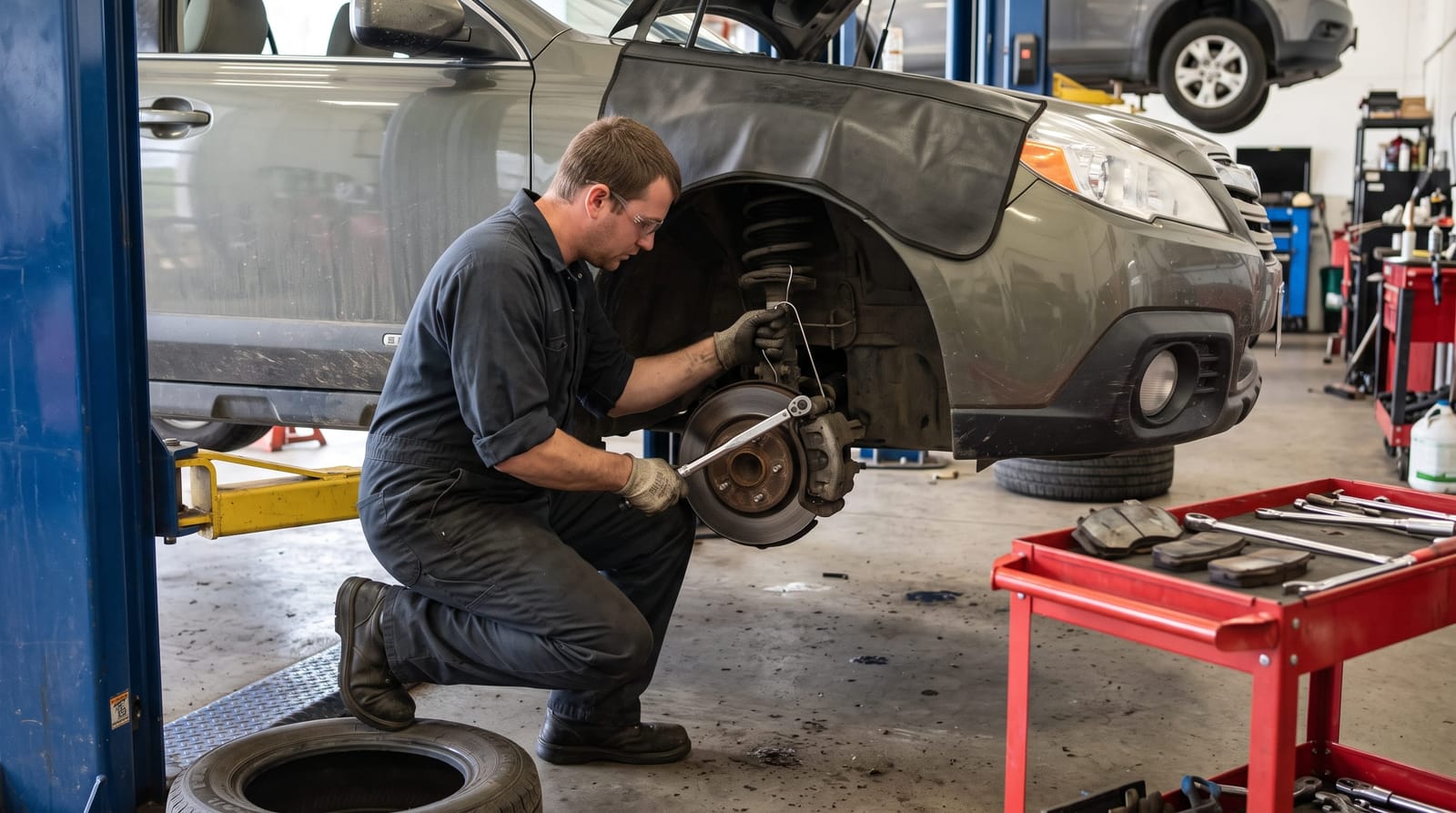
Picture this: you're heading south on Highway 85 after a long day, the kids are in the back seat, and a deer steps onto the shoulder ahead. You press the brake pedal and feel it pulse awkwardly under your foot, or worse, sink toward the floor. In that moment, everything you thought you knew about your vehicle's maintenance suddenly matters more than ever.
Brake failure is not a hypothetical. According to the National Highway Traffic Safety Administration (NHTSA), brake-related issues contribute to approximately 22% of all vehicle crashes caused by mechanical failure in the United States. And yet, brake service remains one of the most commonly deferred maintenance items among everyday drivers, often because people aren't sure what to watch for, what service actually costs, or how urgently a problem needs attention.
This comprehensive guide to brake repair in Fort Lupton, CO covers everything local drivers need to know: warning signs you should never ignore, a breakdown of every major brake service, how often different components need attention, what happens when repairs are postponed, and where to get reliable help whether you drive a daily commuter car or a heavy-duty diesel work truck. If you live in Fort Lupton, Brighton, Firestone, Erie, or Frederick, this guide was written with your roads, and your safety, in mind.
How Your Brake System Actually Works (And Why It's More Complex Than You Think)
Most drivers think of brakes as a simple on/off system: you push, you stop. In reality, your brake system is a precisely engineered network of hydraulic, mechanical, and friction components that must work in perfect coordination every time you slow down. Understanding the basics helps you recognize problems early and communicate clearly with your mechanic.
The Core Components
A modern passenger vehicle brake system includes the following key parts:
- Brake pads: Friction material that clamps against the rotor to create stopping force. Most pads last between 25,000 and 65,000 miles depending on driving habits and pad material.
- Rotors (brake discs): The large metal discs that spin with your wheels. Pads press against them to create friction. Rotors typically last 30,000 to 70,000 miles but can warp or wear thin sooner under heavy braking conditions.
- Calipers: Hydraulically actuated clamps that squeeze the brake pads against the rotor. A seized or leaking caliper is a serious safety issue.
- Brake lines and hoses: Carry brake fluid from the master cylinder to each wheel. Even small leaks can cause significant drops in braking performance.
- Master cylinder: The heart of the hydraulic system. When you press the brake pedal, the master cylinder pressurizes fluid and sends it through the lines to each caliper.
- Brake fluid: A hydraulic fluid that transfers pedal force through the system. It absorbs moisture over time, which lowers its boiling point and can cause brake fade.
- ABS module: Anti-lock braking system components prevent wheel lockup during hard stops, helping you maintain steering control.
Colorado's terrain adds unique stress to every one of these components. Long descents from higher elevations, even moderate ones around Weld County, generate heat that accelerates pad and rotor wear. Seasonal temperature swings between harsh winters and hot summers can cause brake fluid to absorb moisture faster and brake lines to expand and contract repeatedly over time.
Warning Signs Your Brakes Need Attention Now
One of the most valuable things any driver can do is learn to recognize brake warning signs before a small repair becomes a dangerous situation or a much larger bill. Many brake problems announce themselves clearly if you know what to listen and feel for.
Sounds That Signal Trouble
- Squealing or squeaking: A high-pitched squeal during braking is often the wear indicator: a small metal tab built into the pad that contacts the rotor when the friction material gets low. This sound means service is needed soon.
- Grinding: A metal-on-metal grinding noise typically means your pads are completely worn through and the backing plate is contacting the rotor directly. This causes rotor damage and requires immediate attention.
- Clicking or rattling: Loose brake hardware, a failing caliper, or improperly seated pads can produce clicking noises when braking or releasing the pedal.
Physical Sensations to Watch For
- Vibration or pulsing in the pedal: This often indicates warped rotors: a common result of extended hard braking or rapid cooling of hot rotors (like driving through a puddle after aggressive braking).
- Soft or spongy pedal: If the brake pedal feels mushy or travels closer to the floor than usual, you may have air in the brake lines or a fluid leak. This is a serious concern that warrants prompt inspection.
- Pulling to one side: When a vehicle drifts left or right during braking, it often points to uneven pad wear, a stuck caliper, or a brake line restriction on one side.
- Increased stopping distance: If your vehicle is taking noticeably longer to stop, brake performance has already degraded. Don't wait to get this checked.
- Brake warning light: Modern vehicles monitor brake pad thickness and fluid pressure electronically. A lit brake warning light should not be dismissed as a sensor glitch until a technician confirms otherwise.
If you experience more than one of these symptoms simultaneously, treat it as an urgent situation and schedule an inspection immediately. A complete brake inspection at a qualified shop takes less than an hour and gives you a clear picture of exactly where you stand.
Brake Service Intervals: How Often Do You Actually Need Service?
There's no single universal answer to how often brakes need service: it depends on your vehicle, driving style, the terrain you drive, and what type of brake components are installed. But there are general benchmarks that help Fort Lupton area drivers plan ahead and avoid being caught off guard.
General Service Guidelines
- Brake inspections: At minimum once per year, or every 12,000 miles. Many drivers schedule this with their annual tire rotation.
- Brake pads: Typically every 25,000-65,000 miles. City driving with frequent stops wears pads faster than highway driving. Drivers who regularly haul trailers or heavy loads should expect the lower end of that range.
- Rotors: Often replaced at the same time as pads, or when they measure below the minimum thickness specification. A technician should measure rotor thickness during every inspection.
- Brake fluid flush: Most manufacturers recommend every 2 years or 30,000 miles, though fluid condition should be tested during each inspection. Fluid that has absorbed excessive moisture should be replaced regardless of mileage.
- Caliper service: Calipers don't follow a fixed interval but should be inspected with every pad replacement. Sliding pins need lubrication; seized calipers need rebuilding or replacement.
- Brake line inspection: Every 3-4 years, or whenever any brake component is serviced. Steel lines can corrode from road salt; rubber hoses can crack or swell internally over time.
Colorado-Specific Factors That Accelerate Wear
Drivers in and around Fort Lupton should factor in several regional conditions that can shorten typical service intervals:
- Road salt and brine used during winter maintenance accelerate corrosion on brake lines, calipers, and rotors
- Significant temperature swings between seasons stress hydraulic components and brake hoses
- Rural routes with higher speed limits mean harder braking at intersections and stop signs
- Drivers who tow trailers, livestock, or equipment put substantially more demand on all brake components
The Full Range of Brake Services Explained
When you bring your vehicle in for brake repair in Fort Lupton, CO, the services available go well beyond simply swapping out pads. A full-service brake shop should be equipped to handle every component in the system.
Brake Inspection
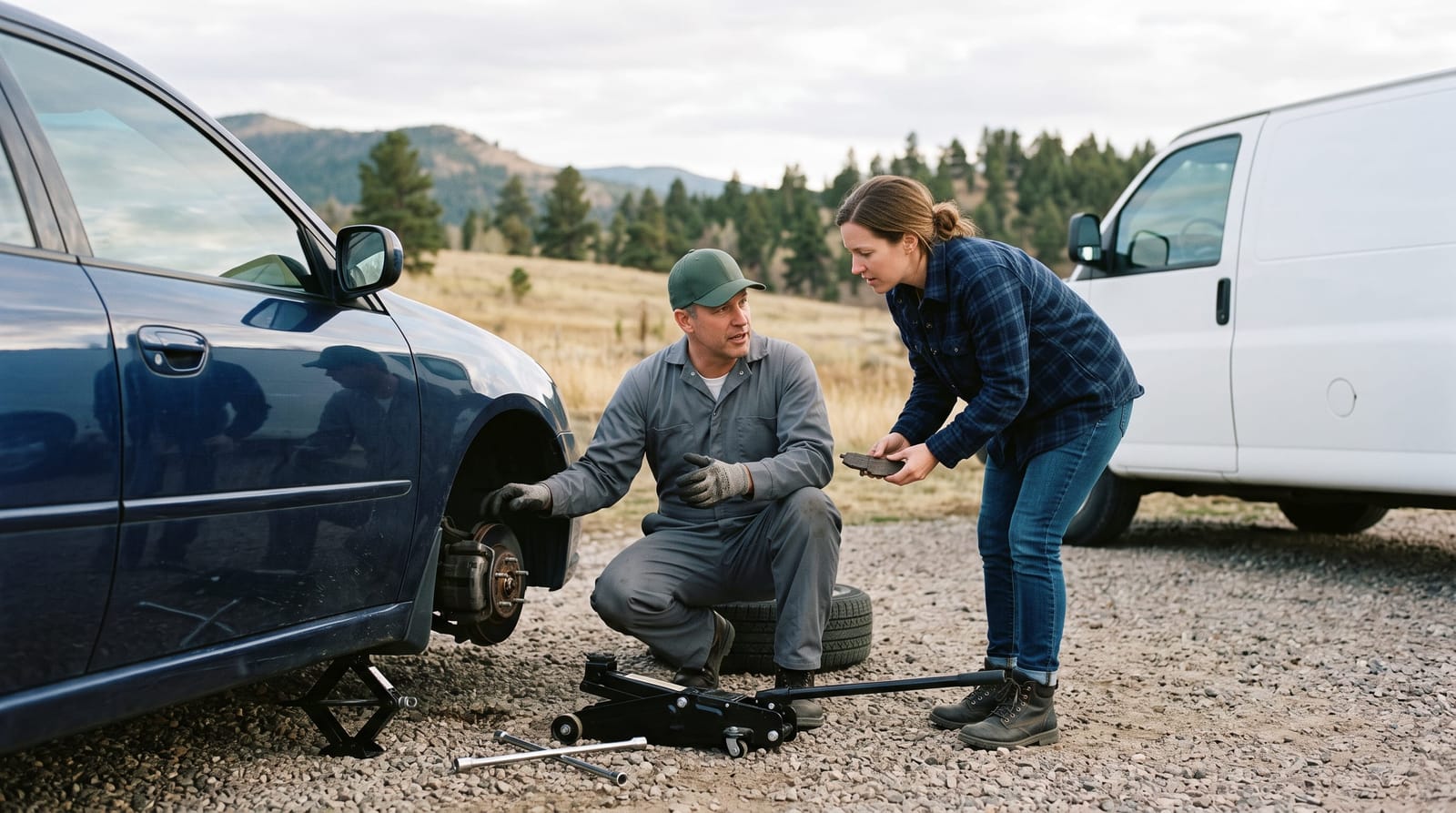
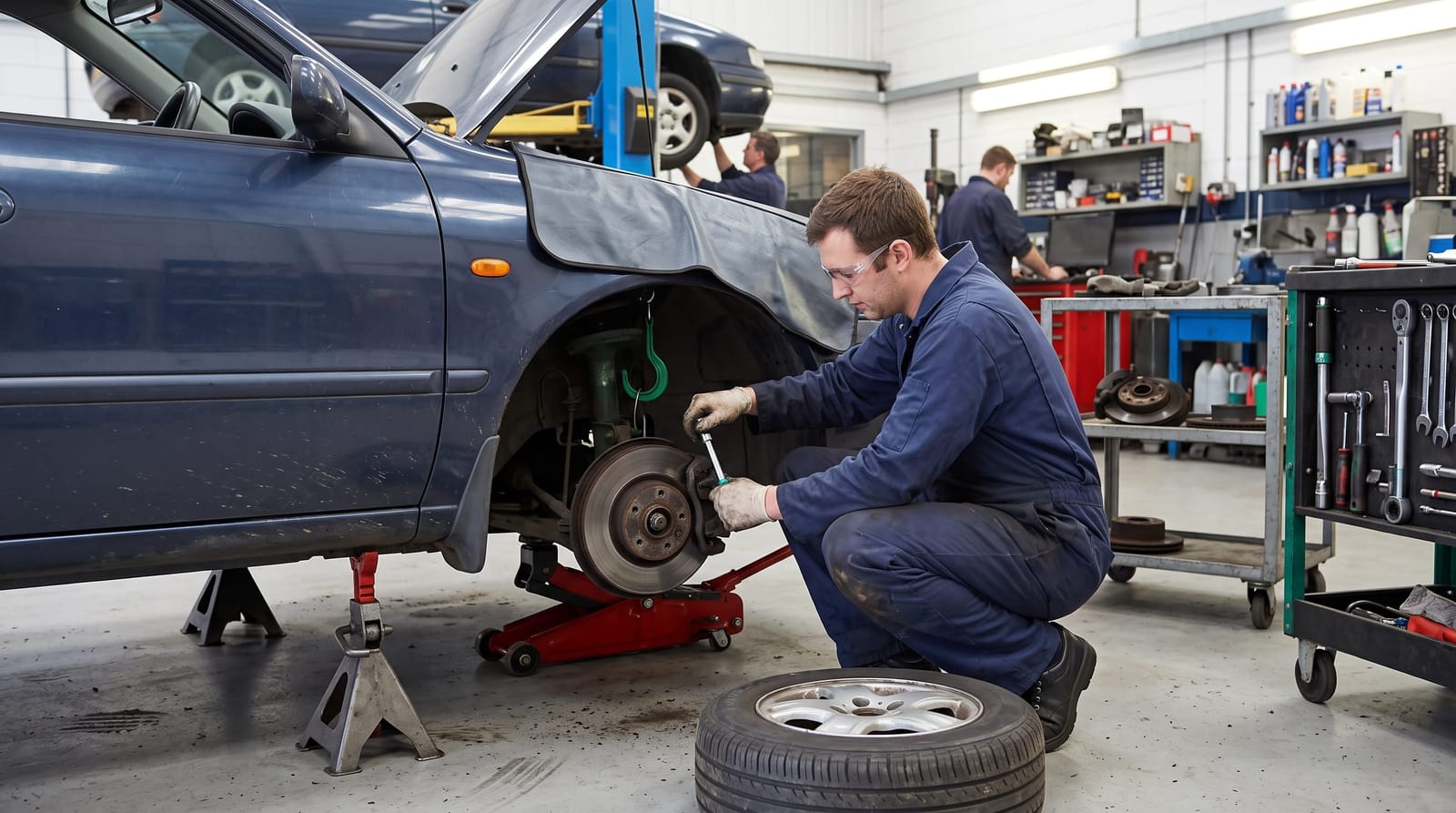
A proper brake inspection involves removing wheels to physically measure pad thickness and rotor depth, checking caliper slide pins, inspecting brake lines and hoses for cracks or leaks, testing pedal feel, and evaluating brake fluid condition. A visual check from outside the wheel is not a complete inspection. Ask specifically whether the wheels will be removed.
Brake Pad Replacement
Pad replacement is the most frequent brake service. New pads are installed, and rotor condition is evaluated to determine whether resurfacing or replacement is also needed. Brake hardware, the small clips and shims that hold pads in place, should be replaced at the same time to ensure proper seating and prevent noise.
Rotor Resurfacing or Replacement
If rotors have enough material remaining, they can sometimes be resurfaced (machined flat) to restore proper contact. However, many shops, and most manufacturers, recommend replacing rotors along with pads because new pads bed into new rotors more efficiently and the cost difference is often minimal compared to the labor involved in doing the job twice.
Caliper Service and Replacement
A seized or leaking caliper is more than an inconvenience: it can cause the vehicle to pull dangerously during braking and significantly increase stopping distance. Caliper service ranges from cleaning and lubricating slide pins to full caliper replacement when internal components have failed.
Brake Line and Hose Repair
Even a small leak in a brake line can cause brake pressure to drop across the entire system. Rubber brake hoses can deteriorate internally without showing visible external cracks, restricting fluid flow in a way that mimics a seized caliper. A technician should inspect lines and hoses carefully during any comprehensive brake service.
Brake Fluid Flush
Brake fluid is hygroscopic: meaning it actively absorbs moisture from the air. Over time, water contamination lowers the fluid's boiling point, which can lead to "brake fade" during hard or extended braking when the fluid actually begins to vaporize. A fluid flush removes old, contaminated fluid and replaces it with fresh fluid that meets your vehicle manufacturer's specifications.
ABS System Diagnosis
When an ABS warning light appears, it typically means a wheel speed sensor, ABS module, or related wiring has a fault. A qualified shop can pull ABS fault codes and diagnose the specific issue rather than guessing. Driving with a malfunctioning ABS system may leave you without anti-lock protection in an emergency stop.
The Real Cost of Ignoring Brake Problems
Delaying brake service is one of the most expensive decisions a driver can make: financially and in terms of safety. The cost of brake repair in Fort Lupton, CO grows substantially the longer problems are left unaddressed.
How Repair Costs Escalate With Delay
- Worn pads → rotor damage: If pads wear completely through, the metal backing plate grinds directly against the rotor surface. A rotor that could have been resurfaced or replaced at moderate cost may need to be replaced along with a pad set that now costs more due to the added labor of dealing with damaged hardware.
- Ignored leaks → caliper or master cylinder failure: A small brake line leak that is caught early is a relatively straightforward repair. Left alone, it can depressurize the system and cause total brake failure: along with the associated collision costs.
- Degraded fluid → ABS failure: Contaminated brake fluid is corrosive to ABS modulators and master cylinder seals. ABS components are significantly more expensive to replace than a routine fluid flush.
- Seized calipers → uneven rotor and tire wear: A caliper that doesn't release properly keeps constant pressure on one brake, heating that rotor excessively, destroying the associated pad prematurely, and creating uneven tire wear on that corner of the vehicle.
Industry data from AAA suggests that deferred vehicle maintenance costs U.S. drivers an estimated $3 billion annually in repair costs that could have been avoided or reduced with timely service. Brakes are among the top five systems where this pattern occurs most frequently.
Beyond the financial impact, the safety consequences are real. According to NHTSA data, brake failure is involved in roughly 5% of all traffic fatalities each year in the United States. These are not random, unpredictable events, in most cases, there were warning signs that went unaddressed.
Brake Service for Heavy-Duty Trucks and Work Vehicles in Weld County
Fort Lupton and the surrounding Weld County area are home to a significant number of diesel pickup owners, agricultural operators, contractors, and fleet managers who depend on heavy-duty trucks for their livelihoods. Brake service for these vehicles is substantially different, and more demanding, than service for passenger cars and light trucks.
Why Heavy-Duty Brakes Are a Different Category
- Larger, heavier vehicles require proportionally more stopping force, which generates more heat per brake event
- Trucks used for towing, livestock trailers, equipment, commercial loads, place extreme cyclical stress on all brake components
- Many work trucks log significantly more miles than personal vehicles, accelerating wear timelines
- Trailer brake controllers and integrated brake systems require their own periodic inspection and calibration
- Air brake systems on commercial vehicles follow a completely different maintenance protocol than hydraulic systems
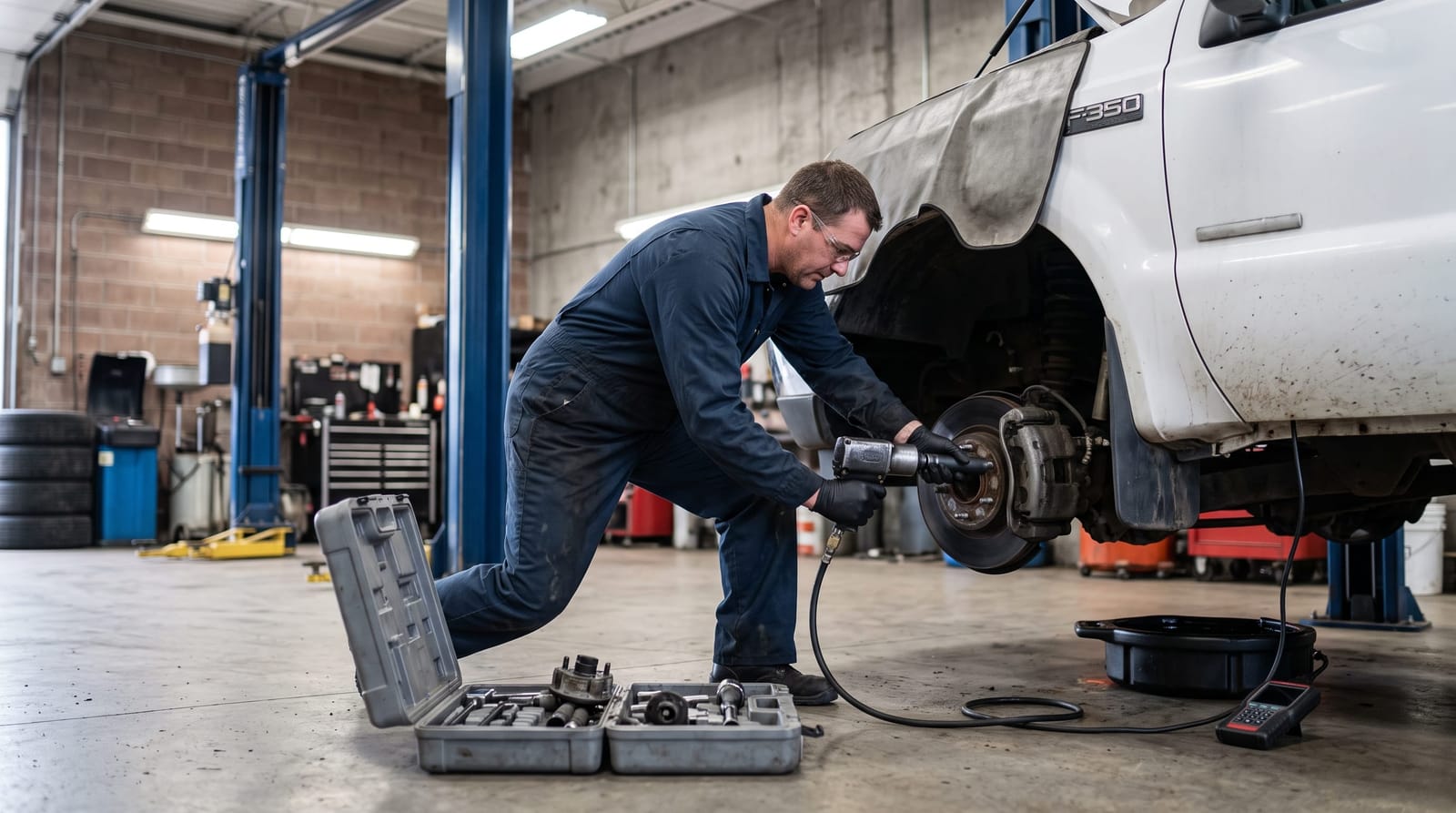
A shop that services heavy-duty work trucks needs not just the right knowledge but the right equipment: heavy-duty lifts, appropriately sized tools, and experience with the specific brake configurations on ¾-ton and 1-ton diesel platforms like the Ford Super Duty, Ram 2500/3500, and GM Silverado HD series.
If you operate work trucks in Weld County, scheduling brake inspections more frequently than standard passenger vehicle intervals is a practical approach: particularly before and after heavy towing seasons. Your fleet's reliability depends on it.
Choosing the Right Brake Shop in Fort Lupton and the Surrounding Area
Fort Lupton drivers have several options for brake service, from dealership service departments to independent shops. Knowing what to look for helps you make a confident choice.
What to Look for in a Brake Service Provider
- ASE certification: Automotive Service Excellence (ASE) certification means technicians have passed standardized tests in specific repair categories. Look for shops where technicians hold current ASE credentials in brakes and related systems.
- Transparency: A trustworthy shop will show you worn components, explain findings clearly, and give you a written estimate before work begins. You should never feel pressured to approve services you don't understand.
- Comprehensive inspection: The shop should remove wheels to properly assess pad depth, rotor condition, caliper function, and brake line integrity, not just perform a visual check from outside the vehicle.
- Capability with your vehicle type: If you drive a heavy-duty truck, make sure the shop has lifts and experience appropriate for larger vehicles. Not every general repair shop is equipped for ¾-ton and larger platforms.
- Warranty on parts and labor: Reputable shops stand behind their work. Ask about the warranty offered on brake components and labor before authorizing any service.
CTDS in Fort Lupton serves drivers throughout the region with ASE-certified technicians handling a full range of brake services for both everyday passenger vehicles and heavy-duty trucks. Whether you're coming in from Brighton, Firestone, Erie, or Frederick, the shop is positioned as a local resource for drivers who want honest, thorough brake service without the long wait or dealership markup.
Brake Safety on Colorado Roads: What Every Local Driver Should Know
Colorado presents a unique combination of driving conditions that affects brake system performance year-round. Understanding those conditions helps you make smarter maintenance decisions and drive more safely.
Winter Driving and Brakes
Ice and packed snow dramatically increase stopping distances regardless of brake condition. Well-maintained brakes with properly functioning ABS give you the best possible performance in these conditions, but even perfect brakes cannot overcome physics. Leave significantly more following distance in winter, and have your brake system inspected before the season begins. Road brine and salt used on Colorado roads from October through March are highly corrosive to brake lines, calipers, and rotors, making post-winter inspections equally valuable.
Heat and Mountain Driving
Even the relatively moderate elevation changes around Weld County can generate sustained braking that overheats pads and rotors on poorly maintained systems. If you're planning a drive into the foothills or mountains, make sure your brakes are in good condition and your brake fluid has been flushed recently. Overheated fluid loses pressure capacity rapidly, which can cause brake fade at exactly the wrong moment on a descent.
Agricultural and Rural Road Considerations
Many Fort Lupton area drivers regularly travel gravel or unpaved roads, or share roads with slow-moving farm equipment. Gravel roads increase dust exposure to brake components and can accelerate wear on certain parts. The sudden stops required when approaching slow equipment at highway speeds also generate above-average brake stress. Drivers in rural Weld County should factor these conditions into their service planning.
Deep Dive: Explore These Related Brake Topics
This guide covers the full landscape of brake service and repair, but some topics deserve a closer look on their own. The following resources go deeper on specific aspects of brake service for Fort Lupton area drivers:
Brake Pads and Rotors: Costs, Timing, and What to Expect
Pad and rotor replacement is the most common brake service, but the details matter: what type of pad is right for your driving style, when rotors should be replaced versus resurfaced, and what fair pricing looks like in the northern Denver metro. Our detailed breakdown of brake pad rotor replacement Brighton CO walks through everything you need to know before your next service appointment.
Calipers and Brake Lines: When It's More Than Just the Pads
Some brake problems go deeper than worn friction material. Seized calipers, leaking brake lines, and failing hoses can compromise your entire hydraulic system. If you're dealing with a soft pedal, vehicle pull, or uneven pad wear, our guide to brake caliper repair Fort Lupton CO explains the diagnosis and repair process in plain language.
Brake Fluid Flush: The Maintenance Most Drivers Skip
Brake fluid is the one service most drivers have never had, and one of the more important ones on the list. Learn why fluid condition matters, how to tell when it needs replacement, and what a proper flush involves in our resource on brake fluid flush service Fort Lupton CO.
Heavy-Duty Truck Brakes in Weld County
Diesel pickups and work trucks demand a different level of brake service. If you're operating a heavy-duty vehicle for work, hauling, or agriculture, our guide to truck brake service Weld County CO covers the specific components, wear patterns, and service intervals that apply to your vehicle.
The Bottom Line: Your Brakes Are Not Optional Maintenance
Of everything on a vehicle, the brake system is the one where deferred maintenance carries the highest real-world risk. The good news is that most brake problems develop gradually, announce themselves with clear warning signs, and can be addressed at reasonable cost when caught early. The challenge is that most drivers don't know what to look for, or they notice a symptom and decide to wait a little longer.
This guide has given you the tools to be more informed: you know the warning signs to watch for, the service intervals to follow, the components that make up your system, and the specific factors that affect Colorado drivers. You also know that heavy-duty trucks require specialized attention, and that delaying repairs reliably turns smaller problems into much larger ones.
If your brakes are due for an inspection, or if you've been noticing any of the warning signs described above, don't wait for the situation to get worse. CTDS in Fort Lupton provides comprehensive brake repair services for drivers throughout the area, including Brighton, Firestone, Erie, and Frederick. Call or visit to schedule your brake inspection and get a clear, honest picture of where your brake system stands today.