Diesel Lift Pump Failure: Signs, Diagnosis & Replacement Near Greeley, CO
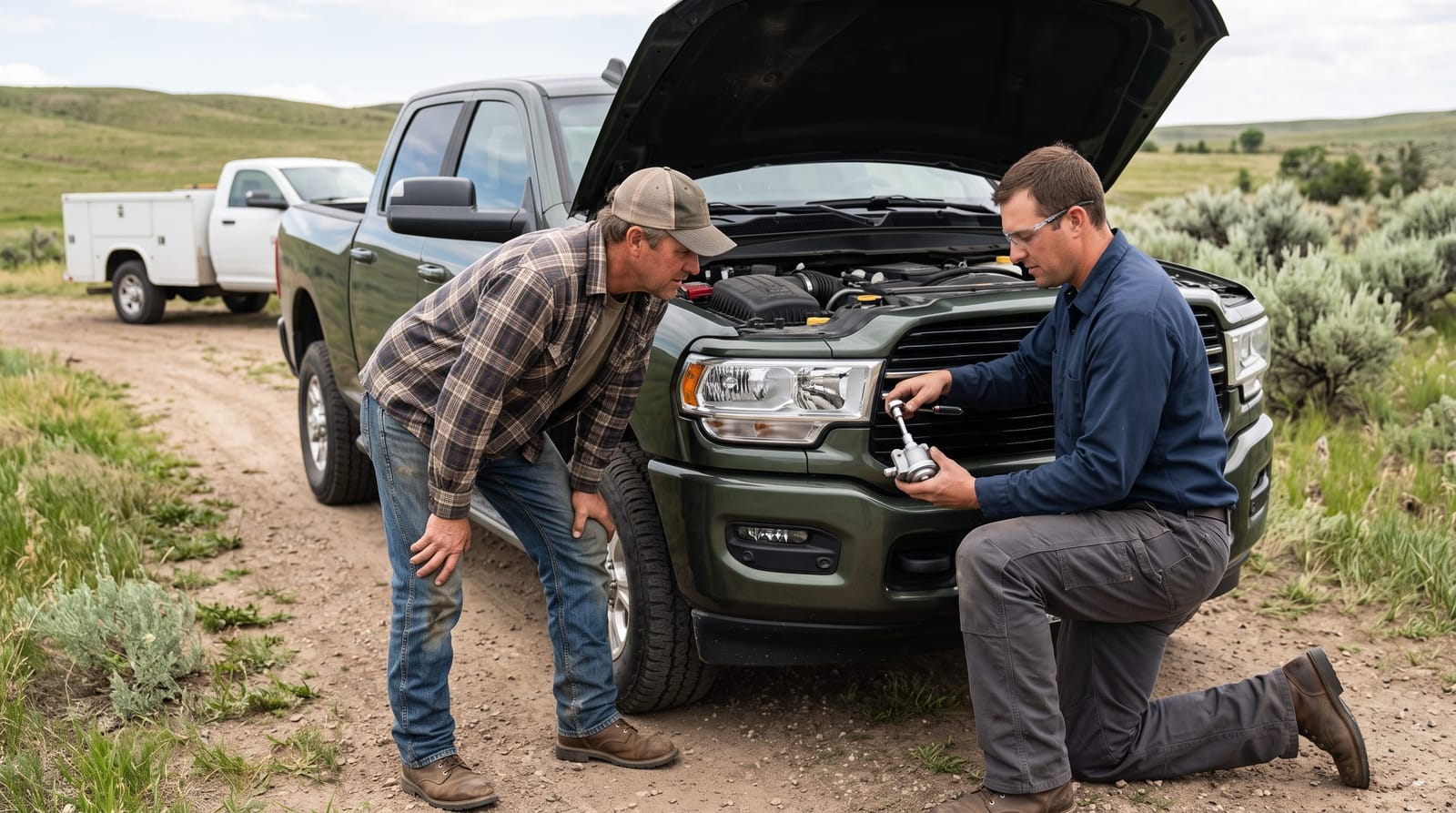
If your diesel truck is cranking longer than usual before it fires up, losing power on the highway, or shutting down unexpectedly, your lift pump may be the culprit. For Cummins owners throughout Greeley, Weld County, and the surrounding communities, a failing lift pump is one of the most common, and most misunderstood, fuel system problems. This beginner's guide breaks down exactly what a lift pump does, how to recognize when it's failing, and why getting it replaced quickly matters far more than most truck owners realize.
What Is a Diesel Lift Pump and What Does It Do?
Before diving into failure symptoms, it helps to understand what the lift pump actually does, because it's easy to confuse it with the high-pressure injection pump, and that confusion can lead to expensive misdiagnoses.
The lift pump is a low-pressure fuel transfer pump. Its job is to pull diesel fuel from the tank and deliver it to the high-pressure injection pump at a consistent, steady pressure. Think of it as a supply line: the lift pump keeps the injection pump fed so that the injection pump can do its precision work at extremely high pressures.
On Cummins-powered trucks, including the popular 5.9L and 6.7L found throughout the Greeley area farm and work truck community: the lift pump is a critical gatekeeper. Modern common-rail diesel fuel systems operate at pressures that demand a clean, adequately pressurized fuel supply upstream. If the lift pump can't maintain that supply, the entire fuel system downstream begins to suffer.
The lift pump is sometimes external (mounted on the frame rail or firewall) and sometimes integrated near the injection pump, depending on the engine generation. Either way, when it fails, your truck will tell you, often in multiple ways at once.
Signs Your Diesel Lift Pump Is Failing
Lift pump failure rarely happens all at once. It tends to degrade gradually, which is both good news (you get warning signs) and bad news (easy to ignore until real damage occurs). Here are the most common symptoms Cummins owners in the Greeley and Weld County area should watch for:
Extended Crank Times and Hard Starts
If your truck takes noticeably longer to start, especially after sitting overnight, the lift pump may not be building adequate fuel pressure before the injection pump demands it. Cold Colorado mornings make this symptom even more pronounced. Many owners mistake this for a glow plug issue, so it's worth having fuel pressure tested early in the diagnostic process.
Loss of Power Under Load
A weak lift pump may keep up at idle or light throttle, but fall behind when you're towing, hauling, or climbing grades like those common on I-25 or rural Weld County roads. If your truck feels sluggish or hesitates under load, fuel starvation from a struggling lift pump is a serious possibility. This is closely related to broader diesel truck losing power Fort Lupton CO issues that can stem from multiple fuel system problems.
Engine Stalling or Rough Running
A severely weakened lift pump may cause the engine to stumble, surge, or stall entirely: particularly at low RPMs when fuel demand and system pressure need to stay balanced.
Low Fuel Pressure Codes
Your truck's ECM monitors fuel rail pressure. A failing lift pump will often trigger low fuel pressure fault codes before other symptoms become obvious. Don't ignore these codes or clear them without investigating the root cause.
Unusual Pump Noise
A dying lift pump sometimes whines, hums, or makes a buzzing noise that changes pitch with engine speed. This is often a sign of internal wear or cavitation inside the pump.
Why a Failed Lift Pump Damages Other Components
Here's where lift pump failure becomes genuinely expensive if left unaddressed: a starved or low-pressure fuel supply doesn't just affect starting and power. It puts the entire downstream fuel system at risk.
High-pressure injection pumps, like the Bosch CP3 found on many Cummins applications, rely on a steady upstream fuel supply for internal lubrication and cooling. Diesel fuel itself lubricates the precision-machined components inside the injection pump. When the lift pump can't deliver adequate volume and pressure, the injection pump runs "dry" or cavitates, accelerating internal wear dramatically.
Similarly, fuel injectors, already expensive components, can begin to wear prematurely when fuel pressure fluctuates. In severe cases, injection pump failure can send metallic debris through the entire high-pressure fuel circuit, contaminating injectors and fuel lines in a costly cascade of damage.
Replacing a lift pump typically costs a fraction of what an injection pump or set of injectors costs. That math alone makes early diagnosis and prompt replacement the clear choice for any truck owner who wants to protect their investment.
How CTDS Diagnoses Lift Pump Problems
Accurate diagnosis is essential because several fuel system problems share overlapping symptoms. At CTDS, the diagnostic process for suspected lift pump failure follows a structured approach rather than guesswork:
- Fuel pressure testing: A mechanical or electronic fuel pressure gauge is connected to measure actual lift pump output pressure at idle and under varying RPM. This gives a clear picture of whether the pump is delivering adequate pressure and volume.
- Volume flow testing: Pressure alone doesn't tell the full story. A pump can hold pressure at idle but fail to move enough fuel volume under demand. Flow testing catches pumps that pass a static pressure test but fail under real-world load conditions.
- Fault code review: Current and stored ECM fault codes are pulled and cross-referenced with live fuel rail pressure data to confirm whether low pressure events match symptom reports.
- Visual and physical inspection: Fuel lines, fittings, filters, and the pump itself are inspected for leaks, cracks, or obvious wear that could mimic pump failure or compound it.
The goal is always to confirm the lift pump is the root cause before any parts are replaced, not simply the first component to point at when fuel pressure is low.
Lift Pump Replacement: What to Expect
Once a lift pump is confirmed as failed or failing, replacement is straightforward when performed by a technician familiar with Cummins fuel systems. Here's a general overview of the process:
- Fuel system depressurization: Before any fuel system component is removed, pressure must be safely relieved from the system.
- Pump removal: The lift pump is unbolted and disconnected from fuel lines and wiring. Depending on the truck and engine generation, access ranges from straightforward to more involved.
- Filter and line inspection: While the pump is out, the fuel filter (if not recently replaced), inlet screen, and nearby fuel lines are inspected. A new pump won't perform well if it's pulling fuel through a clogged filter or a collapsing line.
- New pump installation: The replacement pump is installed, connections are secured, and the system is primed before startup.
- Post-replacement pressure verification: Fuel pressure is retested after installation to confirm the new pump is operating within specification.
Cummins owners often consider upgrading to a higher-output aftermarket lift pump at this stage, particularly if the truck is used for heavy towing or has other performance modifications. A technician familiar with your specific setup can help evaluate whether a stock-replacement or upgraded unit makes more sense for your use case.
Frequently Asked Questions
How long does a diesel lift pump typically last?
Lift pump lifespan varies considerably depending on fuel quality, filter maintenance habits, and operating conditions. Many OEM lift pumps on Cummins trucks last well over 100,000 miles, but trucks running poor-quality fuel, infrequent filter changes, or heavy towing schedules may see failure earlier. There's no fixed interval: monitoring fuel pressure periodically and paying attention to symptoms is the most reliable approach.
Can I drive my diesel truck with a failing lift pump?
Technically, a truck with a partially functioning lift pump may still drive, but continuing to operate it risks damaging the injection pump and injectors: components that cost significantly more to replace. The safest course of action is to have the truck diagnosed promptly rather than wait for a complete failure. This content is educational; consult a qualified diesel mechanic for guidance specific to your vehicle's condition.
Is a lift pump the same as a fuel transfer pump or supply pump?
Yes: "lift pump," "transfer pump," and "supply pump" are terms often used interchangeably to describe the low-pressure pump that moves fuel from the tank to the high-pressure injection pump. The terminology varies by manufacturer and region, but they refer to the same component in most diesel applications.
How much does lift pump replacement cost?
Costs vary based on the specific truck, engine, pump type (OEM vs. aftermarket), and labor involved. A diesel specialist can provide an accurate estimate after inspecting your vehicle. What's consistent is that lift pump replacement is far less expensive than addressing the injection pump or injector damage that results from running with a failed supply pump.
Protect Your Fuel System Before It Becomes a Bigger Problem
A diesel lift pump is a relatively small, affordable component with an outsized role in keeping your fuel system healthy. For Cummins operators near Greeley and throughout Weld County, catching lift pump failure early is the difference between a straightforward repair and a costly injection pump or injector replacement. If you're experiencing hard starts, power loss under load, or low fuel pressure codes, don't wait for the problem to compound. CTDS specializes in diesel fuel system diagnosis and repair, and getting the right answer the first time protects everything downstream.