Diesel Fuel System Repair: Injectors, Lift Pumps & High-Pressure Common Rail Systems
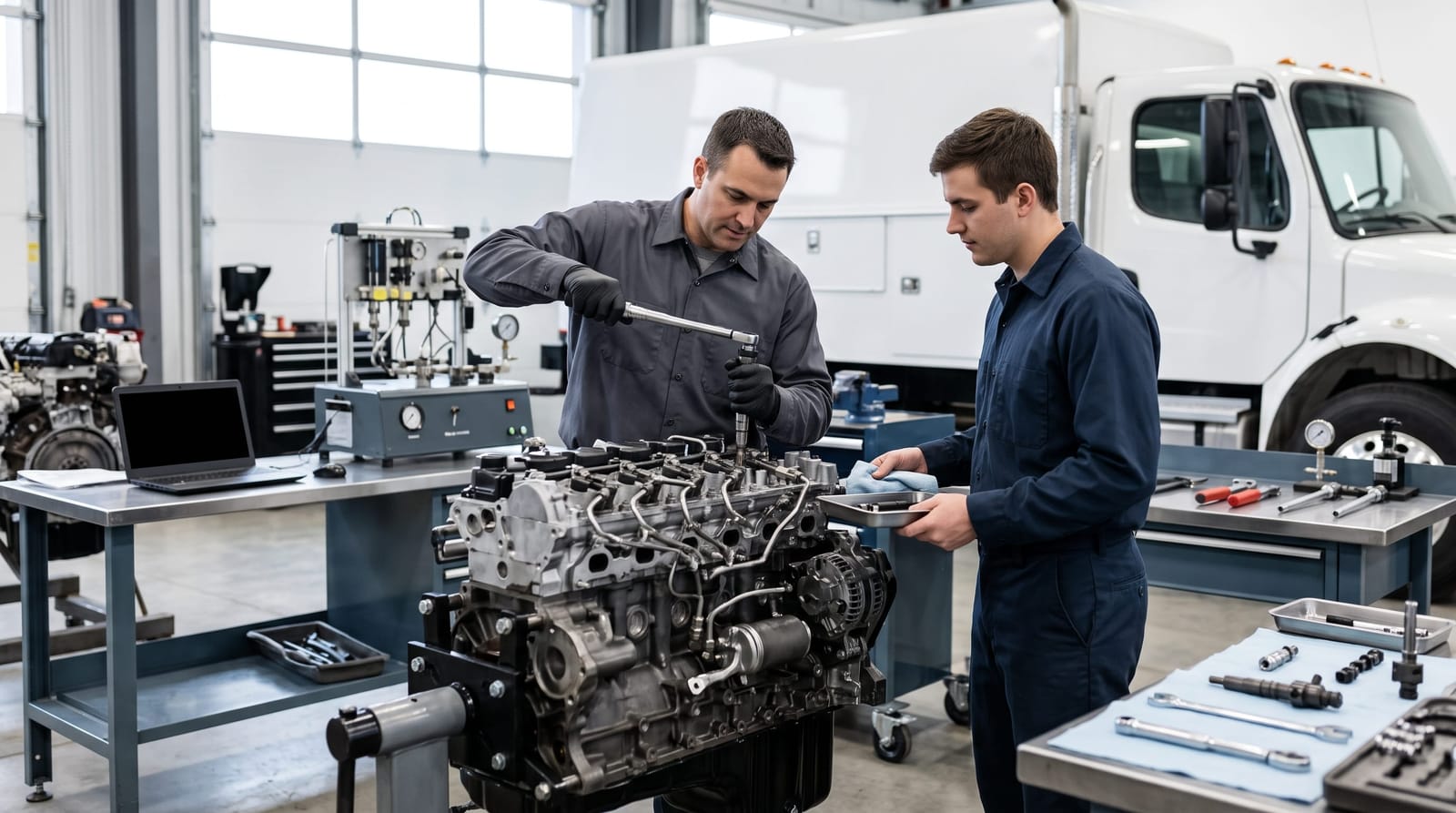
When diesel truck owners explore our complete guide to diesel engine repair in Fort Lupton, CO, one theme comes up again and again: fuel system problems are among the most common, and most misdiagnosed, issues affecting Powerstroke, Cummins, and Duramax trucks today. Whether you're hauling equipment across Weld County or commuting through the North Denver suburbs, a compromised fuel system quietly robs your truck of power, efficiency, and reliability long before it ever throws a major code. This beginner's guide breaks down exactly how modern diesel fuel systems work, what goes wrong with injectors, lift pumps, and high-pressure common rail (HPCR) systems, what the warning signs look like, and why precision diagnostics, not guesswork, are the only appropriate response when something goes wrong.
How a Diesel Fuel System Actually Works (And Why It's More Complex Than You Think)
Most gasoline engine owners assume diesel fuel systems operate on roughly the same principles as what they're used to. They don't. Modern diesel trucks, particularly those built in the last two decades, use fuel delivery systems that operate at pressures that would be unthinkable in a gas engine context. Understanding the basic architecture helps you recognize problems early.
The Three-Stage Delivery Path
Diesel fuel travels through three distinct stages before it ever reaches your combustion chamber:
- Low-pressure supply side: The lift pump pulls fuel from the tank and delivers it at relatively low pressure to the injection pump or high-pressure pump inlet. Think of this as the foundation, if it's weak, everything downstream suffers.
- High-pressure generation: A high-pressure injection pump (or in HPCR systems, a high-pressure pump feeding a common rail) pressurizes fuel to extreme levels. In modern HPCR systems, this can range from 20,000 to over 30,000 PSI depending on the platform and load conditions.
- Precision injection: Injectors receive that high-pressure fuel and atomize it into the combustion chamber in precisely timed, microsecond-duration pulses controlled by the engine control module (ECM).
Why Contamination Is the Enemy
At these operating pressures, fuel cleanliness isn't a nice-to-have: it's an engineering requirement. Particles measured in microns can score injector bores, damage pump internals, and throw off injection timing. This is why diesel fuel filter maintenance isn't optional maintenance. It's protective infrastructure for components that cost hundreds or thousands of dollars each to replace.
Diesel Injector Wear and Failure: What's Actually Happening Inside
If you've been searching for diesel fuel injector repair in Fort Lupton, CO, there's a good chance your truck has already been showing symptoms for longer than you realize. Injector problems rarely announce themselves dramatically. They tend to creep up gradually, disguising themselves as other issues.
Common Injector Failure Modes
Diesel injectors fail in several distinct ways, and each failure mode produces a different symptom profile:
- Tip erosion and seat wear: The injector nozzle tip degrades over time, altering the spray pattern and reducing atomization quality. This produces incomplete combustion, visible black or gray smoke, and reduced power.
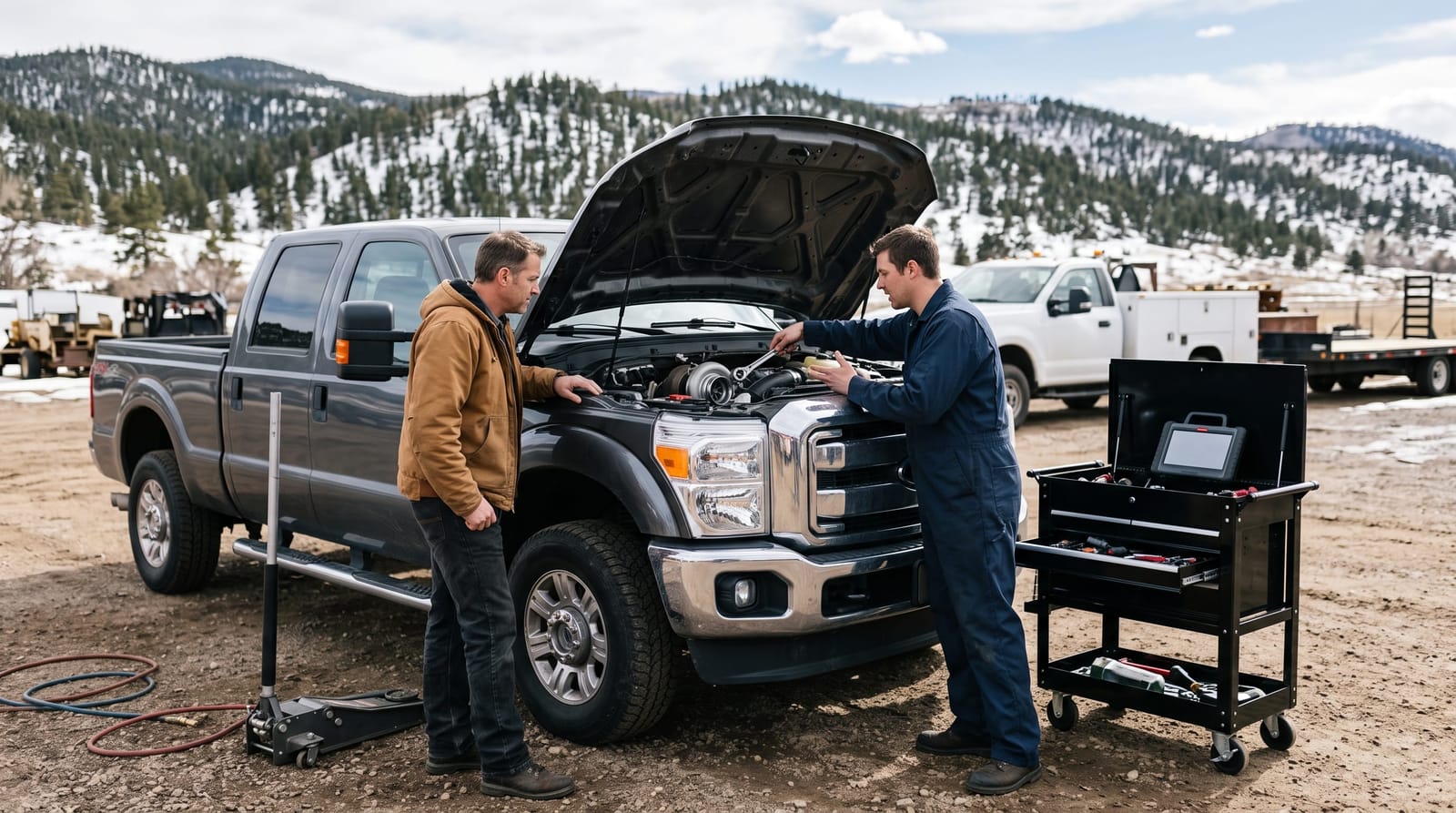
- Stiction (in Powerstroke engines): Oil coking inside the injector body causes the spool valve to stick. Powerstroke owners: particularly on 6.0L and 7.3L platforms: know this failure mode well. Cold starts become rough and inconsistent. For a deeper look at Powerstroke-specific issues, see our guide to Ford Powerstroke repair in Brighton, CO.
- Electrical failures: Modern electronically controlled injectors rely on solenoids or piezoelectric actuators. When these fail, the injector may stick open, delivering too much fuel, or fail to open at all, causing a dead cylinder.
- Return fuel leakage (back-leak): Worn internal seals allow fuel to bypass the injector internally and return to the tank instead of being injected. This reduces effective rail pressure and causes rough running and power loss.
Symptoms Worth Taking Seriously
Watch for white or gray smoke at startup, rough idling that smooths out when warm, misfires or "knock" on one cylinder, hard starting in cold weather, and unexplained drops in fuel economy. If your truck feels like it's losing power without an obvious cause, fuel injector performance testing should be high on the diagnostic checklist.
Lift Pump Failure: The Upstream Problem That Destroys Downstream Components
The lift pump, sometimes called the transfer pump or supply pump, is one of the most overlooked components in the diesel fuel system. It sits upstream of the high-pressure pump, and its job is deceptively simple: keep adequate fuel flowing at stable pressure to the inlet. When it begins to fail, the consequences cascade through the entire system.
Why Lift Pump Health Matters So Much
High-pressure injection pumps are not designed to pull fuel. They're designed to pressurize fuel that has already been adequately supplied. When the lift pump delivers insufficient volume or pressure, the high-pressure pump begins cavitating: essentially running partially dry. Cavitation is catastrophic for pump internals and can destroy a high-pressure pump worth $800 to several thousand dollars in relatively short order. Addressing a failing lift pump early is almost always dramatically less expensive than waiting for it to take the HP pump with it.
Signs Your Lift Pump Is Struggling
- Long or hard crank times, especially when the truck has been sitting
- Fuel pressure readings below spec during cranking or under load
- Surging or hesitation at highway speeds
- Excessive noise from the injection pump area
- Aerated fuel or air in the fuel lines after filter changes
Cummins-powered Ram trucks are particularly susceptible to lift pump issues on certain model years, where the OEM pump design has known longevity limitations. Owners dealing with these issues will find detailed platform-specific guidance in our coverage of Cummins diesel repair in Weld County, CO. For a thorough breakdown of diagnosis and replacement options, our detailed post on diesel lift pump failure and replacement in Colorado covers the subject in depth.
High-Pressure Common Rail Systems: Precision Engineering That Demands Expert Diagnosis
If your truck was built in the mid-2000s or later, it almost certainly uses a high-pressure common rail (HPCR) fuel injection system. This architecture replaced older mechanical and unit injector designs and brought significant benefits, better fuel economy, lower emissions, smoother power delivery, but it also introduced a level of system complexity that makes shade-tree diagnosis genuinely dangerous to your wallet.
How HPCR Systems Differ From Older Designs
In an HPCR system, a high-pressure pump continuously charges a shared fuel rail (the "common rail") that serves all injectors simultaneously. Individual injectors are triggered electronically by the ECM, which varies injection timing, duration, and even the number of injection events per combustion cycle to optimize performance and emissions. Modern systems may fire injectors two, three, or even five times per cycle, pilot injections, main events, and post-injections, all within milliseconds.
What Goes Wrong in HPCR Systems
The most common HPCR failure points include:
- Rail pressure sensor failures: The ECM uses rail pressure data to calculate injection commands. A faulty sensor produces incorrect fuel delivery and throws a wide range of confusing fault codes.
- Pressure relief valve (PRV) failures: The PRV protects the rail from overpressure. A stuck-open PRV dumps pressure and causes severe power loss. A stuck-closed PRV is a safety concern and requires immediate attention.
- High-pressure pump wear: As internal tolerances wear, the pump struggles to maintain target rail pressure under load. This is often confused with injector failure without proper pressure testing.
- Injector return fuel balance issues: Each injector has a measurable return rate. When one or more injectors return excessive fuel, it reduces system efficiency and often indicates internal injector wear.
Why Proper Diagnostic Equipment Is Non-Negotiable
HPCR diagnostics require factory-level or equivalent scan tools capable of performing injector balance tests, return flow measurements, and live rail pressure monitoring under load. Replacing injectors based on visual symptoms alone, without confirming rail pressure performance, return flow data, and pump output, routinely leads to unnecessary parts costs and misdiagnosed root causes. Duramax owners dealing with HPCR symptoms will find that platform-specific context in our post on Duramax diesel repair near Firestone and Frederick, CO.
Fuel Filter Maintenance: The Simplest Protection for the Most Expensive Components
Diesel fuel filter maintenance is genuinely the easiest, most cost-effective thing a diesel truck owner can do to protect their fuel system. Yet it's consistently neglected, either because owners don't know the interval or because they assume the fuel they're buying is clean enough to go longer between changes.
Why Diesel Filtration Requirements Are Strict
Modern HPCR injectors and HP pumps are machined to tolerances measured in single-digit microns. Diesel fuel, even from reputable sources, contains particulate contamination that must be filtered before it reaches these components. Water is an equally serious concern: diesel fuel readily absorbs atmospheric moisture, and water in the fuel system causes corrosion of injector internals and promotes microbial growth that clogs filters and degrades fuel quality.
Recommended Practices
Most diesel manufacturers recommend fuel filter changes every 10,000 to 15,000 miles under normal conditions, though trucks operating in dusty environments (common across Weld County's agricultural areas) or running biodiesel blends may require more frequent service. Many modern diesel trucks have a fuel filter water separator with a drain valve: draining accumulated water at each oil change interval is simple preventive maintenance that costs nothing but a few minutes.
Symptoms of a restricted fuel filter closely mimic lift pump and injector problems: hard starting, reduced power under load, and surging. Always verify filter condition before moving to more expensive diagnostic steps.
What to Expect From Professional Diesel Fuel System Diagnostics at CTDS
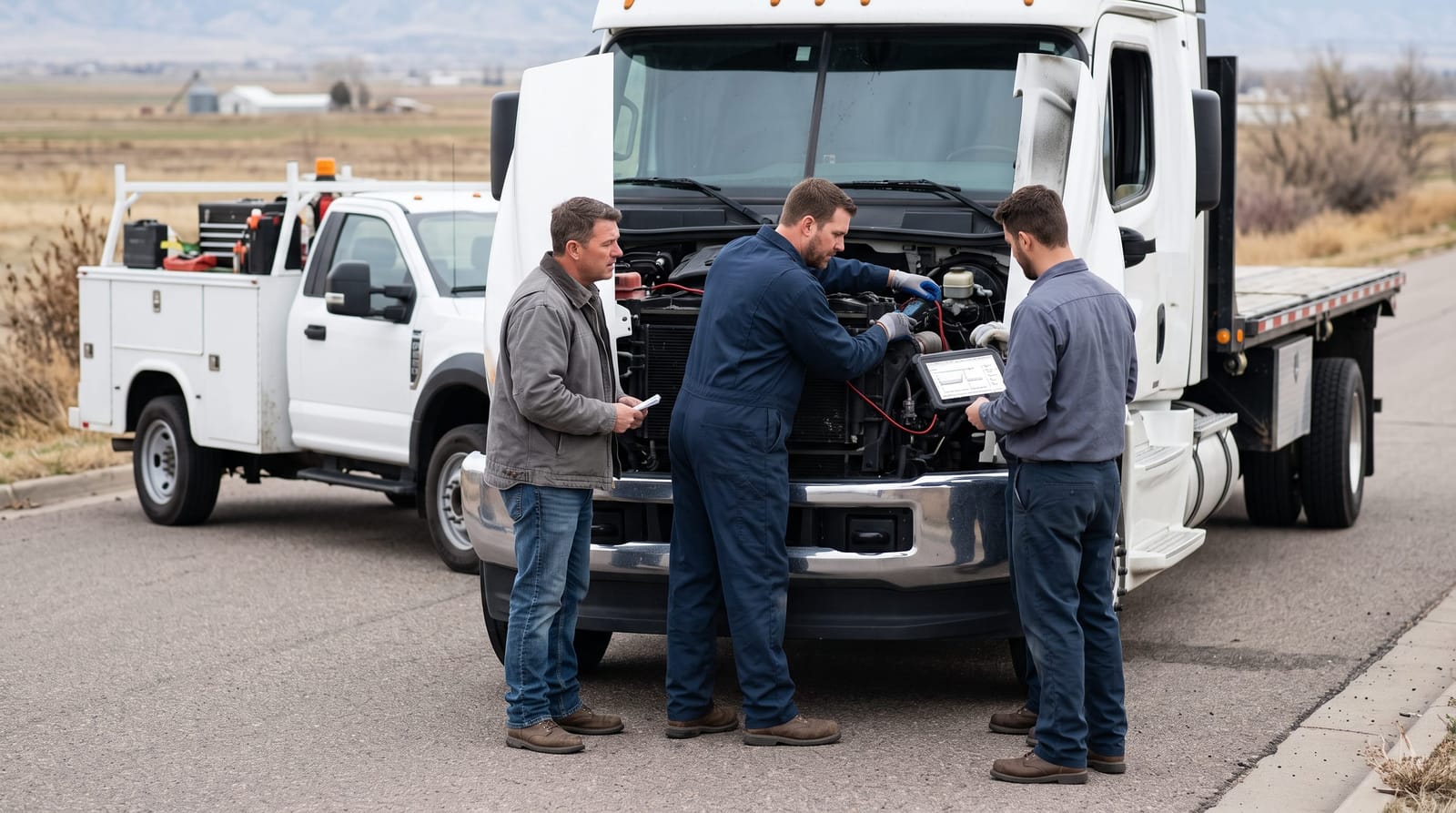
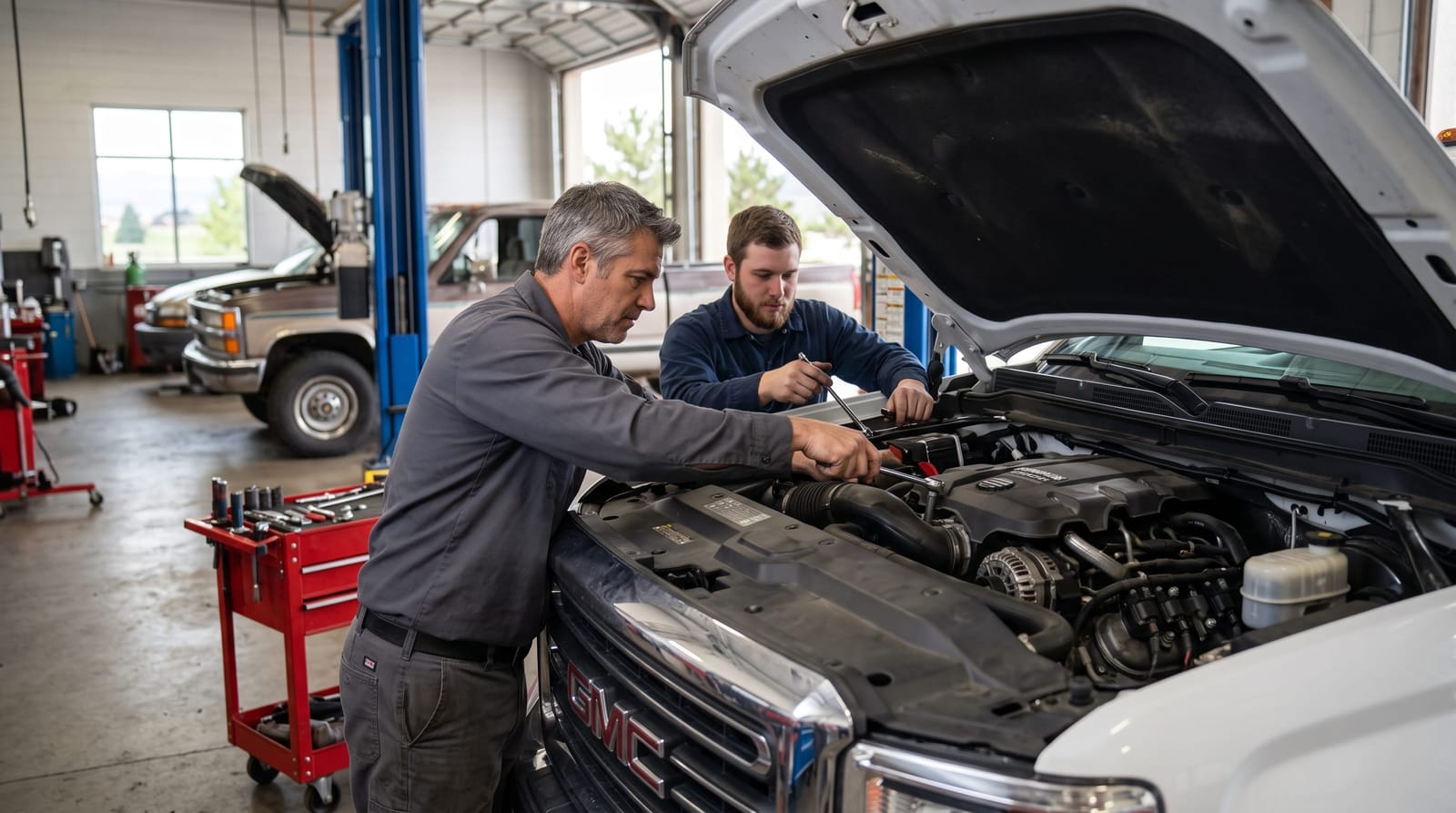
CTDS brings over 27 years of hands-on diesel experience to fuel system diagnosis and repair in Fort Lupton, serving truck owners throughout Weld County and the surrounding North Denver communities. The approach here isn't to guess and replace: it's to measure, verify, and repair with precision.
The Diagnostic Process
A thorough fuel system evaluation at CTDS typically includes:
- Full ECM scan and fault code analysis with context, not just code reading, but understanding what the codes mean in combination
- Live data monitoring of fuel rail pressure at idle, under acceleration, and at steady cruise
- Injector return flow testing to identify out-of-spec injectors
- Lift pump volume and pressure testing under cranking and operating conditions
- Fuel filter inspection and water separator check
- Evaluation of fuel quality if contamination is suspected
Repair, Rebuild, or Replace?
Not every injector problem requires full replacement of all injectors. In some cases, a single failed injector is clearly identified and individually replaced. In other cases, particularly with high-mileage trucks where wear is distributed across all injectors, a full set replacement makes more economic sense than replacing units one at a time as they fail. CTDS discusses these options transparently so owners understand exactly what they're paying for and why.
Related Topics Worth Exploring
If you're diving deeper into diesel fuel system performance and repair, the following resources address specific aspects in more detail:
- If your truck is struggling under load or feels sluggish despite no obvious codes, our coverage of diesel trucks losing power in Fort Lupton, CO walks through the full diagnostic framework: fuel system included.
- For owners specifically dealing with supply-side failures, diesel lift pump failure, diagnosis, and replacement in Colorado provides a comprehensive look at this critical upstream component.
Conclusion: Your Fuel System Deserves More Than Guesswork
Modern diesel fuel systems are engineering achievements that demand respect, and demand expertise when something goes wrong. From lift pumps supplying adequate pressure to high-pressure common rail systems injecting fuel in microsecond pulses at 30,000 PSI, every component in the chain matters. The good news is that most fuel system problems give you early warning signs if you know what to look for: rough idle, hard starts, visible smoke, or unexplained power loss. The right move is always precise diagnosis before any parts are changed.
If your Powerstroke, Cummins, or Duramax truck is showing any of the symptoms described in this guide, CTDS in Fort Lupton is ready to help. With 27-plus years of diesel-specific experience and the diagnostic equipment to match, we find the real problem, not just the most obvious one. Call CTDS at (720) 637-5790 to schedule your diesel fuel system diagnostic today.