Diesel Engine Repair & Performance in Fort Lupton, CO: The Complete Guide for Powerstroke, Cummins & Duramax Owners
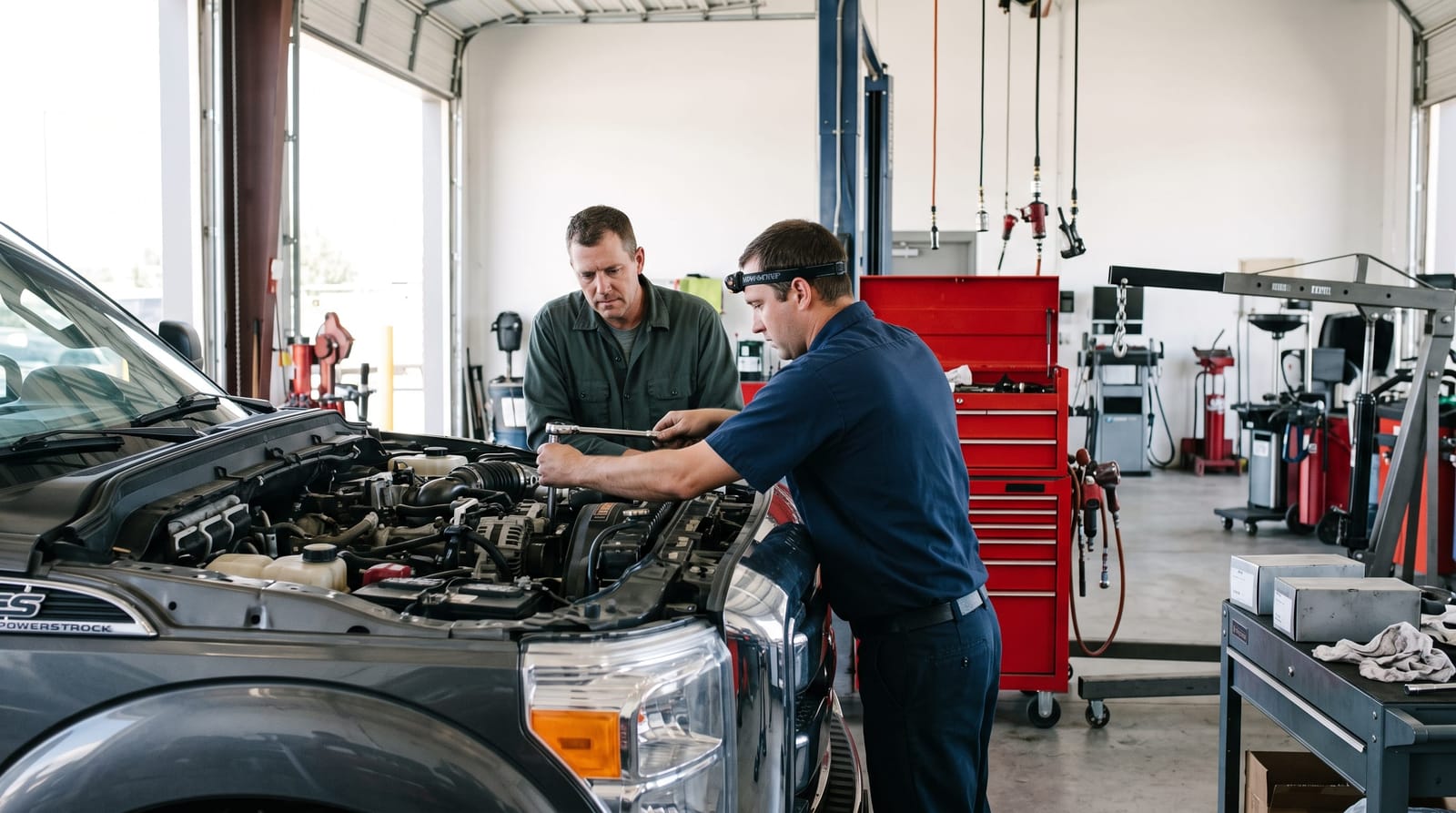
Your diesel truck isn't just a vehicle: it's a tool. It hauls trailers up I-25 mountain grades, pulls equipment to job sites in Greeley, tows livestock out of Weld County, and earns its keep every single day. When something goes wrong with that engine, you don't have time to guess at the problem or leave your rig at a general repair shop where nobody truly understands diesel technology. You need a specialist.
If you're searching for reliable diesel engine repair in Fort Lupton, CO, this guide was written specifically for you. Whether you're running a Ford Powerstroke, a Ram Cummins, or a GM Duramax, the diesel systems in these trucks are sophisticated, demanding, and, when something goes sideways, expensive to repair incorrectly. The difference between a shop that truly knows diesel and one that's figuring it out on your dime is significant.
In this complete guide, you'll learn how Colorado's driving environment puts unique stress on diesel engines, what the most common failure points are for each major truck platform, how fuel systems and turbochargers work together, when to consider performance upgrades, and what a full engine overhaul actually involves. You'll also find links to deeper resources on every major topic covered here. Let's get into it.
Why Diesel Engine Repair Requires a Different Skill Set
A diesel engine operates on fundamentally different principles than a gasoline engine. There are no spark plugs. Combustion is triggered by compression alone: air in the cylinder is compressed so tightly that injected fuel ignites on contact. This means diesel engines run at significantly higher compression ratios, generate enormous torque at low RPM, and depend on precision fuel delivery systems that operate at pressures gasoline systems never approach.
Modern common-rail diesel injection systems can operate at fuel pressures exceeding 30,000 PSI. Injectors fire multiple times per combustion cycle, measured in microseconds. Turbochargers, often compound or variable-geometry designs, spool and respond to electronic control signals. Emissions systems including Diesel Particulate Filters (DPF), Exhaust Gas Recirculation (EGR) valves, and Selective Catalytic Reduction (SCR) systems add entire layers of complexity that didn't exist on diesel trucks twenty years ago.
A technician who mostly works on gas engines can read a diesel trouble code, but interpreting what that code means in context, understanding the cascade of symptoms that point to the actual root cause, requires diesel-specific training, experience, and tools. Misdiagnosis on a high-pressure fuel system isn't just a waste of money. It can mean replacing expensive injectors when the actual problem was a failing lift pump starving the system of volume and pressure. It can mean a cracked injector cup leaking coolant into a cylinder and causing a hydrolocked engine on a mountain descent.
This is why the quality of your diesel shop matters so much. Diagnostic accuracy on the front end saves thousands of dollars and prevents failures that compound into catastrophic damage.
Colorado's Driving Environment: What It Does to Your Diesel Engine
Diesel truck owners in the Fort Lupton, Brighton, Greeley, Erie, and Frederick areas face a combination of operating conditions that genuinely accelerate wear on engine components. Understanding these conditions helps you anticipate maintenance needs and catch problems before they become expensive.
High-Altitude Operation
Colorado's elevation affects diesel engines in ways that are easy to overlook. At 5,000 feet and above, air density is lower. Less oxygen per cubic inch of intake air means less efficient combustion, more particulate loading on the DPF, and turbochargers working harder to deliver adequate boost. Trucks that spend significant time at elevation, or that regularly cross mountain passes on I-70 or US-40, experience accelerated turbocharger wear and more frequent DPF regeneration cycles.
Towing and Grade Demands
The Front Range is a constant cycle of loaded grades and long descents. Hauling a loaded gooseneck trailer up a 6% grade at altitude puts a diesel engine under sustained high-load conditions that push oil temperatures, coolant temperatures, and transmission temperatures into ranges that reveal any existing weakness. Turbocharger oil seals, EGR coolers, head gaskets, and fuel injectors under stress are all candidates for early failure in trucks that work hard in this terrain.
Seasonal Temperature Swings
North Denver metro winters mean sub-zero cold starts, which stress glow plugs, fuel systems, and oil viscosity. Hot summer days with full towing loads create thermal cycling that accelerates gasket wear and coolant system fatigue. Diesel trucks in this region age faster than the same trucks operating in moderate climates, and they need maintenance intervals that reflect that reality.
The Most Common Diesel Engine Problems by Platform
Powerstroke, Cummins, and Duramax are the three dominant diesel platforms in Weld County and the North Denver suburbs. Each has well-documented failure modes that any experienced diesel technician knows to watch for.
Ford Powerstroke
The 6.0L Powerstroke (2003-2007) is legendary for EGR cooler failures, oil cooler clogging, and head gasket issues, often all connected. When the oil cooler becomes restricted, coolant temperatures rise, EGR cooler failure follows, and head gasket compromise is the eventual result. The 6.4L (2008-2010) brought compound turbochargers and high-pressure fuel systems, along with a reputation for DPF clogging and injector failure. The 6.7L (2011: present) is the most refined Powerstroke yet, but it has its own known issues including turbocharger failures, CP4 injection pump concerns, and EGR system fouling. A specialist familiar with the full Powerstroke lineage can diagnose these trucks without the trial-and-error that costs owners money at general shops.
Ram Cummins
The Cummins 5.9L and 6.7L engines have earned a reputation for durability and longevity, when properly maintained. Common issues on high-mileage 5.9L trucks include injector O-ring failures, lift pump weakness, and VP44 injection pump failure on earlier models. The 6.7L Cummins, introduced in 2007, brought emissions equipment challenges including DPF and DEF system issues, EGR valve fouling, and on higher-mileage examples, oil consumption concerns. Cummins trucks used for heavy towing in Colorado also develop head stud and gasket issues when pushed hard over time.
GM Duramax
The Duramax platform, found in Chevy Silverado HD and GMC Sierra HD trucks, spans multiple generations with distinct engineering. The LB7 (2001-2004) is famous for injector failures, all eight injectors frequently need replacement as a set. The LLY and LBZ generations brought improvements but introduced water pump and radiator concerns on high-mileage examples. The LMM and LML generations added DPF and DEF systems with their own maintenance demands, while the newer L5P is a sophisticated engine requiring dealer-level programming access for many repair scenarios. Duramax diagnosis requires platform-specific knowledge and proper scanning tools.
Diesel Fuel System Diagnostics and Repair
The fuel system is the heart of a diesel engine's performance and reliability. Modern high-pressure common-rail systems are engineering marvels, and when they fail, the symptoms can range from subtle to severe. Understanding the key components helps you communicate with your technician and understand the repair recommendations you receive.
Fuel Injectors
Diesel injectors are precision components machined to tolerances measured in microns. Over time, injectors experience tip wear, solenoid degradation, and carbon buildup that affects spray pattern and fuel quantity. A failing injector can cause hard starts, rough idle, excessive black or white smoke, fuel dilution in the engine oil, and misfires. On common-rail systems, injector testing requires specialized equipment that measures return flow rates and injection timing: a process that can't be accurately performed with generic scan tools.
High-Pressure Fuel Pumps
The CP3 and CP4 injection pumps used across different diesel platforms are another critical failure point. CP4 pump failures, common on certain Powerstroke and Duramax applications, are particularly serious because metal contamination from a failing pump can spread through the entire high-pressure fuel circuit, requiring injector replacement and thorough system flushing in addition to the pump itself. Early diagnosis of pump weakness, indicated by low rail pressure codes, hard starting, and power loss, can prevent catastrophic system contamination.
Lift Pumps and Fuel Supply
A weak lift pump is a frequently misdiagnosed problem. When the supply-side pump isn't delivering adequate volume and pressure to the high-pressure injection pump, the injection pump works harder and wears faster. Symptoms mimic injector and injection pump failures. Proper diagnosis distinguishes between supply-side and high-pressure-side failures before expensive components are replaced.
Turbocharger and Emissions System Service
Turbochargers make diesel trucks what they are, without boost, a diesel has no personality. Modern diesel turbochargers are sophisticated variable-geometry devices controlled by electronic actuators, and they're integral to both emissions compliance and engine performance. Maintaining and servicing them correctly is essential for trucks that work hard at Colorado altitude.
Turbocharger Failure Symptoms
Common turbo failure symptoms include excessive smoke (blue or black), whining or grinding noises, loss of power, and boost pressure codes. The root causes vary: oil starvation from neglected oil changes, foreign object damage from an intake system failure, worn shaft bearings from age and heat cycles, or electronic actuator failure on variable-geometry units. Proper diagnosis identifies whether a turbo can be rebuilt or requires replacement, and critically, identifies why the turbo failed to prevent the same failure from occurring again.
EGR System Service
Exhaust Gas Recirculation systems are one of the most maintenance-intensive systems on modern diesel trucks. EGR valves become carbon-fouled over time, EGR coolers crack and leak coolant into the intake, and the associated plumbing accumulates soot deposits that restrict flow. Regular EGR system cleaning and inspection can extend component life significantly and prevent the cascade of failures that a cracked EGR cooler triggers.
DPF and DEF System Maintenance
The Diesel Particulate Filter requires periodic regeneration: either passive (occurring automatically during highway driving) or active (initiated by the truck's computer). When trucks are used primarily for short trips and low-speed work, regeneration cycles don't complete, and the DPF loads with soot until forced regeneration or cleaning is required. DEF (Diesel Exhaust Fluid) systems on trucks with SCR require proper fluid quality and functional injectors to keep NOx emissions within range and keep the truck out of "limp mode."
Diesel Performance Upgrades: More Power, Better Efficiency
Many diesel truck owners in Weld County aren't just looking to keep their trucks running: they want more from them. Colorado's mountain grades demand torque, and a properly tuned diesel can deliver significantly more pulling power without sacrificing reliability when the work is done correctly.
Tuning and ECM Programming
Engine Control Module tuning is the most impactful single upgrade available for a diesel truck. A performance tune modifies fueling maps, boost targets, injection timing, and torque limits to extract more power and efficiency from the existing hardware. A quality diesel tune calibrated by an experienced tuner, not a generic off-the-shelf map, accounts for the truck's existing modifications, intended use, and the altitude at which it operates. Dyno-verified tuning takes the guesswork out of performance gains.
Intake, Exhaust, and Intercooler Upgrades
Supporting modifications, a high-flow cold-air intake, upgraded exhaust, and a larger intercooler, work with a performance tune to reduce intake temperatures, decrease backpressure, and keep charge-air temperatures in an efficient range. These upgrades deliver measurable results when combined with proper tuning. Individual components without tuning to match often deliver underwhelming gains.
Injector and Fuel System Upgrades
Trucks pushing beyond stock power levels eventually outrun the fuel delivery capacity of stock injectors and lift pumps. Upgraded injectors with increased flow rates and a high-volume lift pump ensure that a built diesel engine gets the fuel it needs at high power levels. These modifications are particularly relevant for trucks pulling heavy loads in mountain terrain, where sustained high-load operation demands consistent fuel delivery.
Complete Engine Overhauls: When Repair Becomes Rebuild
High-mileage diesel trucks, particularly those that have worked hard hauling and towing through Colorado's demanding terrain, eventually reach a point where incremental repairs no longer make economic sense. A complete engine overhaul addresses wear throughout the entire engine rather than chasing individual symptoms on a worn-out bottom end.
Signs Your Diesel Needs a Major Overhaul
- Excessive oil consumption (more than one quart per 1,000 miles)
- Significant blow-by visible from the crankcase breather
- Low compression on cylinder leakdown testing
- Metal contamination in the oil
- Chronic overheating with no isolated cause
- Multiple system failures in a short period on a high-mileage engine
What a Diesel Engine Overhaul Involves
A proper diesel engine overhaul is a comprehensive process. The engine is removed, disassembled, cleaned, and fully inspected. Block and cylinder head surfaces are measured for warpage and wear. Cylinders are bored and honed to accept new piston rings (or oversized pistons if wear requires it). Main and rod bearings are replaced. Cylinder heads are rebuilt with new valve seats, guides, and seals. Connecting rods are inspected and resized. All gaskets and seals are replaced throughout the engine.
The result is an engine that performs like new, or better, if performance upgrades are incorporated during the rebuild process. A rebuilt diesel with new or upgraded injectors, a freshened turbocharger, and a performance tune is a different truck than it was when it left the factory. For truck owners whose rigs still have good bodies, frames, and transmissions, an engine overhaul often represents better value than purchasing a replacement truck at current used-vehicle prices.
Choosing the Right Shop for an Engine Overhaul
An engine overhaul is not a project for a general shop. It requires diesel-specific machine work, access to OEM and performance parts networks, and the experience to properly spec the job for the truck's intended use. Shops that perform overhauls regularly have established relationships with machine shops, have standardized procedures for cleaning and inspection, and can provide realistic timelines and accurate estimates. Ask prospective shops how many diesel overhauls they've completed, what warranty they provide on the finished engine, and whether they have references from commercial and agricultural customers who use their trucks for serious work.
Serving Fort Lupton, Brighton, Greeley, Erie, Frederick, and Weld County
Colorado Truck & Diesel Service (CTDS) is located in Fort Lupton, positioned at the center of the agricultural and industrial corridor that runs through Weld County and the North Denver suburbs. Our customer base includes ranchers, contractors, oilfield workers, fleet operators, and diesel enthusiasts from Brighton, Greeley, Erie, Frederick, Firestone, Longmont, and the surrounding communities.
This geography shapes everything about how we approach diesel engine repair. We understand that these trucks are working vehicles. They're not garage queens: they're out in fields, on job sites, and on mountain roads carrying loads that demand reliability. When we diagnose a problem, we're thinking about how the repair holds up under real Colorado work conditions, not just how it looks on paper. When we recommend a performance upgrade, we're thinking about your specific use case: towing weight, typical grades, elevation range, and whether you want a truck that's built for work, play, or both.
Our diagnostic process uses platform-specific tools and software for Powerstroke, Cummins, and Duramax trucks, not generic scan tools that miss the nuance of diesel-specific fault data. Our technicians have hands-on experience with these platforms across multiple generations and understand the common failure patterns that catch owners off guard.
Deep Dive Topics: Explore Every Aspect of Diesel Service
This guide gives you the foundation, but each major diesel service area has its own depth. The following resources go deeper on specific platforms, systems, and services: giving you detailed, actionable information whether you're diagnosing a problem, planning maintenance, or considering a performance build.
- Ford Powerstroke Owners Near Brighton: If you're running a 6.0L, 6.4L, or 6.7L Powerstroke, the platform-specific detail in our Ford Powerstroke repair Brighton CO guide covers the most common failure modes, known problem areas by model year, and how to approach repair decisions that make financial sense for your truck's age and mileage.
- Ram Cummins Operators in Weld County: The Cummins is a legendary engine, but it's not bulletproof. Our Cummins diesel repair Weld County CO resource covers the 5.9L and 6.7L in depth, including fuel system wear patterns, emissions system maintenance, and what it takes to keep a high-mileage Cummins working reliably in Colorado's demanding conditions.
- Duramax Owners Near Firestone and Frederick: GM's Duramax platform spans more than two decades and multiple engine generations. Our guide to Duramax diesel repair Firestone CO addresses generation-specific issues, injector concerns, and what Duramax owners in the Firestone, Frederick, and Erie corridors need to know about maintaining their trucks.
- Fuel System Repair: Injectors, Lift Pumps, and Common Rail Systems: Diesel fuel systems operate at pressures and tolerances that demand specialized knowledge. Our detailed guide to diesel fuel injector repair Fort Lupton CO explains how high-pressure common rail systems work, how to recognize fuel system failure symptoms, and what proper diagnosis looks like before any parts are replaced.
- Turbocharger and Emissions System Service: From variable-geometry turbos to EGR coolers and DPF systems, diesel emissions and forced-induction components require specialized service. Learn what's involved in proper turbocharger repair diesel truck Colorado service and how emissions system maintenance affects reliability and performance at Colorado altitude.
- Performance Upgrades and Tuning for Colorado Conditions: More power, better towing efficiency, and improved fuel economy are all achievable with the right combination of modifications and calibration. Our guide to diesel performance upgrades Colorado covers tuning, supporting hardware upgrades, and how to build a diesel that performs at altitude without sacrificing durability.
Conclusion: Your Diesel Truck Deserves a Specialist
Diesel engine repair in Fort Lupton, CO isn't a commodity service. The trucks in this region work hard: hauling equipment through Weld County, climbing grades on the way to mountain job sites, pulling trailers at elevation that would strain any engine not in top condition. A truck that's properly diagnosed, correctly repaired, and well-maintained will give you years of reliable service. One that's misdiagnosed or patched together at a shop without diesel expertise will keep costing you money, downtime, and frustration.
CTDS exists specifically to serve diesel truck owners in Fort Lupton, Brighton, Greeley, Erie, Frederick, and the surrounding communities. From a quick diagnostic scan to a complete engine overhaul, our approach is the same: accurate diagnosis, quality parts, experienced technicians, and honest communication about what your truck needs and why.
If your Powerstroke, Cummins, or Duramax is giving you trouble, or if you're ready to get more performance out of it, contact CTDS in Fort Lupton to schedule a diagnostic appointment. Tell us what the truck does, what you use it for, and what you're trying to accomplish. We'll take it from there.