Diesel Performance Upgrades in Colorado: Tuning, Horsepower & Towing Efficiency
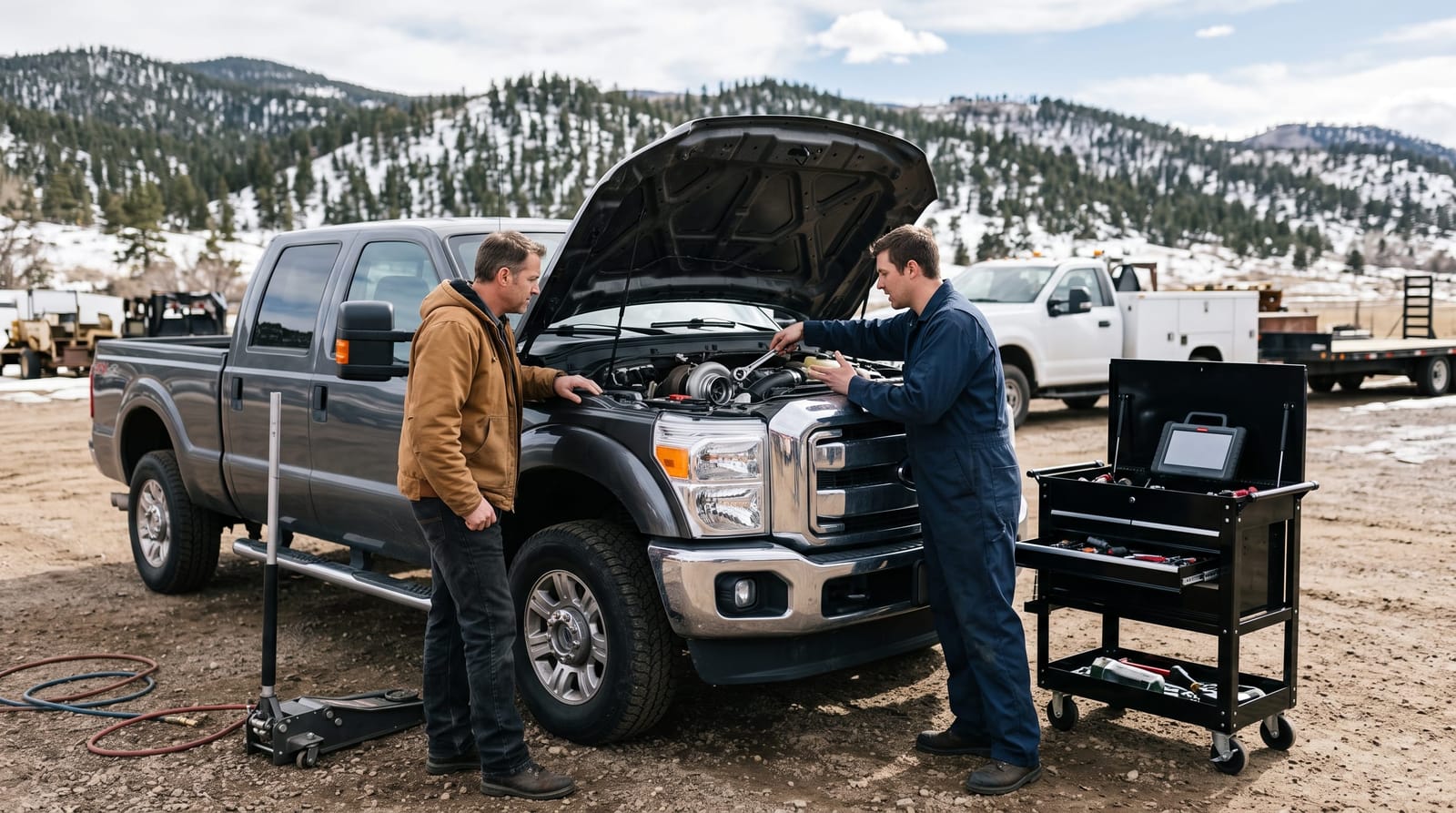
If you've read through our complete guide to diesel engine repair and performance in Fort Lupton, CO, you already know that keeping a diesel truck running strong in Colorado takes more than routine maintenance. But for many Powerstroke, Cummins, and Duramax owners in Weld County and the North Denver suburbs, the real question isn't just about keeping up with repairs: it's about getting more out of what's already under the hood. Colorado's altitude, mountain passes, and year-round towing demands create a unique set of challenges that stock diesel configurations weren't always designed to handle. This beginner's guide breaks down the most impactful diesel performance upgrades available, how they work together as a system, and why Colorado drivers have particularly good reasons to consider them.
Why Colorado Is Hard on Stock Diesel Trucks
Before diving into specific upgrades, it's worth understanding the environment these trucks operate in. Colorado sits at an average elevation of roughly 6,800 feet above sea level, and that's just the average. If you're hauling equipment over Berthoud Pass or pulling a horse trailer up I-70 toward the Eisenhower Tunnel, you're pushing your engine into territory where the air is noticeably thinner than at sea level.
Diesel engines are air-hungry machines. They rely on dense, oxygen-rich air being compressed in the cylinder before fuel is injected. At altitude, that air becomes less dense, which means less oxygen per intake stroke. The result: incomplete combustion, reduced power output, increased exhaust gas temperatures (EGTs), and in some cases, excess black smoke as the engine dumps more fuel than it can efficiently burn.
The Altitude Problem in Numbers
At 5,000 feet, a naturally aspirated engine can lose roughly 10-15% of its sea-level power. Turbocharged diesels handle altitude better than gas engines, but they're still affected. Stock turbo systems and fuel maps are often calibrated for conditions that don't reflect Colorado's mountain reality. That's where performance upgrades start making practical sense, not just for speed enthusiasts, but for anyone regularly doing serious work with their truck.
Towing Amplifies Everything
Add a loaded gooseneck trailer, a camper, or a work flatbed into the mix, and everything gets harder: longer stopping distances, higher EGTs, more stress on the drivetrain. Colorado's long mountain grades don't give your engine a break. Upgrades that improve efficiency and thermal management under load aren't luxury items out here; they're practical tools.
Custom ECU Tuning: The Foundation of Every Performance Build
If there's one upgrade that delivers the broadest improvement across power, efficiency, and drivability, it's a custom tune. Modern diesel engines are controlled by a sophisticated electronic control unit (ECU) that governs fuel delivery, injection timing, boost pressure targets, and dozens of other parameters. The factory calibration is a compromise: it's built to pass emissions, handle wildly variable fuel quality, and accommodate the least common denominator of operating conditions across the country.
A custom tune reoptimizes those parameters for your specific truck, your specific use case, and yes: your specific altitude. A shop like CTDS that specializes in diesel performance can load a tune that accounts for Colorado's elevation, adjusting how the ECU manages boost and fueling so your engine is working efficiently rather than fighting itself.
What a Tune Actually Changes
- Injection timing: Advancing or retarding when fuel fires relative to piston position affects power output and combustion efficiency.
- Fuel rail pressure: Higher pressure means finer atomization and more complete combustion.
- Boost targets: Telling the turbo to spool harder (within safe limits) compensates for thin mountain air.
- Torque management: Adjusting how power is delivered across the RPM band to match how you actually drive, whether that's towing heavy or daily driving.
- Transmission integration: A full tune often includes transmission recalibration so shift points match your new power curve.
If you're wondering whether tuning affects your factory warranty, that's a legitimate question worth researching before you commit. Our related post on diesel performance tuning Colorado warranty covers what you need to know about how aftermarket tunes interact with OEM coverage: an important read before making any decisions.
Intake and Exhaust Upgrades: Letting the Engine Breathe
Tuning tells the engine what to do. Intake and exhaust upgrades determine how freely it can do it. These two systems work together to control airflow into and out of the engine, and restrictions in either direction cost power and efficiency.
Cold Air and High-Flow Intake Systems
A performance air intake replaces the factory airbox and filter with a less restrictive system that draws cooler, denser air into the engine. Cooler air is denser air, which means more oxygen per intake stroke: exactly what you want when you're already fighting altitude. High-flow intakes designed for diesel trucks typically use larger-diameter tubing and oiled or dry cotton gauze filters that flow significantly more air than stock paper elements. The result is more consistent boost response, lower intake air temperatures, and in combination with a tune, measurably better power delivery under load.
Exhaust Systems: Cat-Back and Downpipe Upgrades
On the outflow side, exhaust restrictions create backpressure that the turbocharger has to work against. A larger-diameter cat-back exhaust system reduces that backpressure, allowing the turbo to spool more freely and exhaust gases to exit more efficiently. This is particularly important at high EGTs, common during long mountain grades with a trailer, because better exhaust flow helps the engine run cooler and more efficiently. Some owners opt for upgraded downpipes or full exhaust systems, depending on their goals and local emissions requirements. Always verify compliance with current Colorado emissions regulations before modifying your exhaust system.
Performance Injectors: Feeding the Fire
Stock fuel injectors are calibrated to deliver a specific quantity of fuel at a specific pressure, matched to the factory tune and turbo system. When you start pushing more air into the engine through upgraded intake and turbo components, the fuel system needs to keep up. Undersized injectors become the weak link: they can't flow enough fuel to match the added airflow, which caps your power gains and can lead to lean combustion conditions that raise EGTs.
Injector Sizing and Spray Pattern
Performance injectors are available in different flow rates, typically expressed as a percentage over stock (e.g., 30% over, 50% over). The right size depends entirely on your other upgrades and your goals. More isn't always better: oversized injectors on a lightly modified truck can cause poor idle quality, excess fuel consumption, and smoke at partial throttle. This is why injector upgrades should always be paired with a custom tune that's calibrated specifically for the new fuel delivery characteristics. A good diesel performance shop will size injectors as part of a coordinated system, not as a standalone bolt-on.
Injector Health and Cleaning
It's also worth noting that if your current injectors are showing signs of wear, poor spray pattern, inconsistent delivery, or balance rate issues, performance injectors can double as a repair and upgrade simultaneously. On high-mileage Powerstroke, Cummins, and Duramax engines, injector service is often necessary maintenance before any performance work makes sense.
Turbocharger Upgrades: The Heart of High-Altitude Performance
The turbocharger is the single component most responsible for how well a diesel handles Colorado's altitude challenge. Stock turbos are sized to meet emissions requirements and provide adequate power across a wide range of conditions. Performance turbo upgrades change that calculus significantly.
Upgraded Single Turbos
For most working truck owners, a single upgraded turbo, one with a larger compressor wheel and more efficient housing geometry, provides the best balance of improved power, broader power band, and manageable cost. Larger compressor wheels move more air per revolution, compensating more effectively for altitude-induced air density loss. The tradeoff is sometimes slightly slower spool-up at low RPM, though modern billet wheel designs have improved this considerably.
Twin-Turbo and Compound Turbo Systems
Compound or twin-turbo setups use a large "atmosphere" turbo feeding into a smaller, faster-spooling "high-pressure" turbo. This arrangement provides excellent low-RPM torque (critical for towing from a stop on a grade) combined with strong top-end power. Some OEM diesel trucks already use compound turbo systems from the factory: aftermarket compound kits are available for platforms that don't. These are generally higher-cost, more involved installations, but they're among the most effective solutions for trucks that tow heavy loads in mountainous terrain regularly.
For a deeper look at how your specific platform handles these upgrades, check out our platform-specific guides: Ford Powerstroke repair Brighton CO covers Powerstroke-specific performance considerations, while Cummins diesel repair Weld County CO and Duramax diesel repair Firestone CO address the unique characteristics of those platforms.
Building a Performance Upgrade Plan: What to Do First
One of the most common mistakes diesel owners make is buying parts in isolation. A big turbo on a stock tune with stock injectors won't perform well, and can actually cause problems. Performance upgrades work best as a coordinated system, and the order of operations matters.
A Logical Progression for Most Trucks
- Start with a baseline inspection. Before spending money on performance, verify your engine is mechanically healthy. Worn injectors, a tired turbo, or boost leaks will undermine any upgrade.
- Custom tune first. A tune extracts meaningful gains from a stock truck and gives your tuner a foundation to build on as you add hardware.
- Intake and exhaust next. These are relatively affordable, complement the tune well, and improve the operating environment for everything downstream.
- Injectors and fuel system. If you're pushing for significant power targets, fuel system upgrades keep everything balanced.
- Turbo upgrades last. With everything else in place, a turbo upgrade delivers its full potential without being limited by other bottlenecks.
Budget is always a factor, and it's worth understanding the full picture before committing. Our post on diesel engine overhaul cost Colorado provides helpful context on how performance work fits into the broader cost landscape of major diesel service. And if you're still weighing whether diesel is the right platform for your towing needs at all, the comparison in diesel vs gas truck towing Colorado is worth reading.
Related Details Worth Exploring
This guide covers the major upgrade categories at a beginner level. For more specific deep-dives, watch for our detailed posts on diesel tuning and warranty implications, the real costs of engine overhauls in Colorado, and platform-specific performance considerations for Powerstroke, Cummins, and Duramax trucks operating in Weld County and the North Denver suburbs.
Ready to Get More Out of Your Diesel?
Colorado rewards prepared trucks. Whether you're hauling equipment across Weld County's farm roads, pulling a fifth wheel through the Rockies, or just tired of watching your diesel struggle at altitude, a thoughtfully planned set of performance upgrades can transform how your truck feels and functions. The key is working with a shop that understands diesel engines specifically, not a general automotive shop applying a one-size-fits-all approach. CTDS specializes in diesel performance for exactly the kind of driving Colorado demands. Contact us to talk through your truck, your goals, and what upgrades make the most sense for your situation.