GM Duramax Diesel Repair & Service Near Firestone & Frederick, CO
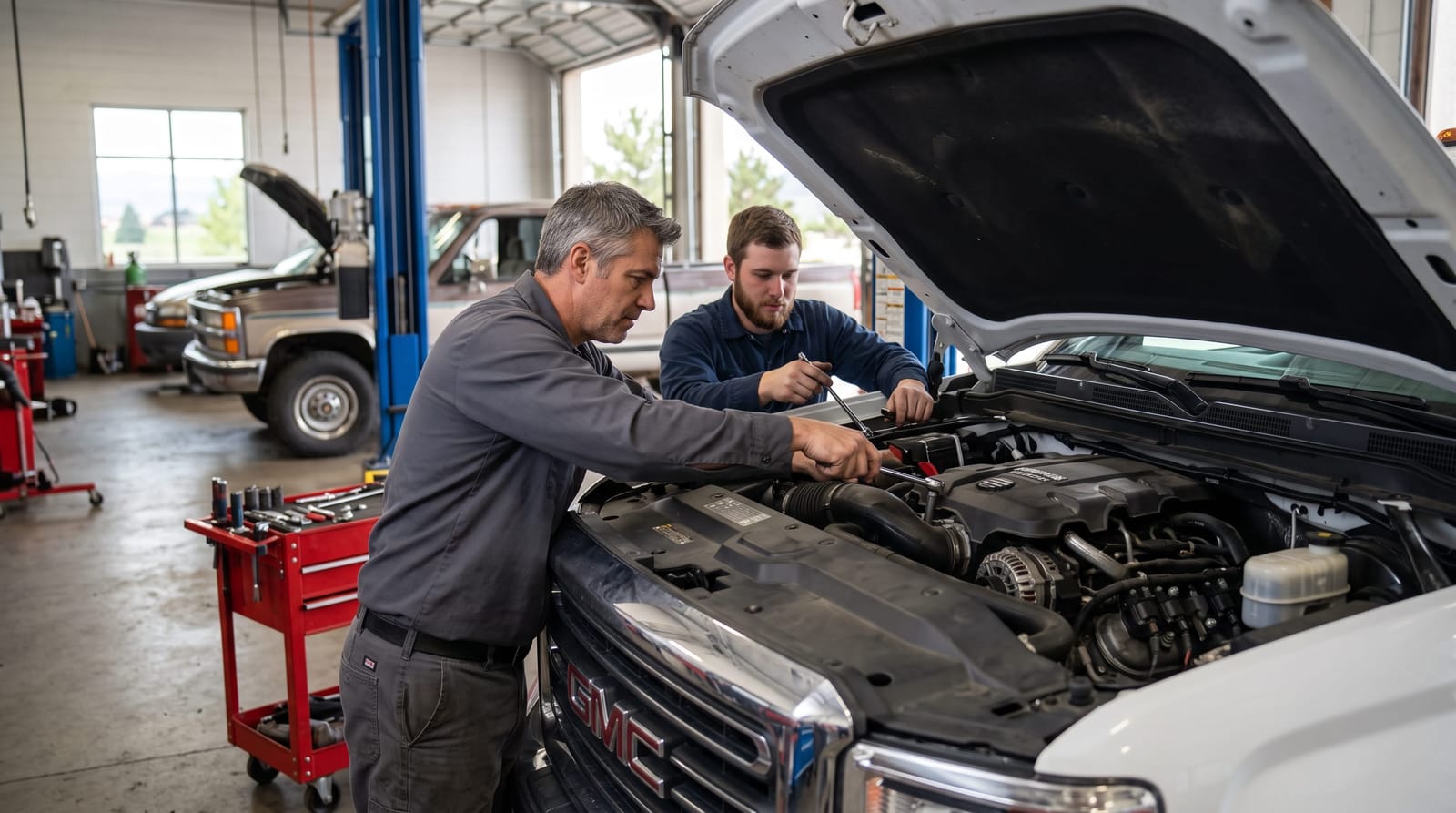
If you own a GM diesel truck, whether it's a Silverado HD, Sierra HD, or an older Classic-body workhorse, the Duramax engine under the hood is one of the most capable powerplants ever bolted into a pickup. But capable doesn't mean invincible. Every generation of Duramax has its own quirks, known failure points, and maintenance demands that differ significantly from gasoline engines. For GM diesel owners in Firestone, Frederick, Dacono, and across the northern Denver suburbs, understanding what your specific Duramax generation needs, and where to go when something goes wrong, can be the difference between a quick fix and a very expensive surprise. This beginner's guide walks you through the most common Duramax problems by generation, how professional diagnostics actually work, and what repair solutions look like at a dedicated diesel shop. It's part of a broader resource on diesel engine repair in Fort Lupton, CO covering everything from performance upgrades to major overhauls.
Step 1: Know Your Duramax Generation: They Are Not All the Same
The biggest mistake GM diesel owners make is assuming that "Duramax" means one thing. In reality, General Motors has released multiple distinct Duramax engine families since 2001, and each generation has its own engineering DNA, emissions hardware, and failure patterns. Before any diagnostic conversation is productive, a shop needs to know exactly which engine you have.
LB7 (2001-2004)
The original 6.6L Duramax. Beloved for its simplicity relative to later emissions-era engines, but notorious for one thing above almost all else: injector failure. The LB7 uses unit injectors that are located inside the valve cover, which means fuel can leak internally into the engine oil. Many LB7 owners first notice excessive oil consumption, white smoke at startup, or a fuel smell in the crankcase before they ever connect it to injectors. A full set of eight injectors is a significant repair, labor alone is intensive because of the access required, but it's a known, well-documented job for shops that specialize in GM diesel work.
LLY, LBZ & LMM (2004-2010)
These mid-generation Duramax engines introduced more power and, with the LMM, Diesel Particulate Filter (DPF) emissions equipment. The LMM is particularly noteworthy: its DPF system introduced a whole new category of problems around clogging, failed regeneration cycles, and exhaust back-pressure that can accelerate turbocharger wear. Owners who do a lot of short-trip, low-load driving, common in suburban and small-town environments, tend to experience DPF problems faster because the truck never gets hot enough to complete a proper regen cycle.
LML & L5P (2011: Present)
The modern era of Duramax brought more power, better fuel economy, and significantly more complex emissions systems including SCR (Selective Catalytic Reduction) and DEF (Diesel Exhaust Fluid). The L5P, introduced in 2017, is widely regarded as GM's best Duramax to date, but "best" doesn't mean problem-free. High-pressure fuel system components, including the CP4.2 injection pump on some LML applications, have drawn attention due to failure modes that can send metal debris throughout the entire fuel system. Early identification and proper repair matter enormously with these trucks.
Step 2: Recognize the Warning Signs Before They Become Major Failures
Duramax engines are generally reliable when properly maintained, but they communicate distress through symptoms that are easy to misread or ignore. Knowing what to watch for, and taking those signs seriously early, is one of the most cost-effective things a diesel owner can do.
Symptoms That Deserve Immediate Attention
- White or gray smoke on startup or under load: On an LB7, this is often injector-related. On emissions-era trucks, it can indicate a DEF or SCR system issue, or coolant intrusion.
- Loss of power or sluggish throttle response: Can indicate a clogged DPF, failing injectors, boost leak, or a VGT (Variable Geometry Turbocharger) actuator issue.
- Excessive fuel in the engine oil: A red flag on LB7s and any truck with injector seal failures. Check your dipstick, if the oil smells like diesel or the level is rising, stop driving and get it diagnosed.
- Check engine light with DPF or DEF codes: P2002, P20EE, P2030: these are DPF and SCR-related codes that often appear together and usually point to a system that needs professional attention, not just a reset.
- Hard starts, especially in cold weather: While some cold-start difficulty is normal, extended cranking or rough running after a cold start can indicate glow plug issues, fuel system air intrusion, or injector wear.
GM diesel owners near Frederick and Firestone who are commuting into the Denver metro area or running highway miles between job sites have an advantage: varied load cycles help emissions systems function properly. But short-haul trucks, especially those doing a lot of idling, need closer attention to DPF health.
Step 3: Understand How Professional Duramax Diagnostics Work
Consumer-grade OBD-II scanners can pull fault codes from a Duramax, but reading codes is only the beginning of a real diesel diagnostic process. At a dedicated diesel shop like CTDS in Fort Lupton, the diagnostic approach goes several layers deeper than a basic code reader can reach.
What a Proper Diagnostic Includes
A thorough Duramax diagnostic starts with a full scan of all modules, not just the engine control module, but also the transmission, ABS, and body modules, because problems in one system often generate ghost codes in others. From there, a technician looks at live data: fuel rail pressure, injection quantity corrections, boost pressure, exhaust temps, and DPF differential pressure readings. These numbers tell the real story that fault codes alone can't.
On an LB7 with suspected injector issues, for example, the technician will look at injector balance rates: how hard each injector is working to compensate for the others. An injector that's commanding dramatically more or less fuel than its neighbors is failing. This data-driven approach prevents unnecessary parts replacement and helps build an accurate repair estimate upfront.
For emissions-related concerns on LMM, LML, or L5P trucks, a shop with professional diesel tooling can force a manual DPF regeneration cycle, measure actual particulate loading, and determine whether the filter needs cleaning, replacement, or whether there's an upstream cause (like oil burning or coolant contamination) that will just re-clog a new filter.
Step 4: Know the Common Repair Solutions for Each Problem Area
Understanding the repair landscape before you walk into a shop conversation puts you in a much better position as an owner. Here's how the most common Duramax repair categories typically unfold.
LB7 Injector Replacement
This is a significant job, but it's a well-defined one. The valve covers come off, injector hold-down bolts are removed (often requiring heat and penetrating oil after years of service), and the injectors are extracted. A reputable shop will recommend replacing all eight at once rather than doing them in pairs: given the labor involved, it rarely makes economic sense to go back in for the others six months later. Quality remanufactured or new OEM injectors are available, and a proper return-line pressure test after installation confirms the system is sealed correctly.
DPF Service and Emissions System Repairs
DPF-related repairs range from a cleaning service (where the filter is removed and cleaned using specialized equipment) to full replacement of the DPF, DOC (Diesel Oxidation Catalyst), or SCR components. On LML trucks with CP4.2 injection pump failures, the repair scope can be extensive: a catastrophic pump failure requires flushing the entire fuel system, replacing the pump, injectors, and fuel lines to ensure no metal contamination remains. This is not a job for a general repair shop.
Turbocharger Service
Duramax trucks use Variable Geometry Turbochargers (VGT), which have moving vanes inside that adjust boost based on load. These vanes are prone to sticking: particularly on higher-mileage trucks or those that have had extended idle time. A sticking VGT actuator causes sluggish boost, black smoke, and can set multiple codes. Cleaning and actuator service can restore function on many turbos; severely worn units need rebuilding or replacement.
Glow Plug and Starting System Service
Glow plugs on Duramax engines, especially the 6.6L in colder climates like northern Colorado winters, take a beating over time. Failed plugs are a common cause of hard cold starts. The good news is that individual plugs can usually be replaced without removing the intake manifold on most Duramax generations, though access varies.
Step 5: Build a Maintenance Routine That Protects Your Investment
Reactive repair is always more expensive than proactive maintenance. Duramax engines reward owners who stay on top of a proper service schedule, and penalize those who skip intervals.
Critical Maintenance Intervals for Duramax Owners
- Engine oil and filter: Duramax engines, especially those with DPF systems, can experience fuel dilution of engine oil during incomplete regen cycles. Many experienced diesel technicians recommend more frequent oil changes on emissions-era trucks than the factory interval suggests: particularly for trucks doing short trips or towing in cold weather. Consult your shop about the right interval for your specific usage pattern.
- Fuel filter replacement: The Duramax runs a two-filter fuel system (primary and secondary). Both need regular replacement. Neglected fuel filters are a leading cause of injection system damage.
- DEF system inspection: On SCR-equipped trucks (2011+), DEF quality matters. Diluted or contaminated DEF causes SCR catalyst damage that's expensive to address.
- Coolant system maintenance: EGR cooler failures on some Duramax generations can push coolant into the intake: a situation that compounds quickly if not caught early. Cooling system flushes and inspection of coolant condition are worth scheduling regularly.
GM diesel owners in Firestone and Frederick who tow regularly, whether it's livestock trailers, equipment, or recreational loads on I-25, put their trucks under elevated thermal and mechanical stress. That makes maintenance intervals even more important, not less.
Why Location Matters: Serving Firestone, Frederick & Surrounding Communities
Most general repair shops in the northern Denver suburbs aren't set up to handle the complexity of modern diesel diagnostics and repair. The tooling, the training, and the parts experience required for Duramax work, especially on emissions-era trucks, represent a real investment that shops without a diesel specialty focus simply haven't made. For GM diesel owners in Firestone, Frederick, Dacono, and Mead, CTDS in Fort Lupton offers a shorter drive and a significantly deeper level of diesel-specific expertise than most metro-area alternatives.
This is the same approach that serves Ford Powerstroke repair Brighton CO customers and Cummins diesel repair Weld County CO owners: a regionally focused, diesel-specialist model that understands how these trucks are actually used in northern Colorado.
Conclusion: Your Duramax Is Built to Last: With the Right Support
The GM Duramax diesel engine, across its many generations, represents some of the best diesel engineering ever offered in a production pickup truck. But keeping one running well, especially through Colorado winters, high-altitude towing, and the demanding work cycles common across Weld County, requires a shop that knows diesel deeply, not just diesel generally. Whether you're troubleshooting an LB7 with suspected injector problems, dealing with DPF headaches on an LMM, or trying to stay ahead of maintenance on a late-model L5P, the path forward starts with accurate diagnostics and honest repair guidance. If your Duramax is giving you trouble or you're simply due for service, reach out to CTDS in Fort Lupton to schedule a diesel-specific inspection today.