6.0 Powerstroke Head Gasket Repair: What Colorado Truck Owners Need to Know
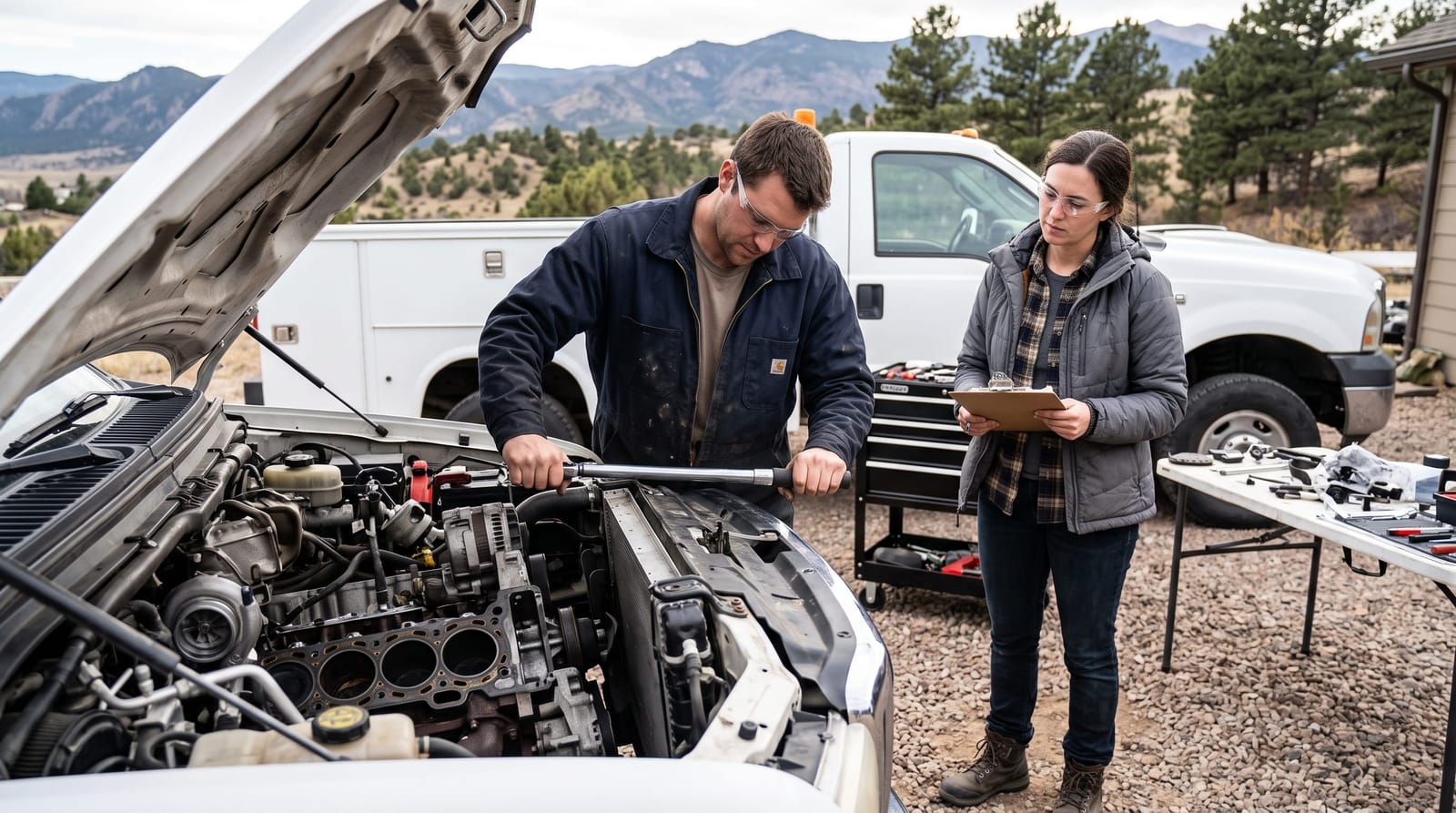
If you own a 2003-2007 Ford F-250 or F-350 with the 6.0L Powerstroke, there's a good chance you've already heard the warning: these engines have a reputation for head gasket failures that can sideline your truck without much notice. As part of our broader coverage of diesel engine repair in Fort Lupton, CO, this beginner's guide breaks down exactly why the 6.0 Powerstroke is so prone to this problem, what a proper repair actually involves, and why cutting corners almost always leads to doing the job twice, at twice the cost.
Why the 6.0 Powerstroke Has a Head Gasket Problem in the First Place
The 6.0 Powerstroke's head gasket failures aren't really a head gasket problem: they're a cooling system problem that eventually destroys the head gaskets. Understanding this distinction is the key to fixing it correctly the first time.
Here's the chain of events that plays out in most 6.0s:
- The EGR cooler fails. The exhaust gas recirculation (EGR) cooler routes hot exhaust gases through a coolant-fed heat exchanger to cool them before they re-enter the intake. These coolers are notorious for cracking internally, which allows exhaust gases to contaminate the coolant. Once the coolant is compromised, its ability to manage engine temperature drops significantly.
- The oil cooler plugs up. The factory oil cooler on the 6.0 uses a very fine-passage design that clogs easily with scale, sediment, and coolant breakdown byproducts. A clogged oil cooler can't do its job, which means oil runs hotter than it should. Hot oil accelerates wear throughout the engine and contributes to rising coolant temperatures as well.
- Cylinder head temperatures spike. With both the EGR cooler and oil cooler compromised, the engine starts running hotter than its design tolerances allow. That excess heat causes the aluminum cylinder heads to expand beyond what the factory head bolts, which are torque-to-yield fasteners meant for single use, can hold down. The result is head gasket failure.
Colorado's conditions add an extra layer of stress. High-altitude operation means the engine works harder to produce power, heat cycles are more extreme on cold mountain mornings, and if you're towing a trailer or running work equipment across Weld County's open terrain, the thermal load on this cooling system is relentless.
The Signs Your 6.0 Is Telling You Something Is Wrong
Early detection matters enormously with the 6.0 Powerstroke. Catching cooling system problems before they progress to head gasket failure can save thousands of dollars in additional repairs. Here's what to watch for:
- White smoke from the exhaust, especially after the engine warms up, can indicate coolant entering the combustion chamber through a compromised head gasket.
- Bubbling or foaming in the coolant reservoir is a classic sign that combustion gases are finding their way into the cooling system.
- Coolant loss without a visible external leak means the coolant is going somewhere it shouldn't, often into the oil or into a cylinder.
- A milky or caramel-colored appearance to the oil on your dipstick indicates coolant has mixed with engine oil, which is a serious condition requiring immediate attention.
- Overheating or temperature gauge spikes, particularly under load or at highway speeds.
- Loss of power or hard starting, which can result from compression loss caused by a blown head gasket.
If you're noticing one or more of these symptoms, stop driving the truck for extended periods and get it diagnosed. Continuing to run a 6.0 with these warning signs risks catastrophic engine damage.
What a Complete 6.0 Powerstroke Head Gasket Repair Actually Involves
This is where many truck owners get burned. A shop that simply replaces the head gaskets and reinstalls the factory head bolts without addressing the root causes has not actually fixed the problem. The head gaskets will fail again, often within a year or two.
A thorough repair: sometimes referred to as "bulletproofing" the 6.0: addresses the entire chain of failure, not just the end result. Here's what a comprehensive repair looks like:
Step 1: Replace the EGR Cooler
The factory EGR cooler comes out and is replaced with an upgraded unit built to handle the thermal demands of the engine. Some shops offer EGR delete options depending on the truck's use and local emissions requirements: consult with your technician about what's appropriate and legal for your situation.
Step 2: Replace the Oil Cooler
The clogged factory oil cooler is removed and replaced. The cooling system is flushed thoroughly to remove the scale and debris that caused the clog in the first place. Skipping this flush means the new cooler will clog again.
Step 3: Install Upgraded Head Studs
The factory torque-to-yield head bolts are a one-time-use fastener that stretch when torqued. Once removed, they should never be reused. A proper 6.0 repair replaces them with heavy-duty head studs, most commonly ARP studs, which clamp the head to the block with significantly more clamping force and can be properly retorqued if needed.
Step 4: Replace the Head Gaskets
With the upgraded studs installed, new head gaskets go in. The cylinder head surface and block deck should be inspected, and resurfaced if needed, to ensure a proper seal.
Step 5: Address the FICM if Needed
The Fuel Injector Control Module (FICM) is another known weak point on the 6.0. While not directly related to head gasket failure, many shops include it as part of a comprehensive repair because a failing FICM can cause hard starts and rough running that get misdiagnosed as other problems.
The scope of a repair will vary depending on the condition of the specific engine and what the diagnostic inspection reveals. Repair costs for 6.0 Powerstroke work vary widely based on how much of the system needs attention, from EGR and oil cooler work alone, up to full head gasket replacement with studs, or a comprehensive overhaul that includes injectors and the high-pressure oil pump. The range can span from several thousand dollars on the low end to well over ten thousand for a complete rebuild. Getting a detailed written estimate from a diesel specialist is the best way to understand what your specific truck needs.
Why Half-Measures Lead to Repeat Failures
The most expensive way to fix a 6.0 Powerstroke is to fix it twice. If a shop replaces the head gaskets without replacing the EGR cooler and oil cooler, the root cause of the overheating is still present. The new head gaskets will be exposed to the same conditions that destroyed the old ones.
Similarly, reusing old torque-to-yield head bolts is a shortcut that rarely ends well. Those bolts have already been stretched once and cannot provide the clamping force needed to keep the head sealed under high cylinder pressures.
When evaluating a repair shop, ask specifically: Are you replacing the EGR cooler and oil cooler? Are you installing ARP head studs? If the answer to either is no without a clear explanation, keep asking questions. A diesel specialist who understands the 6.0 will be able to walk you through exactly why each component is part of the fix.
Frequently Asked Questions
Can I drive my 6.0 Powerstroke if I suspect a head gasket problem?
Driving a 6.0 with suspected head gasket failure is risky and can turn a repairable situation into a destroyed engine. If you're seeing white smoke, coolant loss, or milky oil, have the truck diagnosed before putting more miles on it. Short trips to a shop are far less damaging than continued highway or towing use.
Is the 6.0 Powerstroke worth fixing, or should I just sell the truck?
A properly repaired and bulletproofed 6.0 Powerstroke can be an extremely capable and reliable work truck. Many owners with high-mileage 6.0s that have been correctly repaired report years of trouble-free operation afterward. The decision depends on the overall condition of your truck, how much you've invested in it, and what your alternatives look like. A diesel specialist can give you an honest assessment of whether the repair cost makes sense for your specific truck.
Does Colorado's altitude make 6.0 Powerstroke head gasket problems worse?
Altitude does add stress to the 6.0's cooling system. Thinner air means the engine works harder to produce power, which generates more heat. Cold starts in Colorado winters followed by hard towing on mountain grades create aggressive heat cycling that accelerates wear on the EGR cooler, oil cooler, and head gaskets. Regular coolant system maintenance and keeping an eye on your temperature gauge are especially important for Colorado 6.0 owners.
How long does a 6.0 Powerstroke head gasket repair take?
A comprehensive 6.0 repair is a significant job. Depending on the shop's workload and parts availability, plan for anywhere from several days to a week or more. Shops that specialize in diesel engines and specifically in the 6.0 Powerstroke will typically have the familiarity and tooling to complete the job efficiently without cutting corners.
Putting It All Together
The 6.0 Powerstroke's head gasket reputation is well-earned, but it's not a death sentence for your truck. The key is understanding that the head gaskets are a symptom, not the disease: the EGR cooler, oil cooler, and head bolts are where the real fix begins. A comprehensive repair done right can turn a notorious problem engine into a dependable workhorse. If you're dealing with cooling system symptoms or a confirmed head gasket issue, this is exactly the kind of specialized work covered in our complete guide to diesel engine repair in Fort Lupton, CO. The most important step is getting your truck in front of a diesel specialist who knows the 6.0 inside and out before the problem progresses further.