Fleet Oil Changes & Fluid Maintenance in Fort Lupton: Streamlined Service for Local Businesses
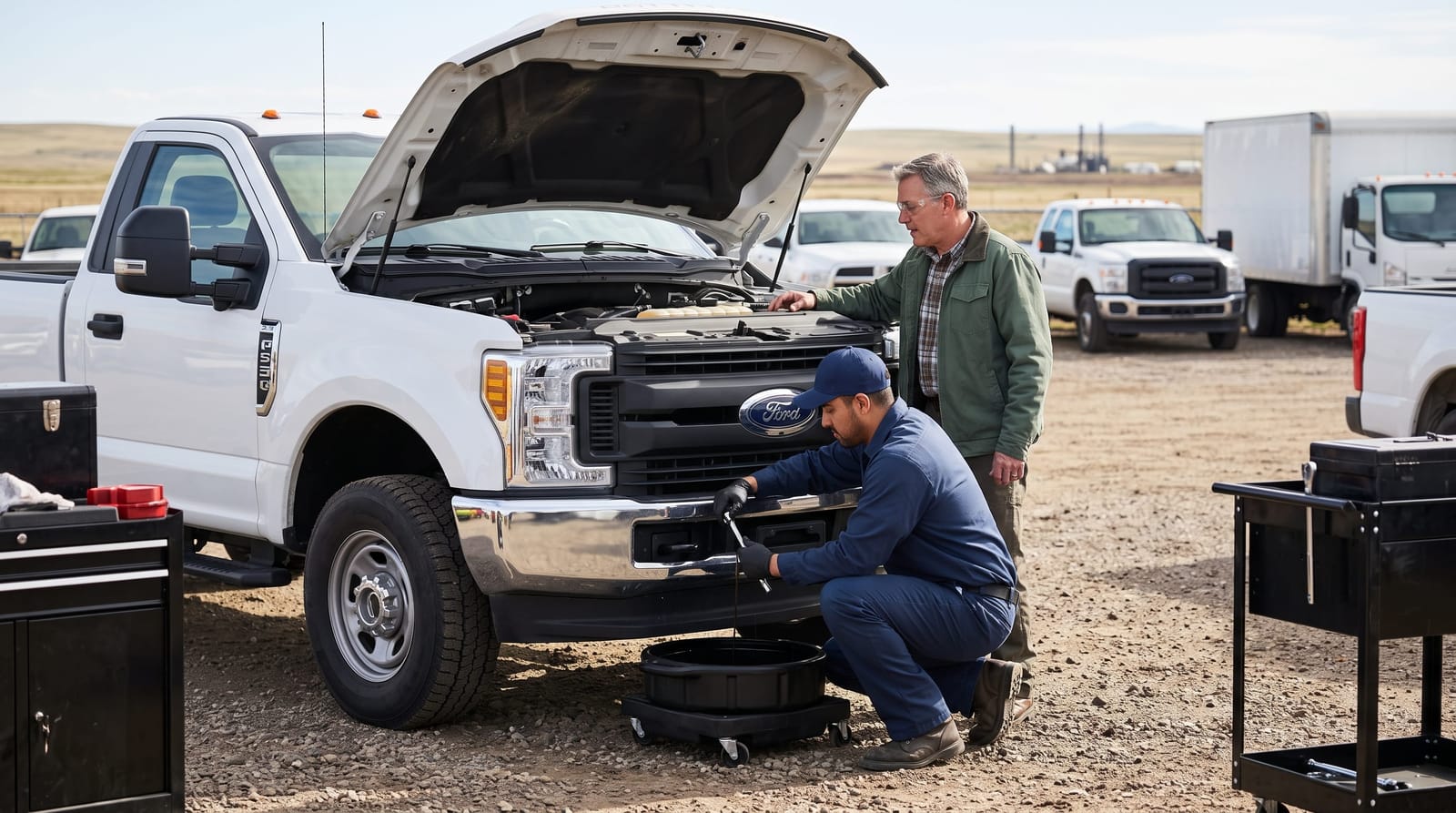
Keeping a commercial fleet running in Weld County means staying ahead of maintenance, not reacting to breakdowns. Oil changes and fluid services are the foundation of any solid fleet preventative maintenance schedule Colorado businesses rely on. Yet many fleet operators underestimate how quickly neglected fluids lead to expensive engine failures, transmission rebuilds, and unplanned downtime.
At Colorado Transmission & Diesel Specialists (CTDS) in Fort Lupton, CO, fleet oil change service Fort Lupton CO businesses need is available with scheduling built around commercial operations. This guide covers diesel oil specifications, service intervals, multi-fluid maintenance, and how a streamlined fleet account keeps your trucks earning instead of sitting.
Why Fleet Oil Changes Are Different From Standard Passenger Vehicle Service
Commercial work trucks operate under conditions that passenger vehicles rarely face. A diesel pickup hauling a full load across Weld County farm roads puts its engine under sustained stress that accelerates oil breakdown. Most fleet vehicles also log significantly more annual miles than personal vehicles: many commercial trucks in this region exceed 30,000 to 50,000 miles per year.
Standard oil change intervals were developed for light-duty, relatively low-stress driving. Fleet vehicles need a different approach.
Higher Heat, More Contamination
Diesel engines run hotter and generate more combustion byproducts than gas engines. This causes oil to oxidize faster. Once oxidation begins, the oil loses its viscosity protection. Metal surfaces start to wear. A diesel engine running degraded oil can show measurable wear damage in fewer than 5,000 miles under heavy-duty conditions.
Soot Loading in Diesel Oil
Diesel combustion produces soot. Modern diesel engine oil is formulated to hold soot in suspension, preventing it from clumping and causing abrasive wear. But this capacity has a limit. Once the oil reaches soot saturation, typically between 2% and 4% soot by weight, it stops protecting effectively. For trucks running long hauls or idling frequently, that limit can arrive before the odometer suggests it should.
The Fleet Risk Factor
When one personal vehicle breaks down, one person is inconvenienced. When a fleet truck breaks down mid-job, the consequences multiply: a missed delivery, a stalled work site, a frustrated client, and an emergency repair bill that dwarfs what a timely oil change would have cost. For contractors and small businesses in Fort Lupton and across Weld County, that math is straightforward.
Diesel Oil Specifications: What Goes Into a Commercial Work Truck
Not all motor oil is the same. Using the wrong specification in a diesel engine can void warranties, reduce protection, and cause long-term damage. CTDS technicians are trained in diesel-specific oil requirements and use the correct products for each vehicle in your fleet.
API and ILSAC Ratings
The American Petroleum Institute (API) rates diesel engine oils. Current heavy-duty diesel oil standards include CK-4 and FA-4 ratings. CK-4 oils are backward compatible with older engines. FA-4 oils are designed specifically for newer engines running at lower viscosities for fuel efficiency. Using FA-4 oil in an older engine can reduce protection: a common mistake when fleets mix vehicle ages.
Viscosity Grades for Colorado Conditions
Weld County temperatures swing significantly between summer and winter. A 15W-40 oil protects well at operating temperature but can be slow to circulate during a cold January startup. Many modern diesel trucks specify 5W-40 or 10W-30 synthetic blends to provide cold-start protection without sacrificing high-temperature performance. Synthetic oil also lasts longer under severe duty, which matters for trucks that rarely get a break.
OEM Requirements Matter
Ford 6.7 Power Stroke, Ram Cummins, and GM Duramax engines each have specific oil requirements from the manufacturer. Dexos D certification, for example, is required in some newer GM diesel applications. CTDS technicians reference OEM specifications for each vehicle, not a generic one-size approach.
Fleet Oil Change Intervals: How Often Is Often Enough?
Interval recommendations vary widely depending on operating conditions. For detailed guidance on specific interval calculations, the post on work truck oil change intervals diesel fleet breaks down the variables in depth. Here is an operational overview.
Severe Duty vs. Normal Duty
Most commercial trucks qualify as severe-duty vehicles. The EPA defines severe service as frequent short trips, towing or hauling near maximum capacity, operation in extreme temperatures, or sustained idling. All of these apply to work trucks. Under severe duty, many diesel trucks should be serviced every 5,000 to 7,500 miles rather than the 10,000-mile intervals sometimes listed in owner's manuals for ideal conditions.
Time-Based Intervals for Low-Mileage Fleets
Some fleet vehicles, utility trucks, equipment transporters, or seasonal vehicles, may not accumulate high mileage but still need time-based oil changes. Oil degrades through oxidation and moisture contamination even when a truck sits. A six-month interval is a reasonable general guideline for low-mileage commercial vehicles, though a technician can assess specific situations more accurately.
Oil Analysis as a Diagnostic Tool
Some fleet operators use oil analysis to set data-driven intervals. A lab sample costs roughly $25 to $35 per vehicle and measures viscosity, metal particle content, water contamination, and soot levels. This data can reveal engine wear early and help calibrate the right interval for each truck's actual workload, not a generalized estimate.
Beyond Engine Oil: Full Fluid Maintenance for Commercial Fleets
Engine oil gets the most attention, but a commercial truck has multiple fluid systems that degrade over time. Neglecting any one of them creates a failure point that can sideline the vehicle just as effectively as a blown engine.
Transmission Fluid
Automatic transmission fluid (ATF) breaks down under heat and load. In a truck that tows regularly, transmission temps can spike well above the normal operating range. Most manufacturers recommend ATF changes every 30,000 to 60,000 miles under severe duty: significantly sooner than the "lifetime fluid" language sometimes found in owner's manuals. A transmission rebuild can cost $3,000 to $6,000 or more. An ATF service costs a fraction of that. CTDS offers transmission fluid service as part of a fleet fluid maintenance program, which connects directly to the broader topic of commercial diesel fleet repair Weld County CO when deferred maintenance leads to component failure.
Coolant Service
Diesel engines produce significant heat. The cooling system handles that heat, but only when the coolant is doing its job. Over time, coolant loses its corrosion inhibitors. Without those inhibitors, internal engine and radiator components corrode. Electrolytic degradation can cause pitting on aluminum surfaces in as little as two to three years of neglected coolant. Heavy-duty diesel coolant (often nitrite-based or OAT/HOAT formulations) should be tested annually and replaced according to the manufacturer's schedule: typically every two to five years depending on the product type.
Brake Fluid
Brake fluid is hygroscopic, meaning it absorbs moisture from the air. As moisture content increases, the fluid's boiling point drops. For a loaded work truck making repeated downhill stops or frequent heavy braking, degraded brake fluid can contribute to brake fade at the worst possible moment. Most commercial vehicle applications benefit from brake fluid inspection and replacement every two years. This is a safety-related maintenance item, for specific guidance on your vehicles, consult your technician and refer to your OEM documentation.
Power Steering and Differential Fluids
Power steering fluid and differential or transfer case fluid are two more systems that fleets often overlook. Differential fluid in a truck that carries heavy payloads on unpaved roads degrades faster than in light-duty applications. Metal shavings accumulate over time, increasing wear on gears and bearings. These services are straightforward to perform during a scheduled maintenance visit and add minimal cost when bundled with other fluid services.
Streamlined Fleet Scheduling at CTDS: Built Around Your Business
The biggest barrier to consistent fleet maintenance is scheduling. A single-truck owner-operator can find time for a service appointment. A contractor managing five to ten work trucks faces a more complex logistical challenge: every truck in the shop is a truck not on the job.
CTDS offers fleet account management designed to reduce that friction. Priority scheduling means fleet vehicles move through service faster than walk-in appointments. Staggered scheduling allows multiple trucks to come in across a week without removing the entire fleet at once. And consolidated invoicing, available for fleet accounts, reduces the administrative burden of tracking individual service receipts across multiple vehicles.
Maintenance Tracking and Reminders
Fleet accounts at CTDS include vehicle service history tracking. This means you don't have to remember when each truck was last serviced. The shop tracks intervals by mileage and date, and can flag vehicles approaching their next service window. This takes the guesswork out of fleet management and ensures no truck slips through the cracks due to a busy month.
Reducing Downtime Through Proactive Service
Planned maintenance appointments create far less downtime than emergency repairs. A scheduled oil change takes an hour or two. A seized engine or failed transmission takes days, plus parts lead time, which in Weld County can extend that window further. Building fluid maintenance into your operational calendar is a direct strategy for minimizing fleet downtime in Weld County Colorado where service options are more limited than in Denver metro.
What to Expect from a Fleet Fluid Service Visit at CTDS
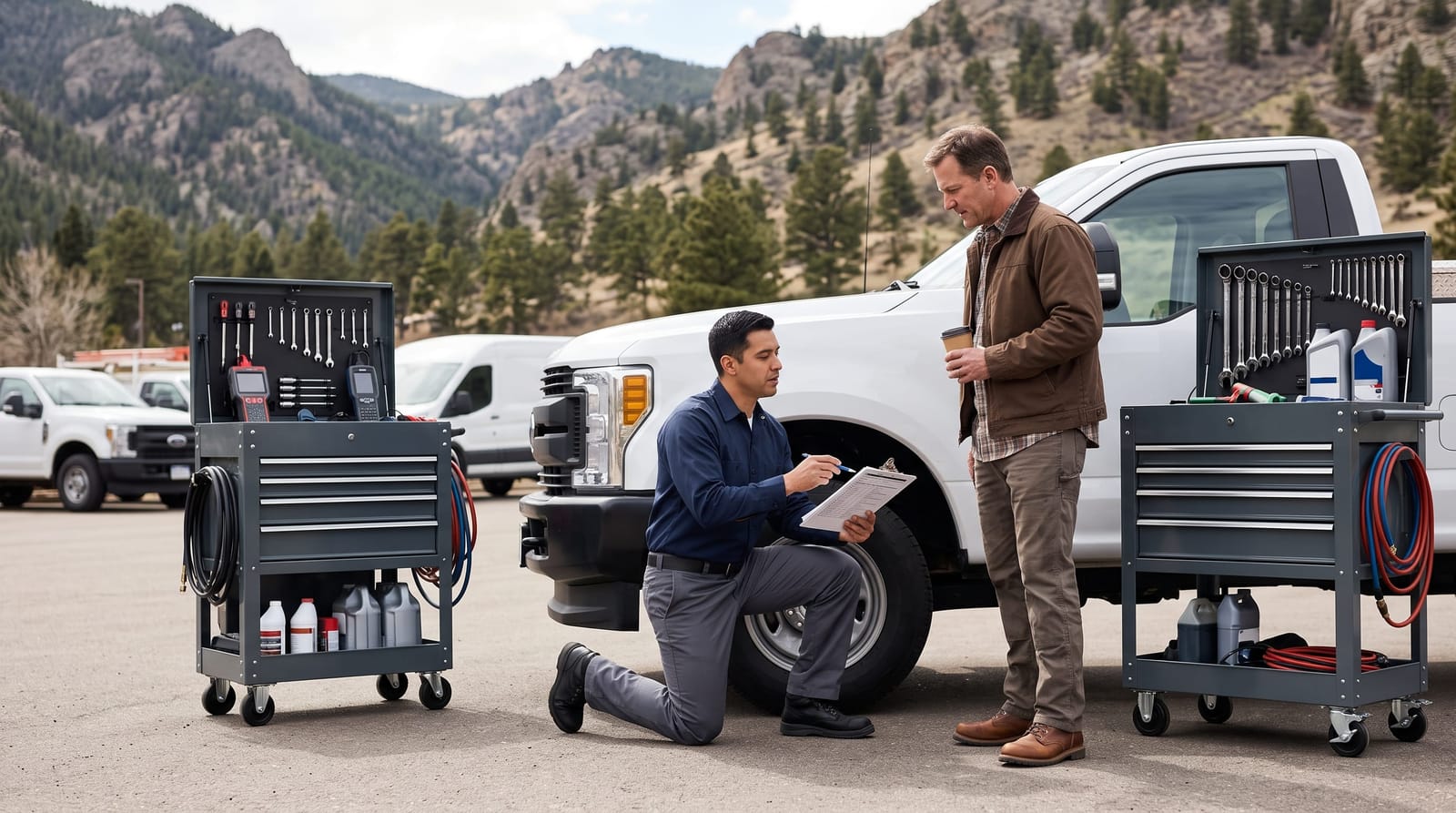
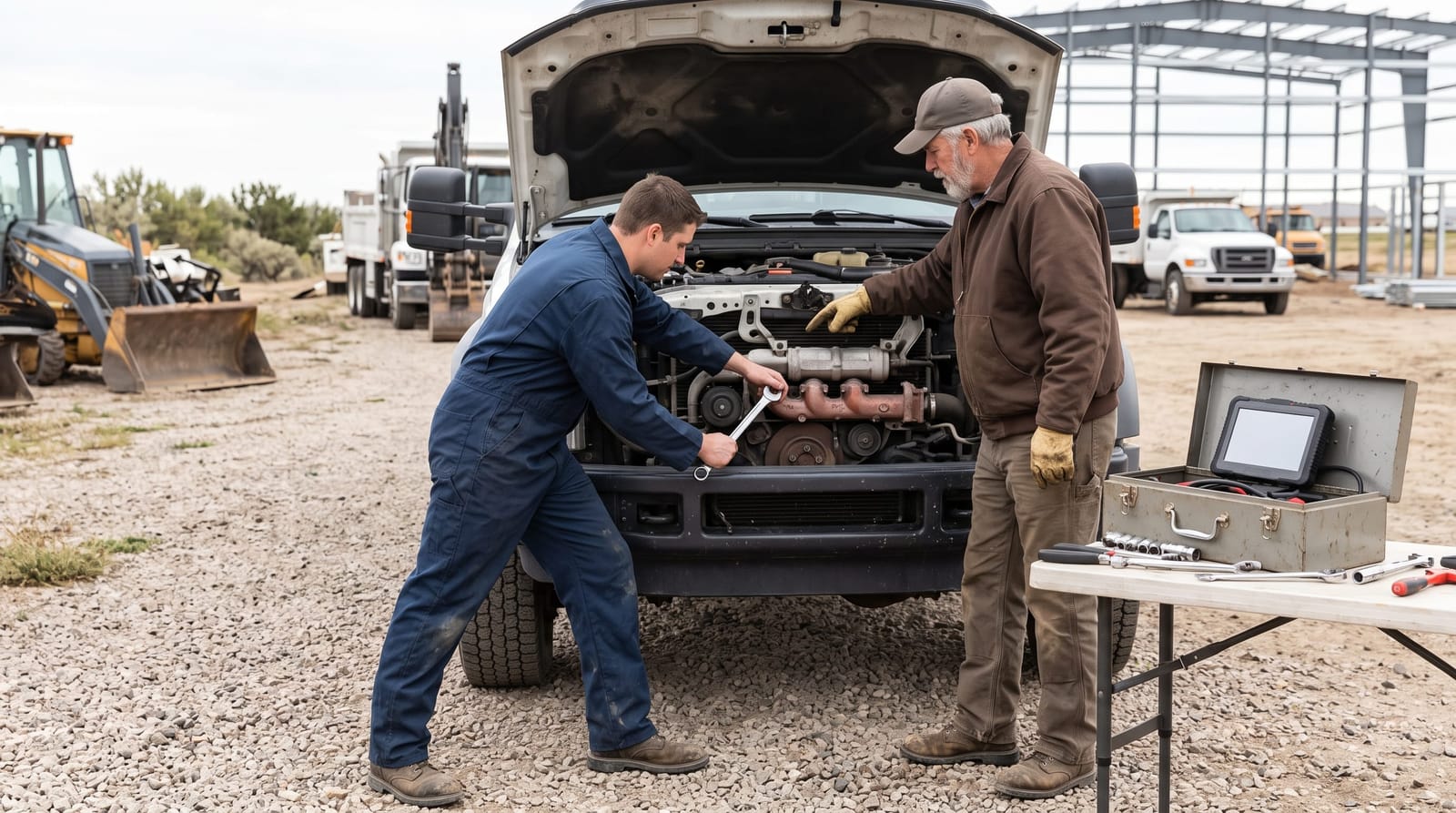
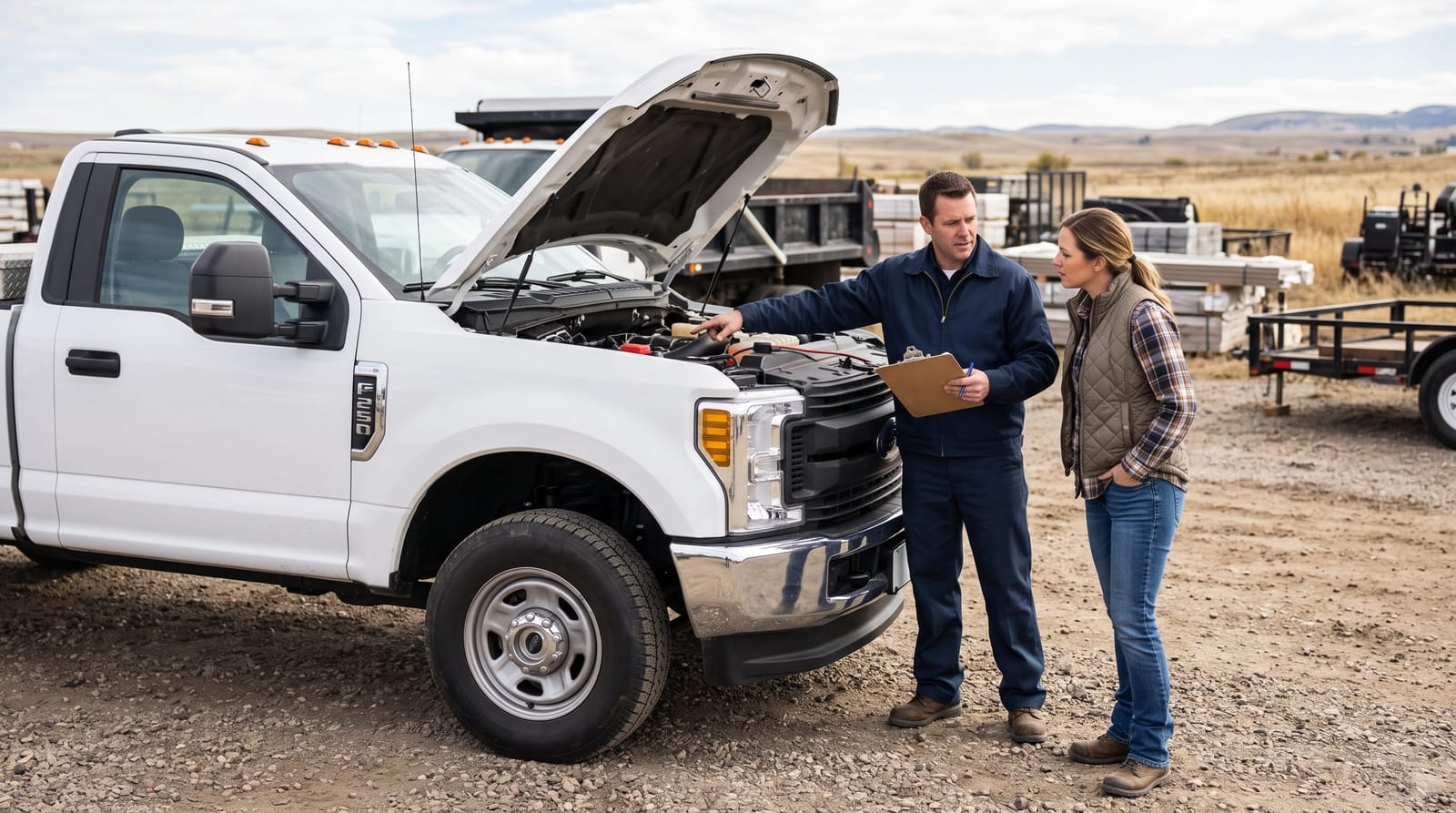
When a fleet vehicle comes in for fluid service at CTDS in Fort Lupton, the process is thorough, not a quick drain-and-fill that misses what's actually happening under the hood.
- Vehicle inspection on intake: The technician reviews service history and notes any reported issues before touching the vehicle.
- Correct fluid specification confirmed: OEM requirements are verified before any fluids are selected.
- Multi-point fluid check: Engine oil, coolant, brake fluid, transmission fluid, power steering, and differential fluid levels and condition are all evaluated during the visit.
- Filter replacement: Oil filter and, where applicable, fuel filter or cabin air filter replacement is completed as part of the service.
- Post-service documentation: Service is logged to the fleet account record with mileage and date for interval tracking.
This process takes longer than a five-minute oil change from a quick-lube chain. But for commercial vehicles where a missed issue can turn into a major repair, the thoroughness pays for itself.
Related Fleet Maintenance Topics
Fleet oil changes and fluid maintenance connect to several broader topics in commercial vehicle care. Fluid service is most effective when it is part of a complete preventative approach, not performed in isolation. Understanding how intervals interact with total vehicle workload, how to build a multi-vehicle maintenance calendar, and how to respond when preventative measures are not enough are all part of managing a healthy fleet.
CTDS covers these areas across its fleet services, from scheduled maintenance programs to diagnostics and repair for vehicles that have experienced mechanical failures.
Conclusion: Consistent Fluid Maintenance Is the Lowest-Cost Fleet Protection Available
Engine oil, transmission fluid, coolant, and brake fluid are consumables. They break down with use. When they are replaced on schedule, the components they protect last significantly longer. When they are not, the repair bills reflect it.
For Fort Lupton area fleet operators, CTDS provides fleet oil change service Fort Lupton CO businesses can schedule around their operations, not the other way around. The shop brings diesel expertise, fleet account management, and multi-fluid service together in one location.
Contact CTDS at (720) 637-5790 to set up a fleet account and get your vehicles on a fluid maintenance schedule that protects your investment and keeps your trucks productive.