How Long Do Brake Pads Last on a Diesel Truck Used for Towing?
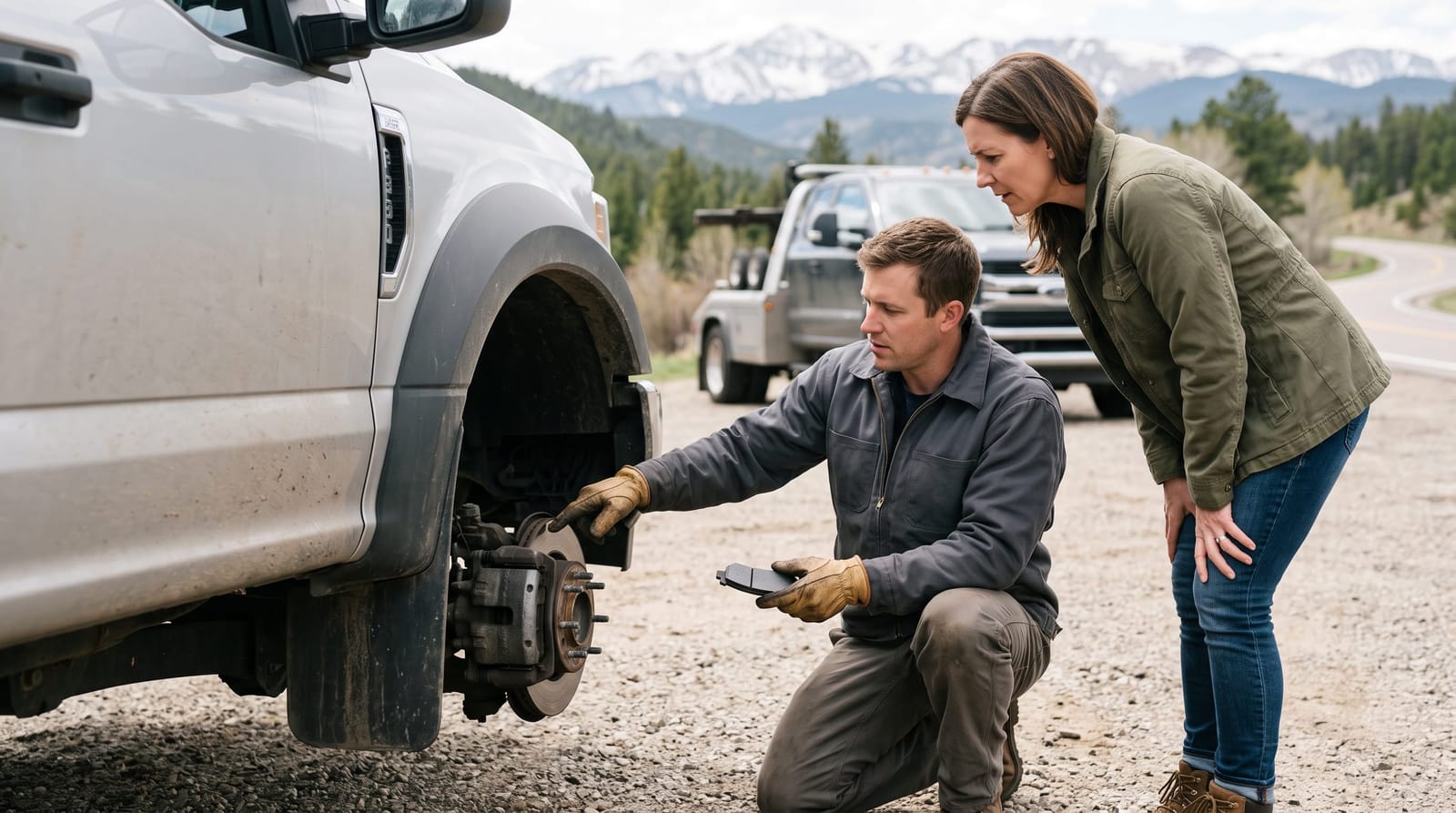
If you regularly pull a fifth wheel, flatbed, or gooseneck trailer through northern Colorado, you already know your diesel truck works harder than most vehicles on the road. But here's what many truck owners underestimate: your brakes work harder too, significantly harder. Brake pad life on a diesel towing truck is a completely different conversation than on a standard passenger vehicle. This guide breaks down realistic brake pad lifespan ranges for diesel trucks used for towing, explains exactly why Colorado's terrain accelerates wear, and gives you practical steps to protect your brake system and your safety.
What Is the Realistic Brake Pad Lifespan for a Diesel Towing Truck?
Under normal driving conditions with no towing load, a quality set of brake pads on a light-duty truck can last anywhere from 40,000 to 60,000 miles. That's a common benchmark for trucks like the Chevy Colorado under everyday driving conditions. However, once you factor in consistent towing and heavy payloads, those numbers can drop dramatically.
For a diesel truck used for towing regularly, think pulling 10,000 to 20,000 pounds several times per week, realistic brake pad life often falls in the range of 20,000 to 35,000 miles. Some heavy-duty operators who tow at or near maximum capacity on a daily basis report needing brake service even sooner, sometimes as early as 15,000 miles. That's up to 60% shorter lifespan compared to light-duty use.
The reason is physics. When you're towing, your truck's total stopping weight can easily exceed 25,000 to 30,000 pounds or more. All of that kinetic energy has to go somewhere when you apply the brakes, and most of it converts to heat through friction at the brake pad and rotor interface. More weight, more heat, more wear: every single stop.
The brake pad life on a diesel towing truck in Colorado is also affected by pad material. Standard organic pads wear fastest under heat stress. Semi-metallic pads handle heat better but can wear rotors more aggressively. Carbon-ceramic pads, while more expensive upfront, offer superior longevity and consistent stopping power under the sustained heat loads common to towing applications.
How Colorado's Mountain Terrain Shortens Brake Pad Life
Colorado doesn't just add elevation: it adds serious braking demand that flat-state truck owners simply don't face. Driving through Fort Lupton and heading toward the foothills or mountains means your diesel truck will routinely encounter long descents, elevation changes exceeding 5,000 feet, and grades that can exceed 6% to 8% on commonly traveled routes like US-85 heading toward Denver or I-70 through the Rockies.
On a long downhill grade with a loaded trailer, brake pads can reach temperatures exceeding 500°F to 700°F within minutes. At those temperatures, brake fade becomes a real concern, and repeated heat cycling degrades pad material far faster than normal stop-and-go driving ever would.
There's also the altitude factor. At higher elevations, engine braking from a diesel's compression braking system is slightly less effective due to thinner air, which places even more load on the friction brakes during descents. Experienced Colorado truck operators learn to use engine braking strategically, holding a lower gear to slow descent speed before relying on friction brakes, but even with good technique, pad wear accelerates compared to driving exclusively on flat terrain.
Winter driving compounds the issue further. Cold temperatures affect brake pad performance during the first few stops of the day, salt and road debris accelerate rotor corrosion, and snow or ice can create inconsistent braking surfaces that cause uneven pad wear. Trucks operating year-round in Colorado's climate face a uniquely demanding combination of seasonal stresses.
Key Factors That Affect Brake Pad Wear Rate on a Towing Truck
Understanding what accelerates brake wear helps you plan maintenance intervals more accurately and avoid being caught off guard by sudden brake failure. Here are the primary variables at play:
- Tow Weight and Frequency: The heavier the trailer and the more often you pull it, the faster pads degrade. A truck pulling a 12,000-pound equipment trailer five days a week will see dramatically faster wear than one towing a 5,000-pound camper on weekends.
- Payload in the Truck Bed: Carrying heavy loads in the bed adds vehicle weight that increases stopping distance demands even without a trailer attached.
- Driving Style: Late, hard braking generates extreme heat. Gradual, controlled deceleration distributes heat more evenly and preserves pads significantly longer. Even small adjustments in driving habits can add thousands of miles to brake pad life.
- Terrain: As discussed, mountain driving and long descents are among the most aggressive brake wear environments a truck can experience.
- Pad Material: Carbon-ceramic and high-performance semi-metallic pads like PowerStop Z36 Extreme Truck and Tow formulations are engineered specifically for the heat and load cycles of towing. They outperform standard pads significantly in high-demand applications.
- Trailer Brake System: A properly calibrated trailer brake controller shares stopping load between the truck and trailer. A malfunctioning or improperly set trailer brake system forces the truck's brakes to carry the entire stopping burden, accelerating wear rapidly.
How to Monitor Brake Pad Health Between Service Intervals
Given how quickly brake pads can wear on a towing truck in Colorado, waiting for your standard mileage service reminder isn't enough. Here are practical ways to stay ahead of brake issues:
- Listen for Squealing or Grinding: Most brake pads include wear indicators: small metal tabs that contact the rotor when pads reach approximately 2-3mm of remaining material, producing a high-pitched squeal. Grinding sounds indicate the pad material is fully depleted and metal-to-metal contact is occurring, which means immediate service is needed.
- Watch for Extended Stopping Distance: If your loaded truck is taking noticeably longer to stop than it used to, worn pads or brake fade is a likely cause. This is especially important to recognize before entering mountain grades.
- Check the Brake Warning Light: Many modern diesel trucks include electronic brake wear sensors that trigger a dashboard warning light when pad thickness drops below a safe threshold.
- Schedule Visual Inspections More Frequently: Towing trucks should have brakes visually inspected every 10,000 to 15,000 miles rather than waiting for the standard 25,000 to 30,000-mile general service intervals. A technician can measure pad thickness directly and assess rotor condition at the same time.
- Verify Trailer Brake Calibration: Have your trailer brake controller checked and calibrated regularly to ensure the trailer is sharing the stopping load correctly. This single step alone can significantly extend brake pad life on the tow vehicle.
Choosing the Right Brake Pads for a Diesel Towing Truck in Colorado
Not all brake pads are created equal, and selecting the right pad material for a diesel towing application in Colorado makes a measurable difference in both lifespan and performance.
Carbon-ceramic pads are widely regarded as one of the best options for high-heat, high-load towing applications. They resist brake fade at elevated temperatures, produce less brake dust, and tend to last longer than organic or standard semi-metallic options under sustained towing demands. The higher upfront cost is often offset by longer service intervals.
Purpose-built towing brake pads, such as the PowerStop Z36 Extreme Truck and Tow series, use a carbon-fiber ceramic formula specifically engineered to handle the heat and pressure cycles associated with towing and hauling. These pads pair well with performance rotors that can also manage heat more effectively than standard rotors.
For diesel trucks that see mixed use, some towing, some highway commuting, a quality semi-metallic pad often strikes a good balance between performance and cost. Work with a trusted brake specialist familiar with diesel truck applications to select the pad compound that matches your actual driving profile and load requirements.
Frequently Asked Questions
How often should a diesel towing truck have its brakes inspected in Colorado?
For diesel trucks used regularly for towing in Colorado, a visual brake inspection every 10,000 to 15,000 miles is a reasonable guideline. Mountain driving and heavy towing accelerate wear far beyond standard passenger vehicle rates, making more frequent inspections a practical safety measure. A qualified technician can measure remaining pad thickness and assess rotor condition quickly during routine service visits.
Does a diesel truck's engine braking help preserve brake pads?
Yes, using engine braking, particularly by downshifting on long descents, reduces reliance on friction brakes and can meaningfully extend brake pad life. Many diesel trucks also have exhaust brakes or compression release brakes that assist in slowing the vehicle on grades. Using these systems strategically, especially on Colorado mountain descents, is one of the most effective ways to protect brake pad life on a towing truck.
What are the signs that brake pads on a towing truck need immediate replacement?
Warning signs include a persistent squealing noise when braking (wear indicator contact), grinding or metal-on-metal sounds (pad fully worn through), vibration or pulsing felt through the brake pedal, a brake warning light on the dashboard, or noticeably increased stopping distances, especially under load. Any of these symptoms on a towing truck warrants immediate inspection before the vehicle is used to tow again.
Do trailer brakes affect how long a truck's brake pads last?
Absolutely. A properly functioning and calibrated trailer brake system shares the stopping load between the truck and the trailer, which directly reduces the stress on the truck's brake pads. When trailer brakes malfunction or are improperly adjusted, the truck's brakes must handle the full kinetic energy of both the truck and the loaded trailer, accelerating pad wear significantly. Regular calibration checks on your trailer brake controller are an important part of brake system maintenance for any truck used for towing.
The Bottom Line: Plan for Shorter Intervals and the Right Parts
Brake pad life on a diesel towing truck in Colorado can realistically fall between 20,000 and 35,000 miles, sometimes less, compared to the 40,000 to 60,000 miles typical of light-duty, no-load driving. Tow weight, terrain, driving habits, pad material, and trailer brake performance all interact to determine how quickly pads wear. The practical takeaway is straightforward: inspect more frequently, choose pad compounds rated for towing demands, and don't rely on dashboard warnings alone. If you're pulling loads regularly in and around Fort Lupton, staying proactive about brake service is one of the most important things you can do to protect your truck, and everyone else on the road.