Squealing vs. Grinding Brakes: What's the Difference and Which Is More Serious?
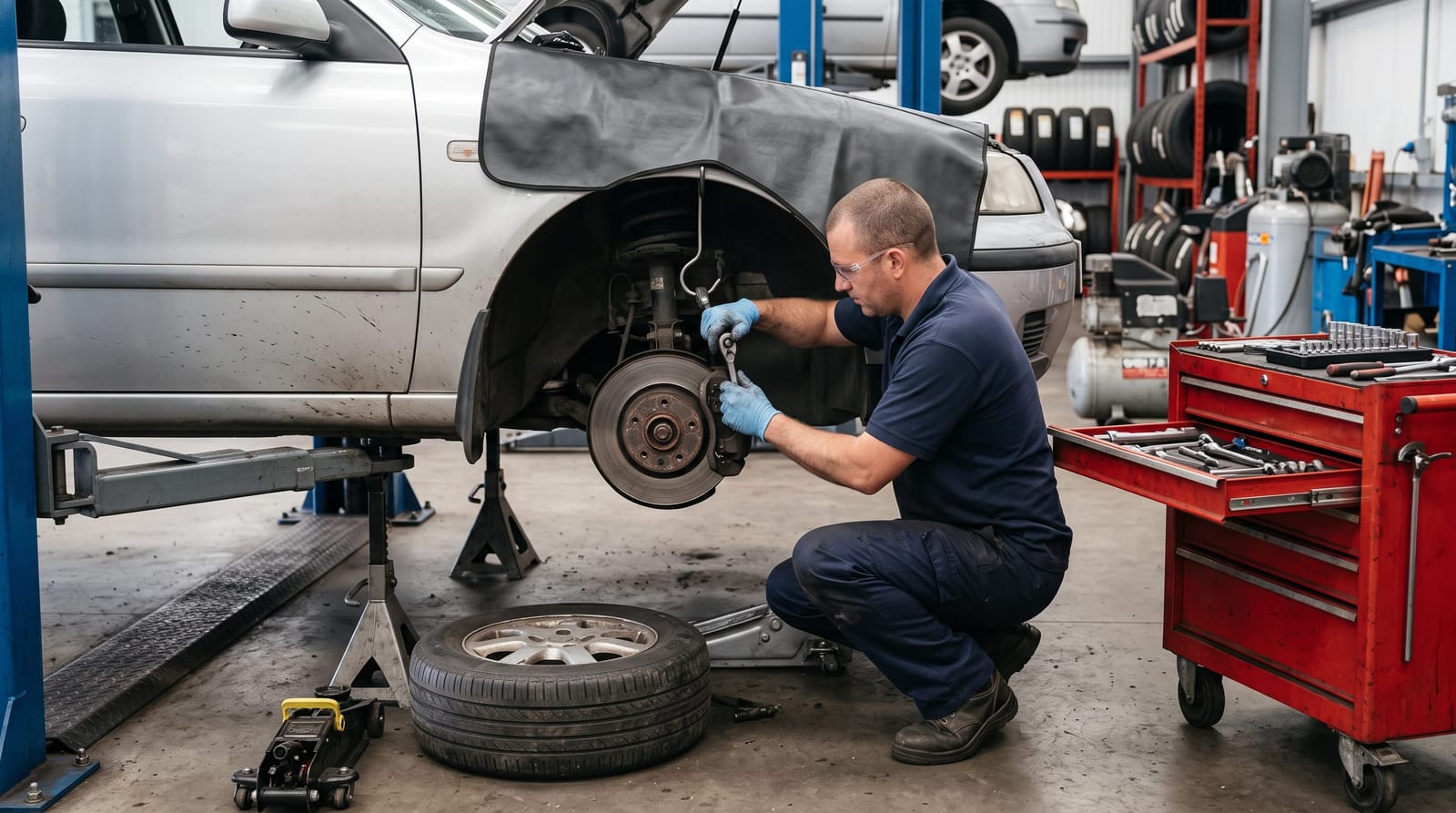
If your brakes are making noise, your vehicle is trying to tell you something, and the specific sound matters more than most drivers realize. Squealing and grinding are the two most common brake noises, but they signal very different problems with very different levels of urgency. As part of understanding complete brake service and repair, knowing how to interpret these sounds can be the difference between a routine pad replacement and a much costlier repair. This guide breaks down exactly what each noise means, how serious each one is, and when you need to act.
What Squealing Brakes Actually Mean
That high-pitched squeal when you press the brake pedal is one of the most recognizable sounds in automotive maintenance, and in most cases, it's a deliberate warning. Most modern brake pads are manufactured with a small metal wear indicator tab built directly into the pad material. When the pad wears down to approximately 2-3mm of remaining thickness, this tab makes contact with the rotor and produces that distinctive squealing sound. It's essentially your vehicle's built-in alarm system telling you the pads are getting low.
However, squealing doesn't always mean worn pads. Other common causes include:
- Morning moisture: Overnight condensation or rain can cause a thin layer of rust to form on rotors. This often produces a brief squeal during the first few stops of the day, then disappears: typically not a cause for concern.
- Debris caught in the caliper: Small stones, road grit, or debris can lodge between the pad and rotor, creating intermittent squealing until the debris clears or is removed.
- Glazed brake pads: Overheated or improperly broken-in pads can develop a hardened, glazed surface that squeals during braking even when pad thickness is adequate.
- Low-dust or semi-metallic pad compounds: Some high-performance or budget brake pad formulations are simply noisier by nature.
The key distinction: squealing that appears consistently every time you brake, not just on the first stop of the day, almost always means it's time for an inspection. Worn pads that go unaddressed will eventually wear down completely, turning a relatively simple repair into something far more serious. Most brake pads last between 25,000 and 65,000 miles, but driving style, vehicle weight, and terrain all affect wear rate significantly.
What Grinding Brakes Actually Mean: And Why It's More Urgent
If squealing is your vehicle's polite warning, grinding is its alarm at full volume. A grinding sound, often described as a metal-on-metal scraping or growling, almost always indicates that the brake pads have worn through completely. When pad material is fully gone, the metal backing plate of the pad makes direct contact with the rotor surface. This is what mechanics mean when they say "metal-to-metal contact."
Grinding brakes are significantly more serious than squealing for several reasons:
- Rotor damage accumulates fast: Once metal contacts the rotor, the rotor surface begins scoring and gouging with every brake application. What might have been a $200-$300 pad replacement can become a $500-$800+ job once rotors need replacement, and rotors often cannot be resurfaced once scoring is deep enough.
- Stopping distance increases: Damaged contact surfaces reduce braking efficiency. Studies on degraded brake systems show stopping distances can increase by 20-30% or more compared to a properly functioning system: a critical safety margin on Colorado's highways and mountain roads.
- Caliper damage is possible: Severe metal-on-metal wear can eventually damage brake calipers, adding another expensive component to the repair.
- Complete brake failure risk: In extreme cases of neglect, grinding brakes can lead to pad separation and a significant loss of braking ability.
There is one exception worth noting: grinding can sometimes occur if a vehicle has been parked for an extended period and surface rust has built up on the rotor. This type of grinding typically clears after a few stops. If grinding persists beyond the first few brake applications, treat it as urgent.
For anyone searching for information about squealing grinding brakes what it means, the short answer is this: squealing buys you some time, grinding does not.
Side-by-Side Comparison: Squealing vs. Grinding
Here's a direct comparison to help you quickly assess what you're hearing and how urgently to respond:
- Squealing: Sound: High-pitched squeal or shriek, usually during braking
- Squealing: Most Likely Cause: Worn pad wear indicators, debris, glazed pads, or morning moisture
- Squealing: Rotor Risk: Low to moderate if addressed promptly
- Squealing: Urgency Level: Schedule inspection within 1-2 weeks; don't ignore persistent squealing
- Squealing: Typical Repair: Brake pad replacement; rotors may or may not need attention
- Grinding: Sound: Deep metal scraping, growling, or rumbling during braking
- Grinding: Most Likely Cause: Completely worn brake pads, metal-to-metal contact
- Grinding: Rotor Risk: High: rotor damage begins immediately and worsens with every stop
- Grinding: Urgency Level: Requires immediate inspection: do not delay driving on grinding brakes
- Grinding: Typical Repair: Pad replacement plus rotor resurfacing or replacement; possible caliper damage
To understand all the warning signs your brakes might be giving you, beyond just noise, review the full breakdown of signs brakes need replacing Colorado drivers should know.
When to Drive vs. When to Stop Immediately
One of the most common questions drivers have is whether it's safe to keep driving once they notice brake noise. Here's straightforward guidance:
Squealing brakes: If the squeal is consistent and occurs every time you brake (not just on the first stop of the day), schedule an inspection as soon as possible: within the week if you can manage it. Driving a moderate distance on squealing brakes is generally lower risk, but the window is not unlimited. Pad wear indicators are typically calibrated to give drivers a warning with roughly 2-4mm of pad life remaining, which may represent a few hundred to a few thousand miles depending on driving habits.
Grinding brakes: If you're hearing grinding, the priority level is significantly higher. Metal-on-metal contact causes rotor damage with every single stop. Continuing to drive adds repair costs quickly and, more importantly, compromises your braking capability. If you are experiencing grinding and need to continue driving before a repair appointment, leave significantly more following distance and avoid hard braking whenever safely possible, but get the vehicle inspected without delay.
If your brakes feel soft, the pedal sinks unusually low, or you notice pulling to one side along with any noise, those are additional warning signs that warrant same-day attention. Understanding the full picture of brake job cost Colorado residents typically face can also help you plan financially for repairs before they become emergencies.
Getting a Professional Diagnosis at CTDS in Fort Lupton
Brake noise diagnosis isn't always straightforward: the same grinding sound can have multiple causes, and what sounds like "just a squeal" can sometimes indicate a more complex issue with a caliper or hardware. A visual inspection from a qualified technician tells you what sound alone cannot: how much pad material remains, whether rotors are scored or warped, whether calipers are functioning correctly, and whether brake fluid condition is contributing to performance issues.
The team at CTDS serves Fort Lupton, Platteville, Hudson, Greeley, and surrounding communities with comprehensive brake inspections for both personal vehicles and heavy-duty trucks. Whether you're hearing a faint squeal or a consistent metal grind, a professional diagnosis is the only way to know exactly where your brakes stand, and what it will take to get them back to safe, reliable operation.
Frequently Asked Questions
Can squealing brakes fix themselves?
In rare cases, squealing caused by morning moisture or loose debris will resolve on its own after a few stops. However, squealing caused by worn brake pads, the most common cause, will not fix itself and will only worsen over time until the pads wear through completely. Persistent squealing that occurs every time you brake should always be inspected by a qualified technician.
Is grinding always a sign of brake failure?
Grinding almost always indicates severe wear or damage: it means your pads are likely worn through, and your rotors may already be compromised. While grinding that clears after the first few stops from a cold start can sometimes be surface rust burning off, grinding that persists through normal braking should be treated as a sign of serious wear requiring immediate professional inspection. Do not assume grinding will resolve on its own.
How long can I drive on squealing brakes before they start grinding?
There's no reliable universal answer because it depends on how much pad material remains when the wear indicator first contacts the rotor, plus your driving style and conditions. Some drivers notice several thousand miles between first squeal and metal-on-metal contact; others may have far less. The safest approach is to schedule an inspection within one to two weeks of first noticing consistent squealing: don't try to time how long you can wait.
Do I need to replace both front and rear brakes at the same time?
Front and rear brakes wear at different rates: front brakes typically handle 60-70% of braking force and wear faster than rear brakes. It's common to replace front pads more frequently than rear pads. Brakes on the same axle (both front or both rear) are generally replaced together to maintain even braking performance. A technician's inspection will tell you exactly which brakes need attention and which have remaining life.
The Bottom Line: Both Noises Deserve Attention, But Grinding Is Urgent
Squealing brakes are your warning system working as designed: they're telling you pad replacement is approaching and you have a limited window to act. Grinding brakes mean that window has closed. With stopping distances potentially increasing by 20-30% on severely worn brakes and rotor damage accumulating with every stop, grinding is a repair that should not wait. Whether you're hearing a faint squeal or a worrying metal grind, a professional brake inspection at CTDS in Fort Lupton gives you a clear, honest answer about what your brakes actually need, and what it takes to keep you and your passengers safe on Colorado roads.