Transmission Warning Signs You Should Never Ignore: A Guide for Colorado Truck Owners
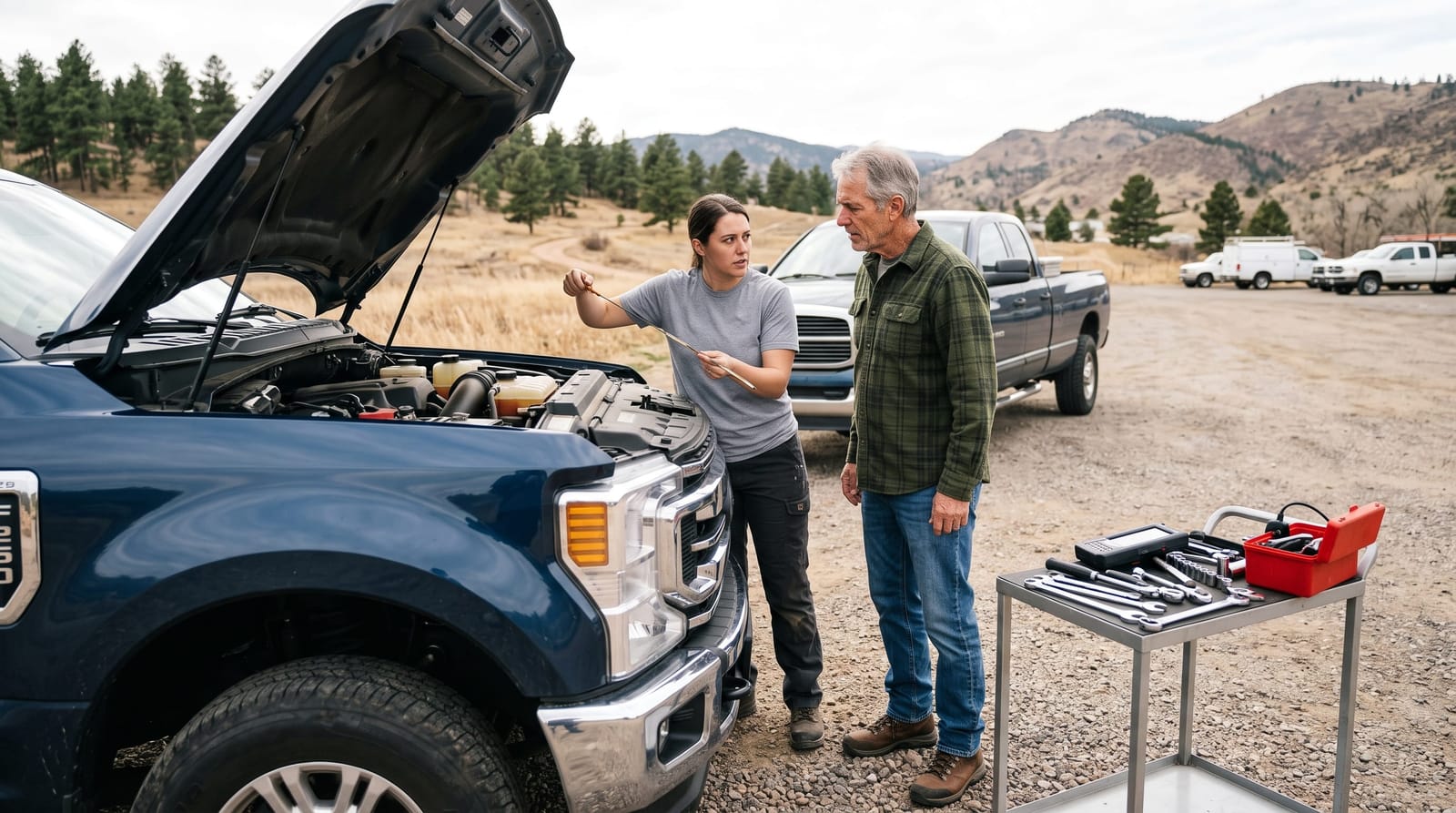
If you drive a truck or diesel vehicle along Colorado's Front Range, hauling equipment through Weld County, commuting on I-25, or pulling heavy loads on rural roads, your transmission takes a beating that most passenger car drivers never experience. Understanding transmission problems symptoms Colorado drivers face is one of the most important things you can do to protect your vehicle investment. As part of our complete guide to transmission repair in Fort Lupton, CO, this deep dive covers the critical warning signs you should never dismiss. Catching a transmission problem early can mean the difference between a $300 diagnostic fix and a $4,000 full rebuild. Here are the warning signs that demand your immediate attention, and what each one typically means for your vehicle.
1. Slipping Gears: The Warning Sign Colorado Drivers Dismiss Too Long
Gear slip is one of the most commonly reported, and most commonly ignored, transmission problems symptoms Colorado truck owners experience. When your transmission slips, the engine revs up but your vehicle doesn't accelerate in proportion. You might feel it as a brief hesitation, a momentary surge of RPMs, or a sensation that the vehicle is coasting when it should be driving forward.
What Causes Gear Slipping?
Slipping gears typically result from one or more of the following root causes:
- Low or degraded transmission fluid: the most common and easiest-to-fix culprit
- Worn clutch packs inside the automatic transmission that can no longer hold gear engagement under load
- Solenoid failure: the electronic valves that control fluid flow and gear changes stop firing correctly
- Band or drum wear: internal mechanical components that degrade over high mileage
Why It's Especially Serious for Truck and Diesel Operators
If you're towing a trailer, pulling a fifth wheel, or hauling a loaded flatbed through Colorado's elevation changes, a slipping transmission isn't just annoying: it's genuinely dangerous. Torque demand spikes when you're climbing a grade or decelerating on a mountain descent, and a slipping transmission can't handle those demands reliably. Studies from transmission industry groups suggest that over 60% of major transmission failures involve early-stage slip that was detected but not addressed. Don't be that statistic.
2. Burning Smell: Your Transmission Is Telling You It's Overheating
A burning smell coming from under your hood or beneath your vehicle is never a "wait and see" situation. In most cases related to the drivetrain, that acrid, slightly sweet burning odor means your transmission fluid is overheating, breaking down, or leaking onto hot components.
What's Happening Inside the Transmission
Automatic transmission fluid (ATF) serves three critical functions: lubrication, hydraulic pressure, and cooling. When ATF breaks down due to heat, age, or contamination, those functions degrade simultaneously. The fluid turns dark brown or black, loses viscosity, and begins to burn, which is exactly what you're smelling. Operating temperatures above 200°F dramatically accelerate internal wear, and for every 20°F increase beyond that threshold, transmission fluid lifespan can be cut roughly in half.
Common Scenarios That Trigger Overheating in Colorado
- Extended towing in summer heat on I-76 or Highway 85
- Stop-and-go traffic with a heavy trailer attached
- Low fluid level forcing the system to work harder
- A clogged or damaged transmission cooler
- High-altitude driving combined with heavy loads
If you notice a burning smell, check your fluid level and color as soon as it's safe to do so. Dark, opaque, or gritty fluid means it needs to be serviced immediately: this is not a maintenance item you can defer.
3. Transmission Shudder and Hard Shifts: When Your Truck Kicks and Bucks
A healthy transmission shifts smoothly and almost imperceptibly under normal driving conditions. When you start feeling pronounced shuddering during gear changes, a hard "clunk" between gears, or jerky engagement at highway speeds, your transmission is communicating a real problem.
Shudder vs. Hard Shift: Understanding the Difference
These two symptoms often get lumped together, but they typically point to different root causes:
- Transmission shudder: a vibration or shake that occurs during light throttle at 35-55 mph, often caused by torque converter issues or contaminated fluid
- Hard shifts: abrupt, jarring gear changes, often tied to solenoid problems, pressure regulation faults, or valve body wear
- Delayed engagement: a pause between shifting into Drive or Reverse and actual movement, indicating hydraulic pressure problems or clutch pack wear
The Chevy Colorado Connection
It's worth noting that certain specific models, including the Chevy Colorado, have documented histories of hard shifts, delayed shifts, and unusual noises that owners sometimes attribute to normal operation. They're not. Hard shifting and shudder are abnormal regardless of the vehicle platform, and they warrant a professional electronic scan to determine whether the cause is mechanical, hydraulic, or software-related. For vehicles with electronically controlled transmissions, an updated TCM calibration sometimes resolves shudder symptoms without internal disassembly, but only a proper diagnostic will tell you that. Learn more about how automatic transmission repair in Fort Lupton works for modern electronically controlled systems.
4. Fluid Leaks: The Ground Beneath Your Truck Doesn't Lie
A puddle under your parked truck is a diagnostic signal hiding in plain sight. Transmission fluid leaks are among the most straightforward warning signs to identify, if you know what to look for, and among the most consequential to ignore.
Identifying Transmission Fluid vs. Other Leaks
Not every fluid dripping from your truck is transmission fluid. Here's how to differentiate:
- Transmission fluid: typically red or reddish-brown (darkens with age), slightly sweet smell, found toward the center or rear of the vehicle
- Engine oil: amber to dark brown, found toward the front of the vehicle
- Coolant: typically bright green, orange, or pink, thin consistency, sweet smell
- Power steering fluid: similar color to ATF, but found near the front wheels
Where Transmission Leaks Originate
Common leak points include the pan gasket, output shaft seals, input shaft seal, cooler lines, and the torque converter seal. A pan gasket leak, for example, might only cost a modest amount to address if caught early. But if a slow leak drops your fluid level low enough to cause internal damage, which can happen over as few as a few hundred miles of highway driving, you're now looking at a significantly more expensive repair or potentially a full rebuild. Early intervention is not optional; it's economical.
5. Check Engine Light and Transmission Codes: Don't Guess, Scan
The check engine light (CEL) triggers a strong temptation in most truck owners: ignore it and hope it goes away. That strategy works out poorly approximately 0% of the time when the underlying fault is transmission-related. Modern vehicles store specific diagnostic trouble codes (DTCs) when the powertrain control module or transmission control module detects an anomaly, and those codes contain genuinely useful information when read by the right equipment.
Common Transmission-Related Trouble Codes
- P0700 series: general transmission control system malfunction (indicates TCM has set its own fault)
- P0730: P0736: incorrect gear ratio detected (often points to solenoid or clutch pack issues)
- P0740: P0744: torque converter clutch faults
- P0750: P0770 series: shift solenoid faults (A through E)
- P0868: transmission fluid pressure low
A generic OBD-II scanner from the parts store will read some of these codes, but it won't access manufacturer-specific enhanced codes, live data streams, or TCM parameters that a professional-grade scan tool captures. That difference matters enormously when diagnosing whether a solenoid code, for example, reflects an actual failed solenoid or a hydraulic pressure problem that's triggering a false solenoid fault. For a detailed breakdown of what specific codes mean for your vehicle, see our guide on transmission check engine light codes in Colorado.
6. Unusual Noises: What That Whining, Clunking, or Grinding Is Telling You
Transmissions are not supposed to make noise under normal operation. If yours is humming, whining, clunking, or grinding, treat that as a red flag, not a quirk.
Noise Type and Likely Cause
- Whining or humming, often indicates low fluid, a worn pump, or a failing torque converter bearing; tends to change pitch with vehicle speed or RPM
- Clunking when shifting: may indicate worn motor mounts, U-joints, or internal transmission damage; clunking in Park or Neutral points more directly to the transmission itself
- Grinding during gear changes, in automatics, this suggests clutch pack wear or band failure; in manuals, it often points to synchronizer wear or clutch adjustment issues
- Buzzing at idle: can indicate solenoid chatter or internal valve body issues
Manual Transmission Owners: Different Noises, Same Urgency
Stick-shift truck drivers hear different sounds than automatic owners, but the urgency is identical. Grinding on engagement, difficulty finding gears, or a rattling noise in Neutral that disappears when you press the clutch pedal are all symptoms worth diagnosing immediately. Manual transmission and clutch systems have their own failure patterns, for a thorough breakdown, see our post on manual transmission and clutch repair in Weld County.
What Happens When You Wait Too Long: Repair vs. Rebuild
Every one of the warning signs covered above represents an early-stage opportunity. Addressed promptly, most of them lead to targeted repairs: a fluid service, a solenoid replacement, a seal kit, a software update. Left unaddressed, these same symptoms compound into full internal failures that require complete disassembly and rebuild of the transmission unit.
The cost difference is significant. A solenoid replacement caught early might run a fraction of what a complete rebuild costs. Understanding when a rebuild is the right call versus a replacement unit involves several variables specific to your vehicle, for a full breakdown of that decision, see our comparison of transmission rebuild vs. replacement in Colorado.
The math is simple: a diagnostic scan costs very little. A complete transmission rebuild costs significantly more. The warning signs exist to give you the window to act before the decision is made for you.
Conclusion: Don't Wait for a Breakdown on Highway 85
Colorado truck owners face real-world conditions, altitude changes, heavy towing, rural roads, and long highway stretches, that accelerate transmission wear faster than urban light-duty driving. The transmission problems symptoms Colorado drivers should watch for, slipping gears, burning smells, shudder, fluid leaks, check engine codes, and unusual noises, are your vehicle's early warning system. Each one is a signal, not background noise.
At CTDS in Fort Lupton, we perform professional electronic transmission diagnostics that go far beyond what a parts-store code reader can tell you. If you're experiencing any of the symptoms described in this guide, bring your truck in before a manageable repair turns into a full rebuild. Early diagnosis is the single most effective thing you can do to protect your transmission, and your budget. Contact CTDS today to schedule your diagnostic appointment.