Ford Powerstroke Repair & Maintenance Near Brighton, CO: Common Problems & Expert Fixes
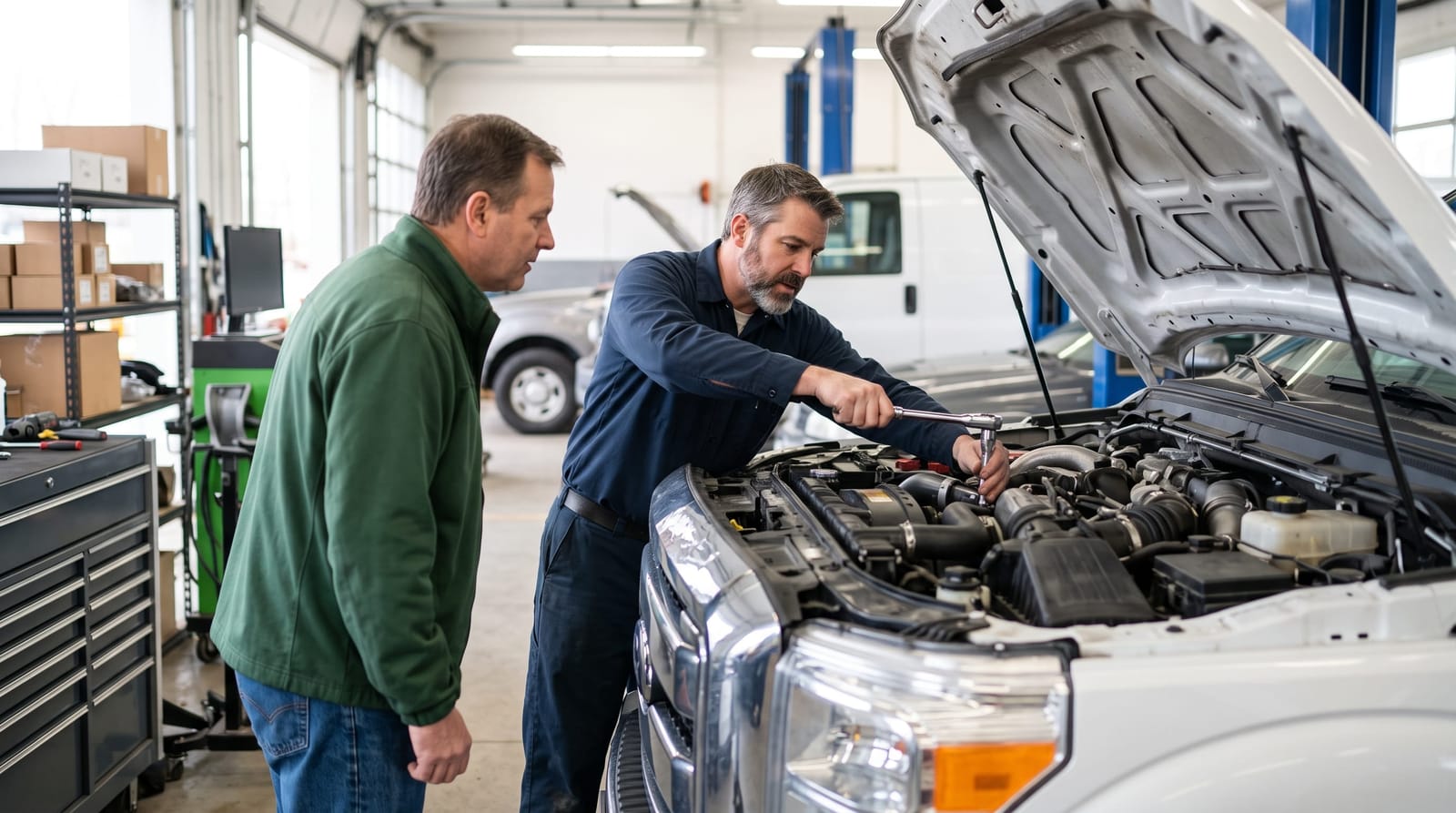
If you own a Ford diesel truck and live in the Brighton or Fort Lupton area, you already know how much you rely on that Powerstroke engine. Whether you're hauling equipment across Weld County or commuting down I-76, a diesel that isn't running right costs you time, money, and peace of mind. Ford Powerstroke repair Brighton CO truck owners need goes beyond a basic oil change: these engines have generation-specific quirks that require a technician who genuinely understands diesel systems. This guide breaks down the most common Powerstroke problems by engine generation, explains how accurate diagnosis prevents repeat failures, and shows you what to expect when you bring your truck to Colorado Truck & Diesel Service (CTDS) in Fort Lupton. If you've been searching for reliable Ford Powerstroke repair in Brighton, CO, this is the place to start.
Why Powerstroke Engines Demand Specialized Repair Knowledge
Ford has built several distinct Powerstroke engine families over the past three decades, and each generation has its own engineering DNA, which means its own failure patterns. A technician who treats a 6.0L the same way they treat a 6.7L is going to miss critical diagnostic steps and likely create new problems while fixing the old ones.
The three generations you're most likely to encounter in trucks on the road today are the 6.0L (2003-2007), the 6.4L (2008-2010), and the 6.7L (2011: present). Each one was a significant engineering departure from the last, and each one introduced different strengths and weaknesses.
What makes Powerstroke diagnosis particularly tricky is that many symptoms overlap across generations. Overheating, rough idle, white smoke, and power loss can all point to very different root causes depending on which engine you have. A shop that doesn't specialize in diesel often chases symptoms rather than causes: replacing parts without understanding the system-level failure that drove the problem in the first place. That's expensive and frustrating for the truck owner.
At CTDS, Ford Powerstroke repair is approached from a systems perspective. Before a single part gets ordered, technicians use diesel-specific diagnostic tools to read live data from the engine, fuel, cooling, and emissions systems simultaneously. That full-picture approach is what separates a real repair from a parts-swap that fails again in six months.
The 6.0L Powerstroke: Head Gaskets, EGR, and Oil Cooler Problems
No engine in the Powerstroke lineup has a more storied reputation for problems than the 6.0L. Built during Ford's partnership with International Navistar, the 6.0L was engineered with tight tolerances that left little margin for the cooling and lubrication system failures that plagued early examples.
Head Gasket Failures
The 6.0L's head gasket failure is the most widely known Powerstroke problem. The root cause is almost always a plugged oil cooler. When the factory oil cooler becomes restricted, which it does, often by 100,000 miles and sometimes much sooner, coolant temperature spikes under load. Those temperature spikes cause the cylinder head to expand and contract repeatedly, eventually compromising the head gasket seal. The symptom most owners notice first is white smoke from the exhaust combined with coolant loss. By the time those symptoms appear, internal mixing of coolant and oil may have already occurred.
The critical point for 6.0L owners: replacing only the head gaskets without addressing the oil cooler is a temporary fix. CTDS replaces the oil cooler, flushes the cooling system, installs updated head studs (the factory bolts are a known weak point), and resurfaces or replaces the heads as needed. Skipping any of those steps virtually guarantees the problem comes back. For a full breakdown of what this repair involves, see our guide on 6.0 Powerstroke head gasket repair Colorado.
EGR Cooler and EGR Valve
The exhaust gas recirculation (EGR) cooler on the 6.0L is another frequent failure point. When it cracks internally, it introduces exhaust gases directly into the coolant system, causing further overheating and white smoke. An EGR valve that's stuck open causes rough idle and misfires. Both components should be inspected, and typically replaced with upgraded aftermarket units, during any major 6.0L cooling system repair.
The 6.4L Powerstroke: DPF Clogging, Fuel Dilution, and Turbo Issues
Ford's 6.4L Powerstroke was designed to meet stricter emissions standards using a diesel particulate filter (DPF) and a more complex fuel injection strategy. While the engine made more power than the 6.0L, its emissions hardware introduced a new set of headaches that Brighton and Fort Lupton truck owners still deal with today.
Diesel Particulate Filter Problems
The DPF captures soot from the exhaust stream and periodically burns it off in a process called regeneration. The problem is that regeneration requires high exhaust temperatures that aren't always achievable in short-trip, low-load driving: exactly the kind of driving many Colorado truck owners do. When the DPF becomes overly saturated, the engine derate. You'll see reduced power, increased fuel consumption, and warning lights on the dash.
Many 6.4L owners have dealt with DPF replacement costs that approach or exceed $3,000 for the filter alone. CTDS evaluates whether a DPF can be professionally cleaned or whether replacement is genuinely necessary, and discusses all available options with the truck owner before proceeding.
Fuel Dilution in the Engine Oil
The 6.4L's regeneration strategy injects extra fuel into the combustion chamber at the end of the power stroke to raise exhaust temperatures for DPF cleaning. Some of that fuel washes past the piston rings and enters the crankcase, diluting the engine oil. Over time, fuel-diluted oil loses its lubricating properties, accelerating wear on bearings and other internal components. If your 6.4L smells like diesel fuel when you check the oil, that's a red flag that deserves immediate attention.
Twin Turbocharger System
The 6.4L uses a sequential twin-turbo system: a high-pressure and a low-pressure turbocharger working together. The compound arrangement is efficient when working correctly, but the additional complexity means more potential failure points. Carbon buildup on turbo vanes, damaged intercooler boots from heat cycling, and oil feed line restrictions are the most common culprits when a 6.4L loses boost pressure.
The 6.7L Powerstroke: Turbocharger Failures and Fuel System Wear
The 6.7L Powerstroke, introduced in 2011, was Ford's first in-house diesel design: no more International partnership. It's a more capable and generally more reliable engine than either of its predecessors, but it's not without its own characteristic problems. Trucks in the 150,000-250,000-mile range are increasingly showing up with two specific failure categories: turbocharger issues and high-pressure fuel system wear.
Variable Geometry Turbocharger Problems
The 6.7L uses a single variable geometry turbocharger (VGT) that adjusts its vane position to optimize boost across the RPM range. The vane actuator mechanism is prone to sticking due to carbon accumulation, particularly in trucks used for a lot of short-trip driving. A stuck vane assembly causes erratic boost, poor throttle response, and eventually triggers limp mode. CTDS cleans, inspects, and recalibrates the VGT system before recommending outright turbo replacement: a step that saves owners significant money when the turbo itself is still mechanically sound.
CP4 High-Pressure Fuel Pump Failures
A known vulnerability in 2011-2019 6.7L Powerstroke trucks is the Bosch CP4.2 high-pressure fuel pump. The CP4.2 relies on diesel fuel itself for internal lubrication. American diesel fuel has lower lubricity than the European diesel the pump was originally designed around, which means the pump's internal components wear faster. When the CP4.2 fails catastrophically, it sends metal debris throughout the entire high-pressure fuel system: injectors, fuel rails, and fuel lines all need to be evaluated and often replaced. Early warning signs include hard starting, rough idle, and longer crank times. Catching CP4.2 wear early through regular fuel system inspection can prevent the kind of catastrophic failure that turns a $2,000 repair into a $10,000+ system replacement.
EGR and Cooling System Maintenance
The 6.7L also has EGR hardware that requires periodic attention. Carbon deposits in the EGR cooler and intake manifold reduce efficiency and can cause rough idle and reduced power. Regular cleaning intervals, especially for high-mileage trucks, keep this system functioning correctly and reduce the risk of more expensive downstream failures.
How CTDS Diagnoses Powerstroke Problems Accurately
One of the most common frustrations diesel truck owners bring to CTDS is a truck that has already been through one or more other shops without a lasting fix. The reason is almost always incomplete diagnosis. Generic OBD-II scanners read fault codes, but they don't tell a technician why a code was triggered: they only confirm that something went wrong. Powerstroke diagnosis requires tools and software that can read live fuel pressure, injection timing, EGR flow rates, exhaust temperatures, and boost pressure simultaneously.
CTDS uses diesel-specific diagnostic equipment that captures all of those data streams in real time, under actual operating conditions. For a 6.0L with overheating complaints, that means monitoring cylinder head temperatures, coolant flow rates, and oil cooler differential pressure together, not just pulling a cooling system code and replacing the thermostat. For a 6.7L with hard starting, it means checking CP4 pump delivery pressure at idle and at load before assuming the injectors are the culprit.
This approach also means CTDS can give truck owners an honest repair estimate. When the root cause is correctly identified upfront, the repair scope is accurate: no "while we were in there" surprises because a related failure wasn't caught before the engine was torn down.
Brighton-area truck owners who've been getting generic check-engine light diagnosis at general automotive shops often find that a single accurate diagnostic session at CTDS explains problems that other shops couldn't resolve in multiple visits. Fort Lupton is a short drive from Brighton via Highway 52, making CTDS a practical choice for diesel owners across the northern Front Range.
Repair Practices That Prevent Recurring Failures
Fixing a Powerstroke correctly the first time requires more than quality parts: it requires understanding why the failure happened and addressing the conditions that caused it. CTDS builds this into every repair process.
Updated Components Over OEM Replacements
Several factory Powerstroke components have known design weaknesses that were never corrected by Ford in original production. The 6.0L's factory head bolts, for example, are stretch-to-yield fasteners that don't provide adequate clamping force over time. CTDS installs aftermarket head studs, engineered specifically to solve this problem, rather than reinstalling the same hardware that contributed to the original failure. Similarly, replacement EGR coolers for the 6.0L are sourced from suppliers whose designs eliminate the cracking patterns that plagued the factory units.
System Flushing and Verification
After major cooling, fuel, or lubrication system repairs, CTDS flushes and pressure-tests the relevant system before returning the truck. A 6.0L head gasket job, for instance, includes a full coolant system flush and a cooling system pressure test to confirm there are no remaining leaks before the truck leaves the shop. This step catches issues that might not show up on a short test drive but would cause a failure within weeks.
Documentation for Future Service
CTDS provides detailed repair documentation so truck owners have a complete record of what was done, what parts were installed, and what the technician's findings were. That information is valuable at every subsequent service appointment, and it's something a truck owner should expect from any shop doing major diesel work.
Related Topics Worth Exploring
If your 6.0L Powerstroke has already shown overheating symptoms or you've been quoted on head gasket work, the details matter significantly. Our in-depth guide on 6.0 Powerstroke head gasket repair Colorado covers the full repair process, what to expect in terms of scope, and the red flags that indicate a shop may be cutting corners on this repair.
For truck owners considering performance upgrades alongside repair work, a common combination when a diesel is already partially disassembled, topics like tuning, fuel system upgrades, and intercooler improvements are covered in detail elsewhere in this cluster. A well-maintained Powerstroke with quality supporting modifications can be significantly more capable and more reliable than a stock truck running worn factory components.
Conclusion: Get Your Powerstroke Diagnosed and Fixed Right
Every Powerstroke generation: the 6.0L, 6.4L, and 6.7L: has specific failure patterns that require generation-specific knowledge and diagnostic tools to address properly. For Brighton and Fort Lupton diesel truck owners, getting that expertise locally matters. Driving a truck with unresolved cooling, fuel, or turbocharger issues accelerates internal damage and turns manageable repairs into major engine work.
CTDS in Fort Lupton specializes in exactly this kind of diesel work: accurate diagnosis, honest scoping, and repairs that address root causes rather than symptoms. If your Powerstroke is showing any of the warning signs covered in this guide, don't wait for the problem to get worse. Contact Colorado Truck & Diesel Service to schedule a diagnostic appointment and get a clear picture of what your truck actually needs.