Manual vs. Automatic Transmission: Which Is Better for Towing in Colorado?
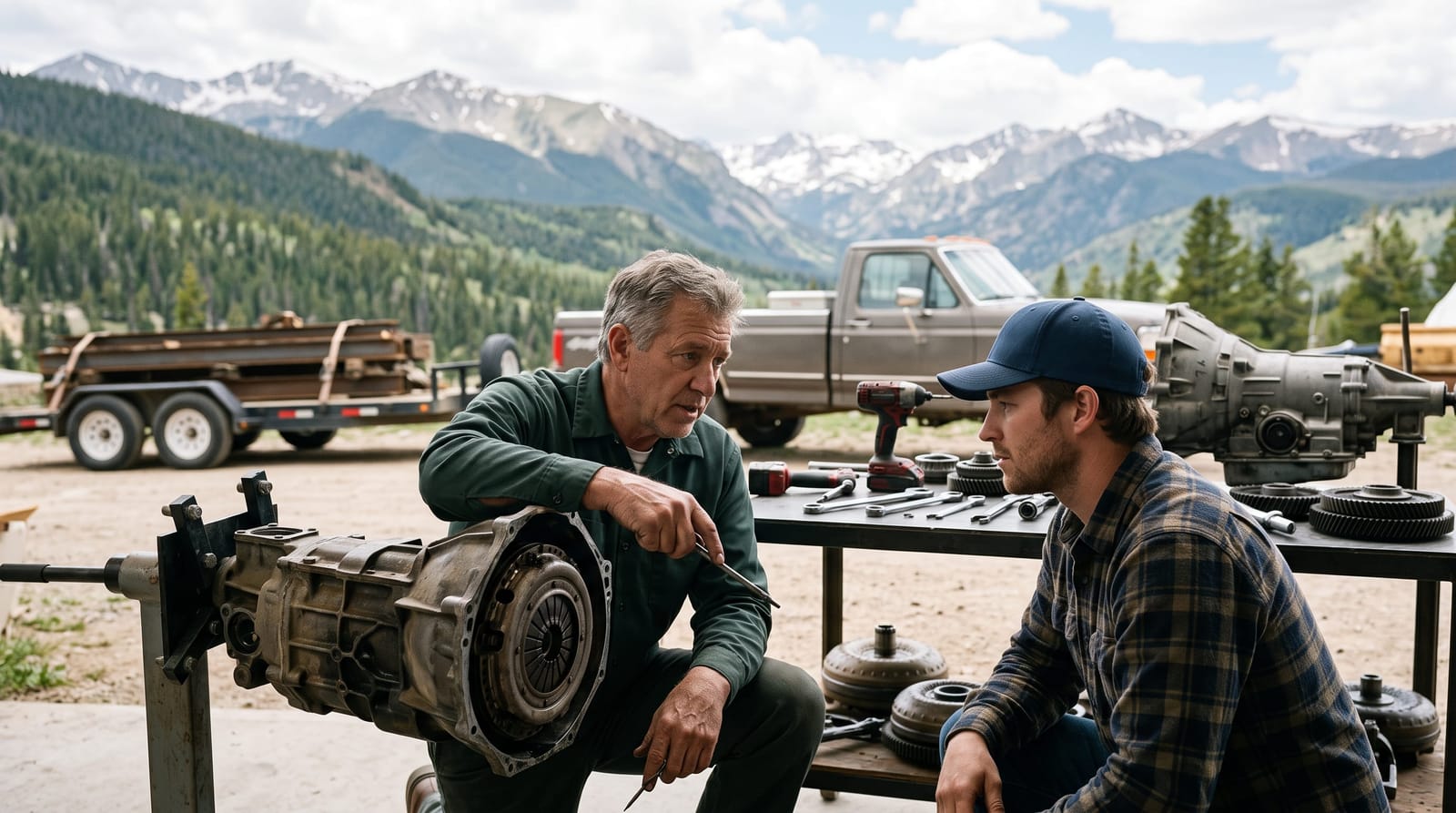
If you haul trailers, boats, campers, or heavy equipment through Colorado's mountain passes and high-altitude highways, your transmission choice matters more than you might think. The debate between manual and automatic transmissions for towing isn't just about personal preference: it comes down to heat management, torque delivery, driver control, and long-term durability under real stress. This guide breaks down how each transmission type performs in Colorado's demanding towing conditions so you can make the right call for your rig.
How Colorado's Terrain Changes the Towing Equation
Towing in Colorado is a fundamentally different challenge than towing on flat interstate highways in Kansas or Nebraska. You're dealing with sustained grades on passes like Berthoud, Vail, and Monument that climb for miles at a time. At elevation, your engine is already working harder due to thinner air and reduced combustion efficiency. Add a loaded trailer to that scenario, and your transmission is managing enormous thermal and mechanical stress for extended periods.
The critical factors in mountain towing aren't just raw towing capacity numbers: they're about how well your transmission handles:
- Sustained uphill pulls at low speeds under heavy load
- Controlled downhill engine braking without overheating brakes
- Frequent gear changes on winding two-lane mountain roads
- Stop-and-go at altitude, where starts on steep grades require precise clutch or torque converter engagement
Understanding how manual and automatic transmissions respond to each of these scenarios is the foundation for making the right choice for your situation.
Manual Transmissions: Control and Confidence: With Trade-Offs
Manual transmissions have a loyal following among experienced drivers, and for good reason. When you're descending a steep mountain grade with a loaded trailer, the ability to manually select a lower gear and use engine braking to your advantage is a genuine safety and mechanical benefit. You're not waiting for the transmission to decide when to downshift: you make that call, and you make it early.
On the uphill side, experienced manual drivers can keep their engine in the optimal torque band by choosing the right gear rather than relying on an automatic to make that decision. For diesel truck operators who know their powerband well, this level of control can be a significant advantage on sustained climbs.
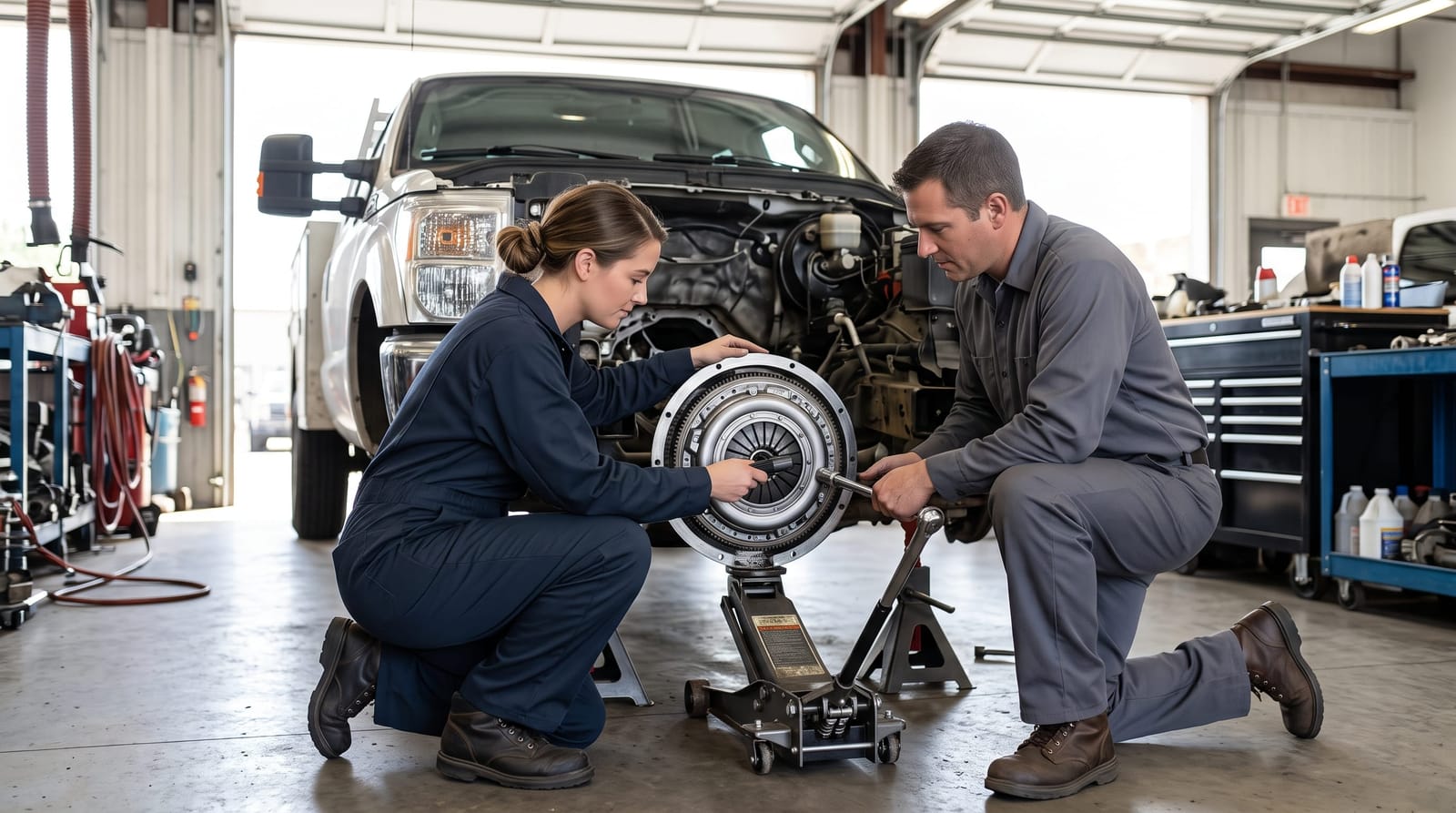
However, manual transmissions carry a real vulnerability in towing applications: clutch wear. Every slow-speed start on a steep grade, think pulling out of a campground on a hill, or merging from a mountain ramp, puts enormous strain on the clutch disc and pressure plate. Repeated heavy-load starts burn through clutch material faster than almost any other driving scenario. If you're towing frequently in Colorado and working a manual clutch hard, clutch replacement becomes a more regular maintenance reality. Understanding what clutch replacement typically costs near Brighton and Firestone is worth knowing before you commit to a manual for your tow vehicle.
Manual transmissions also require considerably more driver skill. Mistakes cost money, and in towing scenarios, they can also create dangerous situations on mountain roads.
Automatic Transmissions: Heat Management and Everyday Reliability
For most Colorado drivers who tow regularly, automatic transmissions offer a more practical and forgiving solution. Modern automatics, especially in heavy-duty trucks, are engineered with towing in mind. Many feature dedicated tow/haul modes that modify shift points, increase line pressure, and reduce torque converter slip to minimize heat buildup on long grades.
Heat is the number one killer of automatic transmissions in towing applications. When an automatic is working hard climbing a 7% grade with a 10,000-pound trailer behind it, transmission fluid temperatures can spike dramatically. The difference between a transmission that lasts 200,000 miles and one that fails at 90,000 often comes down to thermal management: both through factory engineering and proper maintenance like auxiliary coolers and timely fluid changes.
The torque converter in a modern automatic also provides a mechanical advantage at low speeds that clutch-based manual systems don't. There's no clutch to slip or burn when crawling up a steep grade: the torque converter multiplies engine torque at low speeds, which is exactly what you need when towing from a dead stop on an incline.
The trade-off with automatics is cost of repair. When an automatic transmission does fail, the rebuild or replacement price is typically higher than a clutch job on a manual. This is why proper maintenance: particularly regular fluid changes and inspection for signs of heat stress: is so important for anyone who tows with an automatic in Colorado.
Side-by-Side Comparison: What Matters Most for Colorado Towing
Here's how the two transmission types stack up across the factors that matter most for Colorado towing conditions:
- Towing Capacity: Roughly equivalent when properly spec'd. Manufacturers like GM typically rate towing capacity the same for manual and automatic versions of the same engine, meaning the platform matters more than transmission type alone.
- Mountain Control: Slight edge to manual for experienced drivers who want precise gear selection; automatic tow/haul modes close this gap significantly in modern trucks.
- Heat Management: Edge to automatic with a proper transmission cooler; automatic systems are better engineered for sustained thermal loads in towing applications.
- Clutch/Drivetrain Wear: Manual transmissions accumulate significantly more clutch wear in heavy towing scenarios, particularly with frequent mountain starts.
- Driver Fatigue: Automatic transmissions reduce driver workload on long hauls, which is a genuine safety consideration on multi-hour Colorado mountain routes.
- Maintenance Cost: Manual clutch service is generally less expensive per job; automatic fluid and filter maintenance is more frequent but lower cost per service.
- Repair Cost When Something Goes Wrong: Automatic transmission rebuilds typically cost more; manual clutch replacement is a more predictable expense.
What CTDS Recommends for Colorado Tow Vehicles
At CTDS, we service both manual and automatic transmissions regularly, and we see the wear patterns that result from Colorado's towing demands firsthand. Our honest recommendation depends on your specific use case:
If you're an experienced driver who tows occasionally with a diesel truck and genuinely values manual control on mountain descents, a well-maintained manual can serve you well. The key is understanding the clutch replacement reality and staying ahead of it rather than waiting for failure.
If you tow frequently, haul heavy loads regularly, or share your vehicle with multiple drivers, an automatic is generally the more durable and practical choice for Colorado conditions. The engineering in modern heavy-duty automatics is specifically designed for sustained towing stress, but only when the transmission fluid is changed on schedule and the system is inspected regularly.
Regardless of which type you're running, the most important thing we tell every towing customer is this: heat and neglected maintenance kill transmissions. An auxiliary cooler, a fresh fluid service before towing season, and a transmission inspection after any major mountain haul can add years and thousands of miles to your drivetrain's life.
Frequently Asked Questions
Does a manual transmission have a lower towing capacity than an automatic?
Not necessarily. Many manufacturers rate towing capacity identically between manual and automatic versions of the same engine and platform. For example, GM rates certain 4-cylinder models at the same towing capacity regardless of transmission type. However, sustained heavy towing puts more clutch wear on manuals, which can be a long-term durability concern even if the spec sheet looks identical.
Why do automatic transmissions overheat when towing in the mountains?
Automatic transmissions generate heat through torque converter slip and internal fluid friction, and sustained mountain grades amplify this dramatically. Without adequate cooling, either through a factory or aftermarket transmission cooler, fluid temperatures can exceed safe operating ranges, leading to accelerated wear, seal failure, and eventually transmission damage. High-altitude driving also reduces radiator cooling efficiency, compounding the problem.
How often should I service my transmission if I tow regularly in Colorado?
For frequent towing applications, most transmission specialists recommend shortening your fluid change interval significantly from the standard recommendation, often to every 30,000 miles or less, depending on how hard the transmission is working. If you've recently completed a major mountain tow, having the fluid inspected for color, smell, and metal content is a smart preventive step.
Can I add an aftermarket transmission cooler to my tow vehicle?
Yes, and for heavy towing in Colorado, an auxiliary transmission cooler is one of the best investments you can make. Many heavy-duty trucks come with factory coolers that are adequate for moderate towing, but adding a standalone cooler provides significant additional heat protection for sustained mountain grades. This is especially valuable for automatic transmission longevity in Colorado's demanding conditions.
The Bottom Line
For most Colorado drivers who tow regularly, a well-maintained automatic transmission is the more practical and durable choice: particularly for mountain driving where heat management and consistent performance under sustained load matter most. Manual transmissions offer genuine advantages for experienced drivers who prioritize control, but clutch wear in heavy towing scenarios is a real cost to factor in. Whatever you're driving, proper maintenance is non-negotiable. If you're unsure about the condition of your transmission before towing season, the team at CTDS can inspect and service both manual and automatic systems to make sure you're ready for Colorado's roads.