Transmission Repair & Rebuilds in Fort Lupton, CO: The Complete Guide for Colorado Drivers
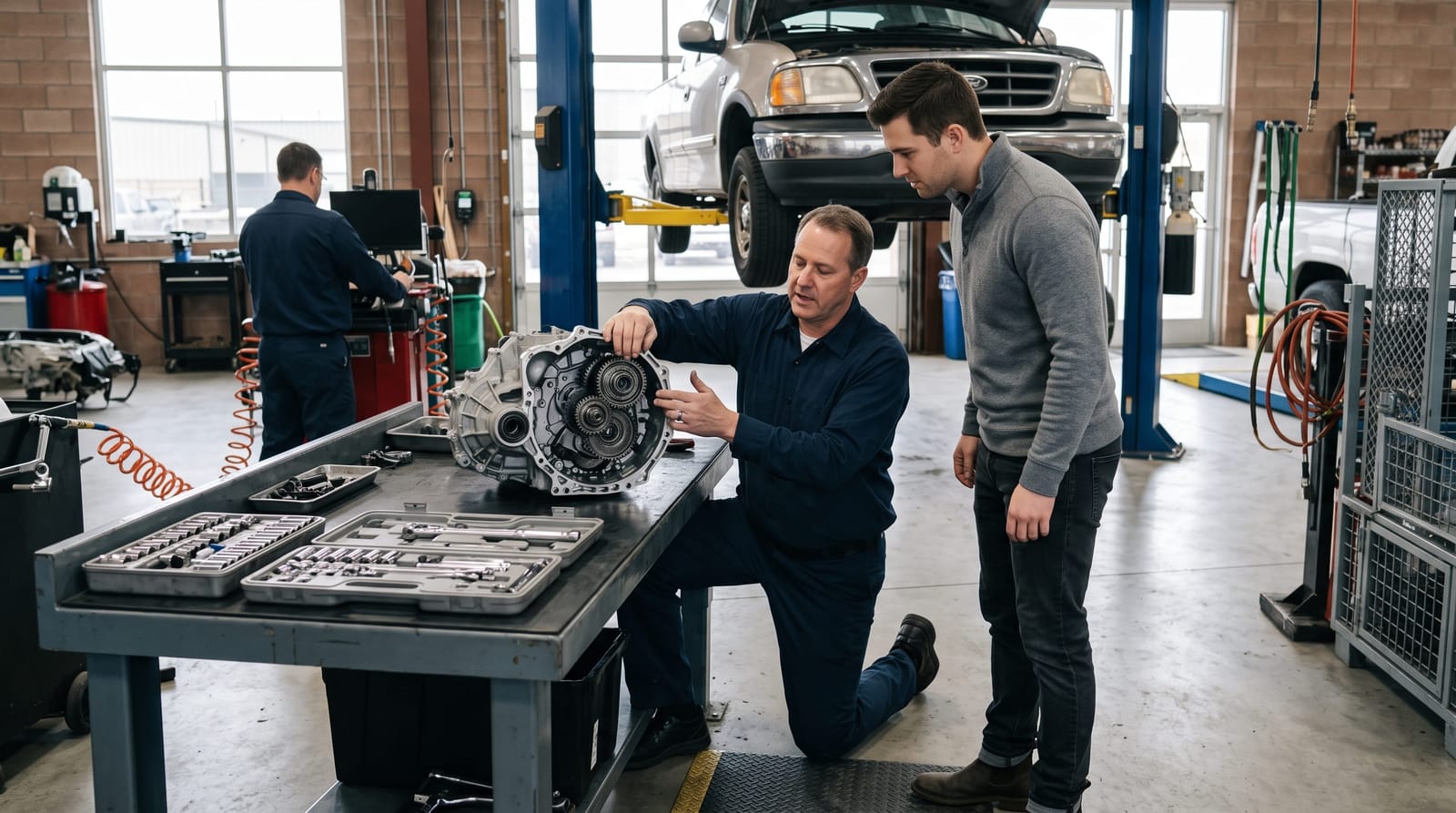
Your transmission is one of the most complex, and most expensive, components in your vehicle. With anywhere from 800 to 1,000 individual parts in a modern automatic transmission, it's also one of the most misunderstood. When something goes wrong, many Colorado drivers aren't sure whether they need a simple fluid service, a repair, or a full rebuild. Others ignore the early warning signs altogether and end up with a $4,000 problem that started as a $150 fix.
If you're searching for transmission repair in Fort Lupton, CO, you're likely already dealing with something that doesn't feel quite right: a slip between gears, a shudder at highway speed, or a warning light that just won't go away. Whether you're driving a daily commuter, a diesel-powered work truck, or a fleet vehicle that can't afford downtime, getting the right diagnosis from an experienced specialist makes all the difference.
This guide covers everything a Colorado driver needs to know about transmission service, from recognizing early symptoms and understanding service intervals to navigating the rebuild-versus-replace decision and knowing what to expect from the repair process. We'll also explain why choosing an independent transmission specialist in Fort Lupton can save you significantly compared to dealership pricing, and why drivers from Brighton, Firestone, Erie, Frederick, and Hudson regularly make the trip to work with a shop that specializes in exactly this.
By the time you finish reading, you'll have the knowledge to make a confident, informed decision about your vehicle's transmission: no upselling, no guesswork.
Understanding Your Transmission: What It Does and Why It Fails
At its most basic, your transmission transfers engine power to your wheels and manages the gear ratios that allow your engine to operate efficiently across a range of speeds. Without a functioning transmission, your engine might produce 400 horsepower and go absolutely nowhere.
Modern transmissions, both automatic and manual, are precision-engineered systems that operate under extreme heat and mechanical stress. Automatic transmissions rely on hydraulic fluid to actuate clutch packs, bands, and planetary gear sets. Manual transmissions use a mechanical clutch and physical gear engagement. Heavy-duty diesel transmissions are built to handle significantly higher torque loads, often in demanding conditions like towing, hauling, or off-road work.
Why Transmissions Fail Prematurely
Most transmission failures aren't sudden events: they're the result of accumulated wear, neglected maintenance, or operating conditions that exceed the transmission's design limits. The most common causes include:
- Degraded or contaminated transmission fluid: Transmission fluid breaks down over time, losing its viscosity and ability to protect internal components. Burnt, dark, or metallic-smelling fluid is a red flag.
- Overheating: According to industry data from the Automatic Transmission Rebuilders Association (ATRA), over 90% of automatic transmission failures are related to heat. For every 20°F increase above the optimal operating temperature, fluid life is cut in half.
- Towing beyond rated capacity: Colorado terrain, with its long mountain grades and elevation changes, puts exceptional stress on transmissions during towing. Exceeding your vehicle's tow rating is one of the fastest ways to cook a transmission.
- Neglected maintenance: Many manufacturers recommend transmission fluid changes every 30,000 to 60,000 miles under normal conditions, and more frequently under severe use. Drivers who skip these intervals compound wear with each passing mile.
- Mechanical wear: Clutch packs, seals, solenoids, and bands all wear over time. A vehicle with 150,000 or more miles that has never had transmission service is running on borrowed time.
Understanding why transmissions fail helps drivers make smarter maintenance decisions, and helps specialists diagnose problems accurately when something does go wrong.
Warning Signs You Should Never Ignore
Transmission problems rarely appear without warning. The challenge is that many early symptoms are subtle enough that drivers dismiss them as "just how the truck drives now." That instinct is costly. Catching a transmission problem at the first symptom can be the difference between a repair that costs hundreds of dollars and a full rebuild that costs several thousand.
Common Transmission Warning Signs
- Slipping gears: The engine revs up, but the vehicle doesn't accelerate proportionally. This often feels like the transmission "hunting" for the right gear.
- Delayed engagement: You shift from Park to Drive or Reverse and there's a pause, sometimes several seconds, before the vehicle moves. This is especially common in cold Colorado mornings.
- Rough or hard shifts: Instead of smooth transitions between gears, you feel a jerk, clunk, or shudder.
- Shuddering at highway speeds: A rhythmic shudder or vibration, particularly at steady cruising speeds around 40-50 mph, can indicate torque converter issues or fluid breakdown.
- Transmission fluid leaks: Red or brownish fluid pooling under your vehicle is a direct signal that your transmission needs attention. Running low on fluid accelerates internal damage rapidly.
- Burnt fluid smell: If you smell something burning, especially after a long drive or towing session, have your fluid checked immediately.
- Check engine or transmission warning lights: Modern vehicles have dozens of transmission-related fault codes. A scan tool is required to interpret them accurately. Don't assume a light means the worst; equally, don't ignore it.
- Unusual noises: Whining, clunking, or humming from the transmission area are mechanical signals that deserve professional inspection.
For a thorough breakdown of these symptoms and what they mean for Colorado truck and diesel owners specifically, see our dedicated guide on transmission problems symptoms Colorado: it covers each warning sign in detail with diagnostic context.
Types of Transmission Services: From Fluid Changes to Full Rebuilds
Not every transmission issue requires a rebuild. One of the most important things a qualified specialist does is match the service level to the actual problem: no more, no less. Here's a breakdown of the primary service types and what situations they address.
Transmission Fluid Service
A transmission fluid service involves draining the old fluid, often dropping the pan to inspect the filter and look for metallic debris, replacing the filter, and refilling with fresh fluid. This is the foundational maintenance item for any transmission and is often the most neglected service on the vehicle. For many drivers, a timely fluid service can restore smooth shifting and extend transmission life by tens of thousands of miles.
Some shops offer a transmission flush as an alternative, which uses a machine to exchange virtually all of the fluid, including fluid retained in the torque converter, rather than just what drains from the pan. The right choice between a drain-and-fill and a full flush depends on the vehicle's condition, mileage, and service history. Learn more about when each approach is appropriate in our guide on transmission fluid flush Fort Lupton CO.
Transmission Repair
Targeted transmission repair addresses a specific failed component, a solenoid, a sensor, a seal, a clutch pack, without disassembling the entire unit. This approach is appropriate when the transmission is otherwise in good condition and the root cause is clearly identified. Proper diagnosis is essential here; replacing a solenoid when the real problem is hydraulic pressure or fluid contamination won't fix anything.
Transmission Rebuild
A rebuild involves removing the transmission from the vehicle, fully disassembling it, inspecting every component, replacing all worn or damaged parts, and reassembling it to factory, or better-than-factory, specifications. A quality rebuild performed by an experienced specialist is often the most cost-effective path for high-mileage vehicles or those with significant internal damage. It can restore performance and reliability comparable to a new unit at a fraction of the cost of a factory replacement.
Transmission Replacement
In some cases, particularly when a transmission is so severely damaged that rebuilding isn't economical, or when the vehicle's value doesn't justify a full rebuild, replacement with a remanufactured or salvage unit may be the right call. This decision involves trade-offs in cost, warranty, and long-term reliability that are worth discussing in detail. Our guide on transmission rebuild vs replacement Colorado walks through how to evaluate which option fits your situation.
Automatic vs. Manual vs. Heavy-Duty Diesel Transmissions
Not all transmission work is the same, and not all shops are equally equipped to handle every type. Understanding the differences between transmission types helps you ask the right questions when evaluating a repair shop.
Automatic Transmissions
Automatic transmissions are the most common type in passenger vehicles and light trucks. They use hydraulic fluid pressure and electronic controls to manage gear selection. Modern automatics may have 6, 8, or even 10 speeds, with increasingly sophisticated valve bodies and solenoid arrays. Diagnosing an automatic transmission problem requires the right scan tools to read transmission-specific fault codes, as well as the hands-on experience to interpret what those codes mean in context.
Common automatic transmission services include fluid and filter replacement, solenoid replacement, torque converter service, valve body repair, and full rebuilds. For a detailed look at what automatic transmission diagnosis and repair involves, including what to expect during service, see our guide on automatic transmission repair Fort Lupton.
Manual Transmissions and Clutches
Manual transmissions are mechanically simpler in some respects but require a different set of skills and knowledge to service correctly. The clutch system, including the pressure plate, clutch disc, release bearing, and flywheel, is a wear item that requires replacement at intervals that vary widely by driver behavior and vehicle use. A manual transmission rebuild addresses gear synchronizers, bearings, seals, and shift forks.
Drivers in Weld County who prefer stick-shift vehicles, whether for fuel economy, control, or personal preference, need a shop that actually knows manual transmissions rather than one that only works on automatics. Our resource on manual transmission clutch repair Weld County CO covers the full scope of what manual transmission and clutch service involves.
Heavy-Duty Diesel Transmissions
Diesel-powered trucks, particularly those used for towing, hauling, construction, or agriculture, place demands on their transmissions that are categorically different from what a typical passenger vehicle experiences. High torque outputs, heavy loads, and hard-use duty cycles accelerate wear on internal components. Heavy-duty diesel transmissions like the Allison 1000, the Aisin AS69RC (used in Ram Heavy Duty applications), and ZF transmissions (common in Fords and commercial vehicles) require specialized knowledge, tooling, and parts sourcing.
Colorado's terrain compounds the challenge. Drivers running through Weld County and the surrounding area, hauling agricultural equipment, pulling equipment trailers, or operating fleet vehicles, need a transmission specialist who understands these systems, not a general repair shop that handles transmissions occasionally. Our deep dive on heavy duty transmission repair Brighton CO explains what sets a true heavy-duty specialist apart.
The Transmission Diagnosis Process: What Happens Before Any Work Begins
One of the biggest differences between a skilled transmission specialist and a general auto repair shop is the diagnostic process. Good diagnosis takes time and expertise, and it's worth every minute, because the wrong diagnosis leads to the wrong repair, wasted money, and a problem that comes back.
Step 1: Customer Interview and Symptom History
A thorough diagnostic begins with listening. When did the problem start? Under what conditions does it occur: cold starts, highway speeds, heavy loads? Has the transmission ever been serviced? What's the vehicle's mileage and work history? These details narrow the diagnostic field significantly before a technician even looks at the vehicle.
Step 2: Visual Inspection and Fluid Check
The technician will inspect the transmission visually for leaks, check fluid level and condition, and look for any obvious external damage. Fluid color, smell, and the presence of metallic particles are diagnostic data points. Dark, burnt fluid tells a different story than fluid that's simply due for a change.
Step 3: Scan Tool Diagnostics
Modern vehicles store transmission fault codes in the TCM (Transmission Control Module) that a professional-grade scan tool can retrieve. These codes guide the diagnostic process but don't tell the whole story: an experienced technician understands that a code indicates a symptom, not necessarily a cause. Pressure testing, road testing, and further inspection are often required to confirm the root cause.
Step 4: Road Test and Pressure Testing
A road test allows the technician to replicate the conditions under which the problem occurs and evaluate shift quality, engagement, slippage, and response across different operating modes. Hydraulic pressure testing can reveal whether the transmission's internal circuits are functioning within specification.
Step 5: Written Estimate and Repair Plan
Once the problem is identified, a reputable shop provides a clear written estimate with an explanation of what was found, what repair is recommended, and why. You should never feel pressured to approve work without understanding what you're paying for and what the expected outcome is.
Independent Specialist vs. Dealership: What Colorado Drivers Need to Know
One of the most common questions drivers ask when facing a transmission problem is whether to go to a dealership or an independent specialist. The honest answer depends on what matters most to you, and when it comes to transmission work specifically, independent specialists often have a significant edge.
Specialization and Experience
A dealership's service department handles a broad range of repairs across many systems. Their technicians may see transmission problems regularly, but they're not transmission specialists: they're generalists who follow manufacturer repair procedures. An independent transmission shop, by contrast, is staffed by technicians whose entire professional focus is transmissions. That depth of specialization matters when you're dealing with a complex diagnostic problem or a full rebuild.
Cost Differences
Dealership overhead, facility costs, manufacturer certifications, parts markup, tends to translate to higher labor rates. Industry data consistently shows that independent repair shops charge 20% to 40% less on average for the same work compared to dealerships. For a transmission rebuild that might run $2,500 to $4,000+ at a dealership, that difference is material. Equally important: independent shops can often source quality parts from multiple suppliers, giving you options that a dealership's parts department cannot.
Accountability and Relationship
When you work with an established independent shop, you're often talking directly to the owner or the lead technician, not a service advisor whose role is to manage your expectations and protect the shop's throughput. Colorado Transmission & Diesel Specialists has been operating in Fort Lupton for over 21 years, building a reputation built on repeat customers and referrals from across the North Denver Metro and Weld County. That kind of longevity in a competitive market reflects a consistent track record.
Flexibility for Heavy-Duty and Diesel Work
Many dealerships are simply not equipped to work on heavy-duty diesel transmissions, particularly for work trucks, fleet vehicles, or modified performance trucks. An independent specialist with dedicated diesel and heavy-duty transmission experience fills a gap that dealerships routinely leave open.
Serving Fort Lupton and the Surrounding Communities
Colorado Transmission & Diesel Specialists is based in Fort Lupton, CO, making it a convenient choice for drivers throughout the North Denver Metro area and Weld County. While Fort Lupton sits at the center of the service area, the shop regularly serves customers from:
- Brighton, CO: Located just south of Fort Lupton along Highway 85, Brighton drivers have quick access to CTDS for both routine transmission maintenance and major repair work, including heavy-duty diesel transmission services.
- Firestone, CO: With a growing population of commuters and agricultural operators, Firestone residents rely on CTDS for transmission work that local shops aren't equipped to handle.
- Erie, CO: Erie's mix of residential growth and commercial activity means more trucks, SUVs, and fleet vehicles needing transmission service. CTDS is a reasonable drive east on Highway 52.
- Frederick, CO: Located just south of Firestone, Frederick drivers are well within CTDS's service range and often come for diesel and fleet transmission work.
- Hudson, CO: Farther east along I-76, Hudson residents, many of whom operate agricultural equipment and heavy trucks, find CTDS to be the most qualified specialist in the region for demanding transmission work.
For drivers in any of these communities, the trip to Fort Lupton for transmission work is an investment in getting the job done right the first time, by a team that has spent over two decades focused on exactly this work.
Transmission Maintenance: Preventing Problems Before They Start
The most cost-effective transmission repair is the one you never need because you maintained the system properly. For Colorado drivers, particularly those who tow, haul, or operate in demanding conditions, a proactive maintenance schedule pays dividends in reduced repair costs and extended transmission life.
Key Maintenance Intervals to Know
- Fluid and filter service: Under normal driving conditions, most manufacturers recommend transmission fluid service every 30,000 to 60,000 miles. Under severe conditions, towing, mountain driving, commercial use, or stop-and-go traffic, intervals should be shortened to every 15,000 to 30,000 miles.
- Cooler inspection: Transmission coolers (either integrated in the radiator or external) should be inspected periodically for blockage or leaks, especially on tow vehicles. A compromised cooler is a direct path to overheating.
- Pan inspection: When dropping the pan for a fluid service, the technician should inspect for metallic debris. Small amounts of fine metallic sediment are normal; larger particles or chunks indicate internal wear that warrants further investigation.
- Clutch wear monitoring: For manual transmission vehicles, clutch pedal feel and engagement point are indicators of clutch wear. A high engagement point or slipping under load signals it's time for inspection.
One of the most valuable things you can do as a vehicle owner is establish a relationship with a transmission specialist who knows your vehicle's history. When a shop has records of your past services, they can spot trends, gradually increasing metallic content in the fluid, for example, before those trends become expensive failures.
Deep Dive Topics: Go Further Into What Matters Most to You
This guide is designed as a comprehensive starting point. Each major topic covered here has its own dedicated resource with deeper technical detail, specific examples, and practical guidance. Here's where to go if you want to dig deeper:
- Transmission Fluid Service & Flush, Learn why the fluid service is the single most important, and most commonly skipped, maintenance item for your transmission, and understand the difference between a drain-and-fill and a full flush: transmission fluid flush Fort Lupton CO.
- Rebuild vs. Replacement: The rebuild-versus-replace decision involves cost, mileage, vehicle value, and parts availability. Walk through the key factors with our side-by-side analysis: transmission rebuild vs replacement Colorado.
- Manual Transmission & Clutch Repair, If you drive a stick shift, this resource covers everything from clutch adjustment and wear indicators to full manual transmission rebuilds and what Weld County drivers need to know: manual transmission clutch repair Weld County CO.
- Automatic Transmission Repair, From slipping gears and delayed engagement to solenoid failures and full rebuilds, this guide covers automatic transmission diagnosis and what the repair process looks like from start to finish: automatic transmission repair Fort Lupton.
- Transmission Warning Signs: Colorado truck owners face unique conditions that accelerate transmission wear. This resource covers the symptoms you should never ignore, what they indicate, and when to act: transmission problems symptoms Colorado.
- Heavy-Duty Transmission Specialists, Not every shop can work on Allison, Aisin, or ZF heavy-duty transmissions. Learn what makes a true heavy-duty specialist and why it matters for diesel truck owners near Brighton and Erie: heavy duty transmission repair Brighton CO.
Conclusion: Transmission Repair in Fort Lupton Done Right
Your transmission is too important, and too expensive to replace, to trust to a shop that treats it as an afterthought. Whether you need a routine fluid service, a targeted repair, or a complete rebuild, the right outcome starts with the right diagnosis and the right specialist doing the work.
Colorado Transmission & Diesel Specialists has spent over 21 years earning a reputation for honest, expert transmission service in Fort Lupton, CO. We work on automatic transmissions, manual transmissions and clutches, and heavy-duty diesel systems, and we serve drivers from across the North Denver Metro and Weld County, including Brighton, Firestone, Erie, Frederick, and Hudson.
If your vehicle is showing any of the symptoms described in this guide, or if you simply know it's time for maintenance you've been putting off, the best step you can take is to schedule a diagnostic inspection with a specialist who will give you a straight answer and a fair estimate. No upselling, no guesswork, no surprises.
Contact Colorado Transmission & Diesel Specialists in Fort Lupton, CO today to schedule your transmission inspection. We'll tell you exactly what's going on and what it will take to fix it right.