Turbocharger Repair & EGR/DPF Service for Diesel Trucks in North Denver Metro
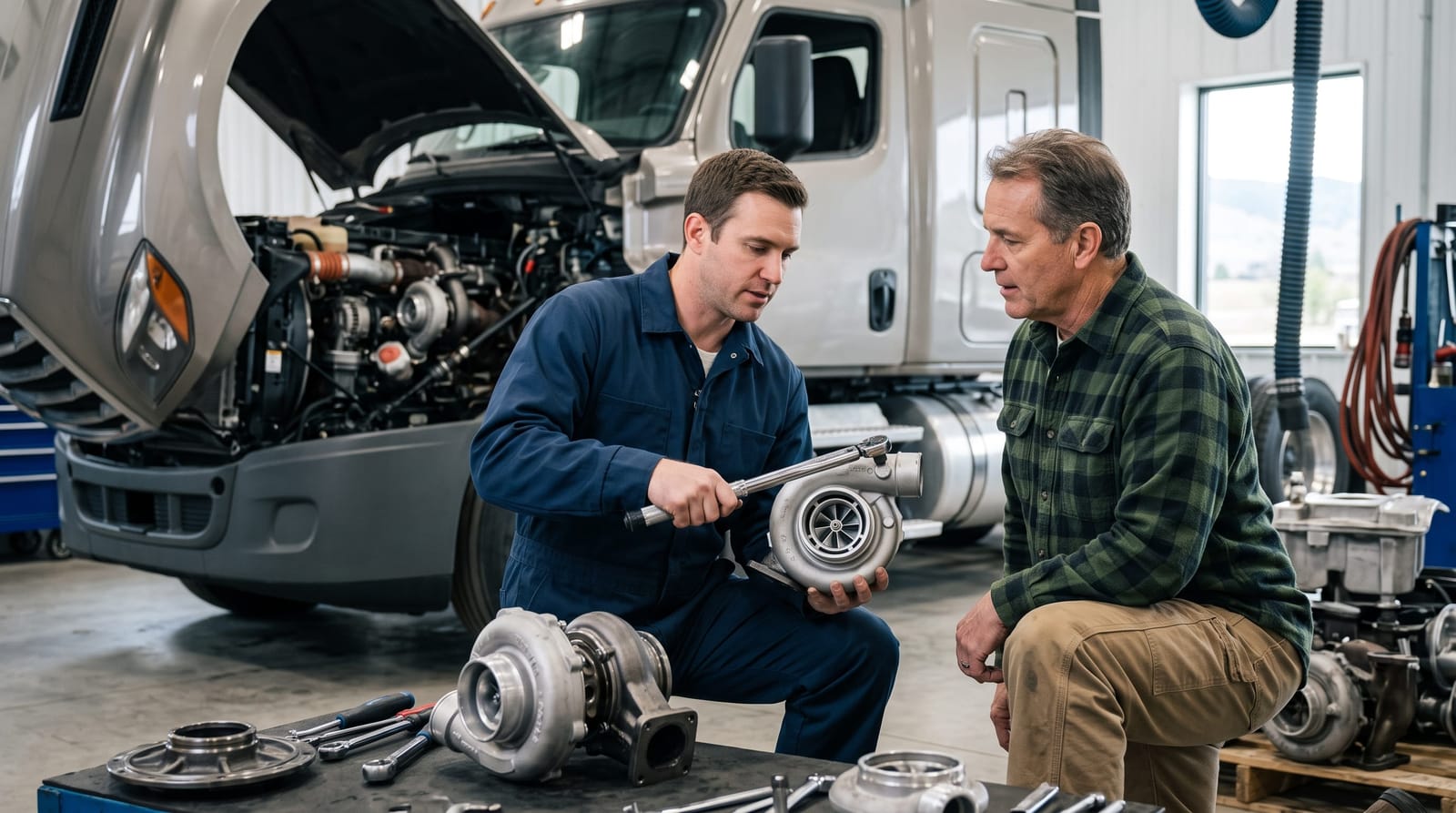
If you own a diesel pickup, whether it's a Powerstroke, Cummins, or Duramax, the turbocharger, EGR system, and DPF filter are three of the most performance-critical components under your hood. They work together to deliver the power, fuel economy, and emissions compliance that define modern diesel trucks. When any one of them fails or degrades, you'll feel it immediately: sluggish throttle response, black smoke, poor mileage, or a check engine light that won't quit. This beginner's guide breaks down how each system works, what warning signs to watch for, and why turbocharger repair for your diesel truck in Colorado, along with EGR and DPF service, requires a shop with real diesel-specific expertise. Whether you're new to diesel ownership or just want to understand what's happening under the hood, this guide is your starting point.
What Does a Turbocharger Actually Do: and Why Does It Fail?
Your diesel truck's turbocharger is an exhaust-driven air pump. Hot exhaust gases spin a turbine wheel, which in turn spins a compressor wheel that forces a much larger volume of air into your engine's cylinders than natural atmospheric pressure could deliver. More air means more fuel can be injected, which means more power and better combustion efficiency. Without a functioning turbo, your diesel is a fraction of what it's supposed to be.
Turbos in diesel trucks operate under extreme conditions: spinning at 100,000+ RPM while handling scorching exhaust temperatures. That environment creates several common failure points that every diesel owner should recognize.
Common Turbocharger Failure Modes
- Oil starvation or oil contamination: The turbo bearings depend entirely on clean, pressurized engine oil. Delayed oil changes, using the wrong oil viscosity, or a clogged oil feed line can starve the bearings and cause catastrophic failure within minutes.
- Foreign object damage (FOD): Even a small bolt, nut, or chunk of carbon ingested through the intake or exhaust side can destroy compressor or turbine blades instantly.
- Boost leaks: Cracks or loose couplers in the charge air system allow compressed air to escape before it reaches the engine. You lose power, your truck runs rich, and fuel economy drops sharply.
- Variable geometry vane failure: Modern diesel turbos use variable geometry turbines (VGT) with movable vanes that optimize airflow across RPM ranges. Carbon buildup or actuator failure causes those vanes to stick, leading to over-boost, under-boost, or erratic power delivery.
- Shaft seal failure: Worn seals allow oil to enter the intake or exhaust, producing the characteristic blue or white smoke that signals a turbo past its service life.
Turbocharger Diagnosis: What a Qualified Shop Does
Proper turbocharger repair for a diesel truck in Colorado starts with diagnosis, not guesswork. A qualified technician will check boost pressure with a gauge or scan tool data, inspect all charge air couplers and intercooler piping for leaks (often using a smoke machine), evaluate shaft play and axial movement within spec, and inspect the oil feed and drain lines. On VGT turbos: common on Powerstroke 6.0, 6.4, and 6.7 engines, as well as the Duramax LB7 through LML: the actuator position and vane movement must also be verified with the appropriate scan tool. Shops that skip this diagnostic process and go straight to replacement risk missing the root cause and having the new turbo fail just as quickly.
Boost Leaks: The Silent Performance Killer
Of all turbo-related problems, boost leaks are among the most underdiagnosed, especially on high-mileage trucks. The charge air system on a modern diesel includes the turbo compressor outlet, an intercooler (charge air cooler), and a network of silicone or rubber couplers and clamps connecting it all to the intake manifold. Over time and heat cycling, those couplers crack or loosen. Even a small leak at one coupler can rob your truck of 20-40 horsepower and noticeably hurt fuel economy.
Signs You Have a Boost Leak
- Reduced power under load, especially when pulling a trailer or climbing grades
- Black smoke from the exhaust during hard acceleration
- Turbo that seems to spool up but doesn't build expected boost pressure
- Intercooler or charge pipe connections that look oily or dusty (dirt sticks to leaked oil/air)
- Scan tool data showing commanded vs. actual boost that don't match
A smoke test, pressurizing the charge air system with a non-petroleum smoke, is the most reliable way to find even pinhole leaks quickly. If you're in the North Denver metro area and dealing with any of these symptoms, getting a boost leak inspection done before investing in more expensive parts is always the right first step.
EGR System: Why It Clogs, Why It Matters, and How It's Serviced
The Exhaust Gas Recirculation (EGR) system routes a controlled portion of exhaust gases back into the intake manifold. The goal is to lower peak combustion temperatures, which reduces nitrogen oxide (NOx) emissions. On paper, it's elegant engineering. In practice, on diesel engines, especially the Powerstroke 6.0 and 6.4, the early Cummins ISB, and the Duramax LB7 through LMM: the EGR system is one of the most common sources of expensive repairs.
What Goes Wrong With Diesel EGR Systems
- EGR valve carbon buildup: Exhaust gases carry soot and oil vapor. Over thousands of miles, this deposits carbon inside the EGR valve, causing it to stick open or closed. A stuck-open EGR introduces too much exhaust into the intake, hurting power and causing rough idle. A stuck-closed EGR raises combustion temps and trips fault codes.
- EGR cooler failure: The EGR cooler uses engine coolant to cool exhaust gases before they re-enter the intake. Internal corrosion or thermal fatigue can crack the cooler internally, allowing coolant to mix with exhaust gases or enter the intake manifold. This is a serious failure mode: coolant in the combustion chamber causes hydrolocking risk and significant engine damage. If you notice white smoke, a sweet smell from the exhaust, or unexplained coolant loss, EGR cooler failure in diesel trucks is one of the first things a qualified shop should rule out.
- Intake manifold carbon restriction: On high-EGR-rate engines, soot accumulates inside the intake manifold over time. Severe restriction reduces airflow to individual cylinders, causing power loss and uneven running.
EGR Service Options
Depending on the severity of buildup, EGR service may include valve cleaning and testing, EGR cooler pressure testing, or full replacement of cooler and valve assemblies. Intake manifold cleaning, using chemical soak or mechanical cleaning, is often done at the same time on high-mileage trucks. This kind of work requires familiarity with each platform's specific design. The EGR system on a 6.0 Powerstroke, for example, is significantly different from what you'll find on a Cummins 6.7, and the service procedures are not interchangeable. Owners of Ford trucks dealing with EGR-related overheating concerns can find platform-specific context in our guide to Ford Powerstroke repair in Brighton, CO.
DPF Filter Service: Cleaning, Replacement, and What You Need to Know
The Diesel Particulate Filter (DPF) is a ceramic honeycomb filter mounted in the exhaust system. It captures soot particles from combustion. Periodically, the engine control module initiates a "regeneration" cycle: injecting extra fuel to raise exhaust temps and burn off accumulated soot. This is normal operation. What's not normal is a DPF that becomes so clogged it can no longer regenerate effectively.
Why DPFs Get Clogged
- Frequent short trips that don't allow exhaust temps to reach regeneration thresholds
- Faulty injectors or EGR systems that send excessive soot to the filter
- Oil consumption issues that deposit ash in the DPF (ash cannot be burned off: only cleaned out)
- Failed regeneration cycles due to coolant temp sensor, fuel pressure, or DPF pressure sensor faults
DPF Service: Cleaning vs. Replacement
When a DPF is heavily loaded with ash or physically damaged, there are two primary service paths: professional cleaning or replacement. DPF cleaning, done using high-pressure pneumatic cleaning equipment or thermal regeneration ovens, can restore a filter close to factory flow specs if the substrate is intact. Replacement makes sense when the filter is cracked, melted, or so ash-loaded that cleaning won't restore adequate flow. The decision between these paths depends on the filter's condition and your truck's mileage and use case. For a thorough breakdown of the legal and practical considerations specific to Colorado truck owners, see our detailed look at DPF delete vs. clean options for Colorado diesel trucks.
It's also worth noting that DPF-related fault codes are frequently misdiagnosed. A truck throwing a "DPF full" code may actually have a failed differential pressure sensor, a clogged DPF pressure sensor line, or a regeneration inhibitor fault: none of which require filter replacement. Proper diagnosis before parts replacement saves significant money.
How These Three Systems Work Together: and Fail Together
The turbocharger, EGR system, and DPF are not independent: they're deeply interconnected. A failing turbo that's pushing oil into the intake can accelerate EGR valve fouling and DPF loading with oil ash. A malfunctioning EGR system that passes excess soot sends more particulates to the DPF, shortening its service life. A DPF that can't complete a regeneration cycle raises backpressure in the exhaust, which directly affects turbo performance and increases exhaust gas temps throughout the system.
This is why diesel owners on platforms like the 6.0 Powerstroke or early Duramax LB7 often find themselves chasing symptoms across multiple systems. Fixing one component without addressing the root cause, or the downstream damage, leads to repeated failures. A shop that understands these system interactions can diagnose more efficiently and give you a repair plan that actually solves the problem rather than temporarily masking it.
Cummins owners dealing with interconnected system failures can find relevant platform context in our guide to Cummins diesel repair in Weld County, CO, while Duramax operators will find similar platform-specific detail in our coverage of Duramax diesel repair near Firestone and Frederick, CO.
Why Turbocharger & Emissions System Repair Requires Diesel Specialists
General automotive shops can handle oil changes and brakes. Turbocharger diagnosis, VGT actuator calibration, EGR cooler replacement, and DPF service are a different category of work entirely. Here's why specialization matters:
- Platform-specific scan tools: Many diesel fault codes and live data parameters require manufacturer-specific or professional-grade scan tools. Generic OBD-II readers miss the detail needed to properly diagnose turbo vane position, EGR flow rate, and DPF differential pressure.
- Diesel-specific technical knowledge: The failure modes on a 6.7 Powerstroke VGT turbo are completely different from those on a Cummins HE341VE. A technician familiar with one may be unfamiliar with the other without specific training.
- Proper parts and procedures: EGR cooler replacement on a 6.0 Powerstroke, for example, requires coolant system flush, oil cooler inspection, and often head gasket evaluation: it's not a standalone job. Shops that don't know this will send trucks back out with the same failure in weeks.
- Specialized cleaning equipment: DPF cleaning requires pneumatic filter cleaning machines or thermal ovens: equipment most general shops don't own.
For diesel truck owners in Weld County and the North Denver suburbs, from Fort Lupton and Brighton to Firestone and Frederick, finding a shop with genuine diesel expertise in these systems saves money, time, and repeat repairs.
Related Topics to Explore
If this guide has you thinking about specific repair decisions for your truck, these detailed resources go deeper on two of the most commonly misunderstood diesel emissions topics:
- DPF delete vs. clean in Colorado: what's legal, what's practical, and how to think through the decision for your specific situation.
- EGR cooler failure symptoms and repair options: a detailed look at one of the most serious (and frequently misdiagnosed) failures in diesel emissions systems.
The Bottom Line for North Denver Metro Diesel Owners
Your turbocharger, EGR system, and DPF filter are high-stakes components. When they work correctly, your diesel truck runs the way it was designed to, with the power and efficiency that made you choose diesel in the first place. When they fail, the consequences range from lost performance and poor fuel economy to serious engine damage if left unaddressed. Understanding the warning signs, the way these systems interact, and why specialized diesel knowledge matters puts you in a much better position as a truck owner.
If your diesel is showing any of the symptoms described in this guide, reduced power, smoke, recurring fault codes, or poor fuel economy, Colorado Truck & Diesel Service in Fort Lupton has the diagnostic equipment, platform knowledge, and hands-on experience to identify the real problem and fix it right the first time. Contact us to schedule a diagnostic appointment and let's get your truck back to running the way it should.