DPF Delete vs. DPF Clean: What's Legal & What's Right for Your Truck in Colorado?
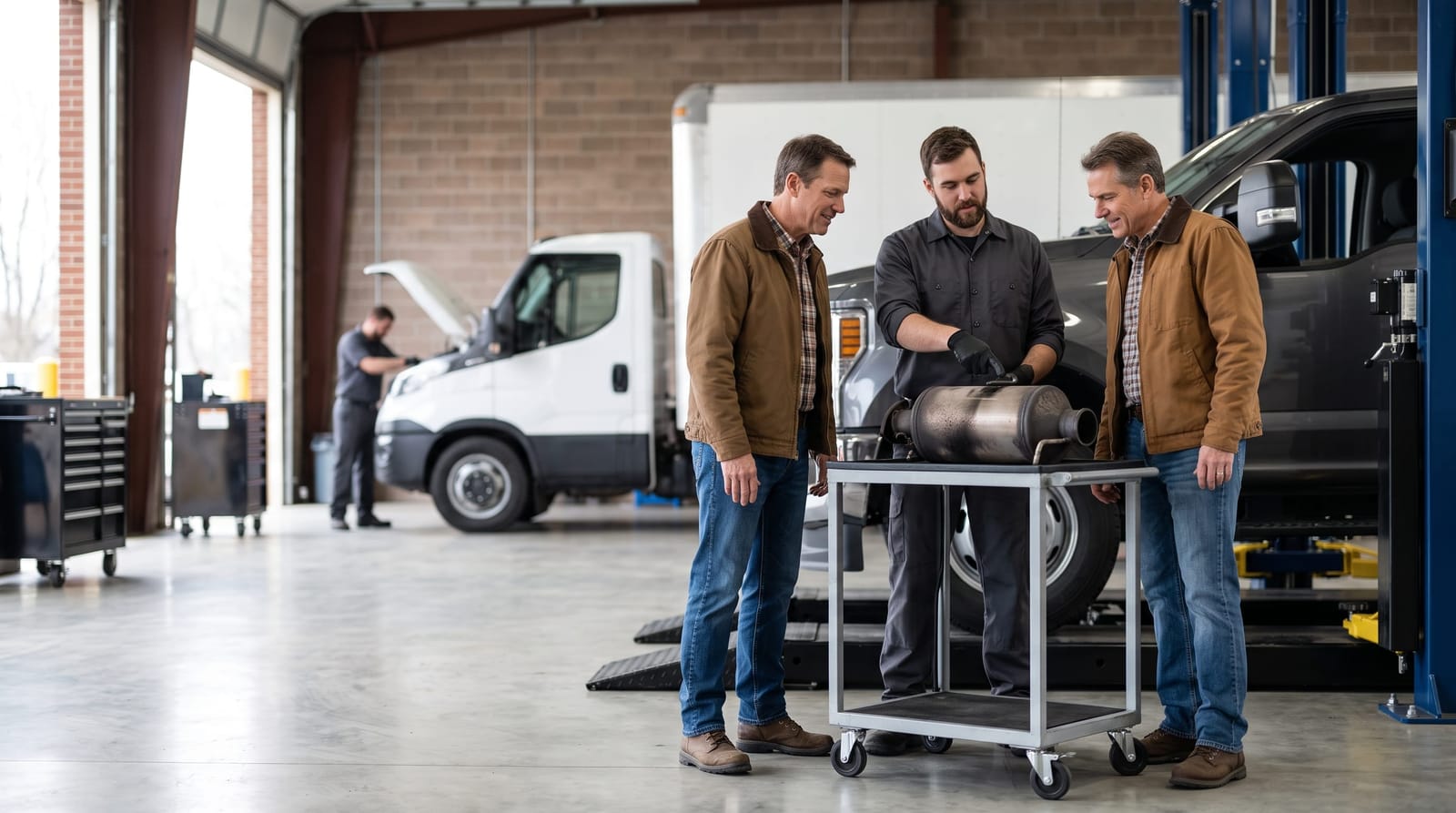
If you own a Powerstroke, Cummins, or Duramax diesel truck in Colorado, you've almost certainly heard the debate: delete the DPF or clean it? The performance appeal of a delete is real, but so are the legal consequences, and in Colorado, those consequences are significant. This guide breaks down exactly what each option involves, how Colorado's emissions enforcement works, and what compliant alternatives can actually restore your truck's performance and fuel economy without putting your registration, warranty, or driving privileges at risk. We'll give you the honest answer, not just the one that sounds good.
What Is a DPF Delete: and Why Do Diesel Owners Consider It?
A Diesel Particulate Filter (DPF) is an emissions control device built into your exhaust system that captures soot particles from combustion. Over time, typically between 100,000 and 150,000 miles depending on duty cycle, DPFs clog, regenerate less efficiently, and can trigger limp mode, reduced throttle response, and fuel economy drops of 10-15% in heavily clogged systems.
A DPF delete involves physically removing the filter and reprogramming the truck's ECU with a tune that eliminates the regeneration cycle entirely. The performance appeal is straightforward: deleted trucks can see gains of 30-50 horsepower on tuned setups, and owners no longer deal with DEF fluid refills or forced regen cycles at inconvenient times.
However, the tradeoff is significant. Deleted trucks produce visible black soot emissions, and the ECU modifications disable OBD-II readiness monitors that emissions inspection stations check during annual testing. In states like Colorado, which uses both OBD-II readiness checks and visual inspection protocols, a deleted truck will fail emissions every single time.
Beyond state inspection, federal law prohibits operating a vehicle with tampered emissions equipment on public roads. This applies to all on-road registered vehicles regardless of state. Diesel tuner shops and equipment sellers have faced federal enforcement actions with fines exceeding $4,500 per device sold: a number that underscores how seriously regulators treat this issue. For specific guidance on your legal situation, always consult a licensed attorney familiar with federal and state vehicle regulations.
How Colorado Emissions Enforcement Works in Practice
Colorado's emissions testing program covers most of the Front Range and surrounding counties, including Weld County. The inspection process is layered and specifically designed to catch both software-level and physical modifications.
Here's what inspectors check that catches deleted trucks:
- OBD-II Readiness Monitors: A deleted truck's ECU typically shows incomplete or failed readiness monitors for the DPF system. Inspections flag this immediately.
- Visual Inspection: Inspectors physically look for the presence of required emissions components. A missing DPF is a hard fail: there's no workaround.
- Opacity Testing: Some diesel inspection lanes use opacity meters to measure exhaust smoke density. Deleted trucks producing visible black smoke fail this portion as well.
The practical result: a deleted truck registered in Colorado cannot legally pass emissions testing. Trucks that fail cannot be registered, and driving an unregistered vehicle creates additional legal exposure. Owners in Weld County and the North Denver suburbs who delete their trucks for weekend use often discover the registration problem at renewal time: a costly and stressful situation that a DPF clean would have prevented entirely.
It's also worth noting that Colorado has strengthened emissions enforcement coordination in recent years, and the state participates in national databases that track modified vehicles. Consulting with a qualified attorney before making any modifications to emissions equipment is strongly recommended for anyone considering this path.
DPF Cleaning: What It Is, What It Costs, and What to Expect
DPF cleaning is a professional service that removes accumulated soot, ash, and hydrocarbon deposits from your existing filter: restoring airflow, reducing backpressure, and bringing performance back toward factory specifications without any modifications to emissions equipment.
Professional DPF cleaning services typically use one of two methods:
- Pneumatic Cleaning: Compressed air is cycled through the filter cells to dislodge ash deposits. This is effective for moderate clogging and is often the first step in a cleaning process.
- Thermal/Bake-and-Blow Cleaning: The filter is heated in a specialized oven to burn off hydrocarbon contamination, then pneumatically cleaned. This is the more thorough option for heavily loaded filters and is what professional diesel shops use on high-mileage units.
Cost-wise, professional DPF cleaning ranges from roughly $300-$600 depending on filter size and contamination level: a fraction of the $1,500-$4,000+ cost of OEM DPF replacement on Powerstroke, Cummins, or Duramax platforms. For trucks showing DPF-related fault codes, reduced power, or extended regen cycles, cleaning is often the most cost-effective first step before replacement is even considered.
At Colorado Truck & Diesel Service in Fort Lupton, DPF cleaning is performed as part of a broader emissions system evaluation, including inspection of the DPF pressure differential sensors and exhaust temperature sensors that often cause false fault codes even on clean filters.
EGR Systems: The Other Side of the Delete Conversation
DPF deletes are often discussed alongside EGR (Exhaust Gas Recirculation) deletes, since the two systems are frequently modified together. The EGR system routes a portion of exhaust gases back into the intake to reduce combustion temperatures and NOx emissions. EGR cooler failures are particularly common on 6.0L and 6.4L Powerstroke engines, as well as certain Cummins and Duramax applications.
Like DPF deletes, EGR deletes are illegal for on-road use under federal emissions law and will trigger a Colorado emissions failure. The compliant alternative is EGR system repair or cleaning, which addresses the real-world performance issues (coolant contamination, intake carbon buildup, overheating) without removing a required emissions component.
If your truck is showing symptoms of EGR-related problems alongside DPF issues, understanding EGR cooler failure in diesel trucks, including symptoms and compliant repair options, is an important part of addressing your truck's overall emissions system health before the problems compound.
Side-by-Side Comparison: DPF Delete vs. DPF Clean
| Factor | DPF Delete | DPF Clean |
|---|---|---|
| Legal for On-Road Use in Colorado | No | Yes |
| Passes Colorado Emissions | No | Yes (when properly serviced) |
| Performance Improvement | Significant (30-50 HP on tuned setups) | Moderate (restores lost performance from clogging) |
| Typical Cost | $500-$1,500+ (tune + hardware) | $300-$600 |
| Registration Impact | Vehicle cannot be legally registered | No impact |
| Warranty Implications | Voids emissions-related warranty coverage | None |
Frequently Asked Questions
Can I delete my DPF for off-road use only and still register my truck in Colorado?
A deleted truck that is registered for on-road use must pass Colorado emissions testing to maintain registration, and it won't. Some owners maintain separate off-road-only vehicles that are never registered for street use, but operating a deleted vehicle on public roads remains prohibited under federal law regardless of intent. If you're considering this, consult a licensed attorney for guidance specific to your situation.
How often does a DPF need to be professionally cleaned?
Most diesel technicians recommend professional DPF cleaning every 100,000-150,000 miles under normal operating conditions, or sooner if your truck sees significant idle time, short-trip driving, or towing at high load. Trucks used frequently in stop-and-go conditions accumulate ash faster because passive regen cycles, which require sustained highway speeds, happen less often.
Will DPF cleaning fix limp mode and reduced power on my Powerstroke, Cummins, or Duramax?
If a clogged or restricted DPF is the root cause of limp mode, professional cleaning often resolves the issue. However, limp mode can also be triggered by faulty DPF pressure differential sensors, exhaust temperature sensors, or EGR system faults: components that should be inspected and tested before and after cleaning to confirm the repair was successful.
Is DPF cleaning the same as a forced regen?
No. A forced regen is a software-initiated process that raises exhaust temperatures to burn off soot accumulation: it's something your truck does automatically or that a technician can trigger with a scan tool. Professional DPF cleaning physically removes ash deposits that regen cycles cannot burn away. Ash buildup is permanent without physical cleaning, which is why regens become less effective as mileage accumulates.
The Bottom Line for Colorado Diesel Owners
The DPF delete vs. clean debate has a straightforward answer for any truck that operates on Colorado roads: cleaning is the legal, practical, and cost-effective path. Deletes offer real performance gains but at the cost of your registration, emissions compliance, and legal standing under federal law: consequences that outweigh the benefits for most on-road diesel owners. Colorado Truck & Diesel Service in Fort Lupton provides DPF cleaning and full emissions system diagnostics as part of our diesel performance and repair services, giving Powerstroke, Cummins, and Duramax owners a compliant route back to peak performance. For more on the complete picture of diesel engine repair and maintenance in our area, visit our guide to diesel engine repair and performance in Fort Lupton, CO.