What Is a Ford CDF Drum Bushing Failure and How Do You Fix It?
If you own a Ford F-150, F-250, or F-350 equipped with the 10R80 ten-speed automatic transmission, there is a known factory flaw you need to understand before it leaves you stranded. Ford CDF drum bushing failure repair is one of the most common rebuild jobs we handle at CTDS, and for good reason: this is a factory engineering shortcoming that Ford never fully resolved at the production level. This beginner's guide breaks down exactly what the CDF drum is, why the bushing fails, what symptoms to watch for, and how a proper rebuild corrects it using upgraded components.
What Is the CDF Drum and Why Does It Matter?
The CDF drum, short for the C, D, and F clutch drum assembly, is a critical rotating component inside Ford's 10R80 and its General Motors counterpart, the 10L80 ten-speed automatic transmission. This drum houses multiple clutch packs that engage and disengage to execute the smooth gear changes a ten-speed transmission is designed to deliver.
Inside the drum sits a small but vital component: the bushing. This bronze or powdered-metal sleeve acts as a bearing surface, allowing the drum to rotate smoothly around the transmission's center shaft. Without a properly functioning bushing, the drum cannot maintain its precise rotational alignment, and metal-on-metal contact begins to occur.
Ford introduced the 10R80 in 2017 across its F-Series and Mustang lineup, marketing it as a fuel-efficiency and performance upgrade. By 2019, Ford truck owner communities were already documenting widespread CDF drum bushing failures, particularly in 1/2-ton and 3/4-ton trucks used for towing and hauling. The 10R80 is found in millions of trucks on the road today, which means this is not a rare edge case: it is a systemic problem affecting a very large population of Ford owners.
What Causes the CDF Drum Bushing to Fail?
The root cause comes down to an undersized and under-engineered factory bushing that was not designed to handle the heat and load cycles generated by real-world truck use, especially towing. When the bushing begins to wear, it loses its ability to keep the drum centered on the shaft. That small amount of wobble translates into uneven clutch pack wear and, eventually, catastrophic clutch failure.
Heat is the accelerant. Transmission fluid in a 10R80 under normal driving conditions can reach temperatures between 175°F and 200°F. Under towing load, which is exactly how a high percentage of F-250 and F-350 owners use their trucks, fluid temperatures can spike well above 220°F. At those temperatures, a marginal factory bushing degrades rapidly.
As the bushing wears, it sheds material directly into the transmission fluid. Owners who have had their fluid analyzed after a CDF failure consistently report finding friction material and fine metallic debris suspended in the fluid. This debris then circulates through the entire transmission, accelerating wear on valves, clutch packs, and the pump: turning what started as a single failed bushing into a complete transmission failure if left unaddressed.
Trucks that tow frequently, haul heavy payloads, or operate in stop-and-go traffic are at significantly elevated risk. Data from Ford Truck Enthusiasts forum threads documents failures occurring as early as 30,000 to 60,000 miles on trucks used in working conditions.
Recognizing the Symptoms of CDF Drum Bushing Failure
Knowing what to look for can be the difference between a transmission rebuild and a full replacement. Here are the most common warning signs Ford 10R80 owners report before a complete failure:
- Harsh or jerky shifts between gears 1-3 and 7-8: This is the signature symptom. The 10R80 is designed to shift almost imperceptibly, so any roughness or clunking during acceleration is a red flag.
- Burnt or dark transmission fluid: Healthy transmission fluid is a clear reddish color. Fluid that appears brown, black, or smells burnt indicates overheating and internal contamination.
- Low transmission fluid level: A sealed transmission that is losing fluid indicates a seal has been compromised, often downstream of the initial bushing failure.
- Hesitation or slipping during gear changes: If the transmission seems to search for a gear or momentarily loses drive, clutch pack damage is likely already underway.
- Debris in the transmission pan: During a fluid service, visible friction material or metallic particles in the pan sediment are a near-certain indicator of CDF drum damage.
Do not ignore these symptoms. Continuing to drive a truck with an active CDF drum bushing failure can turn a $2,500-$4,000 rebuild into a $6,000+ complete transmission replacement within a matter of weeks.
How CTDS Corrects CDF Drum Bushing Failure During a Rebuild
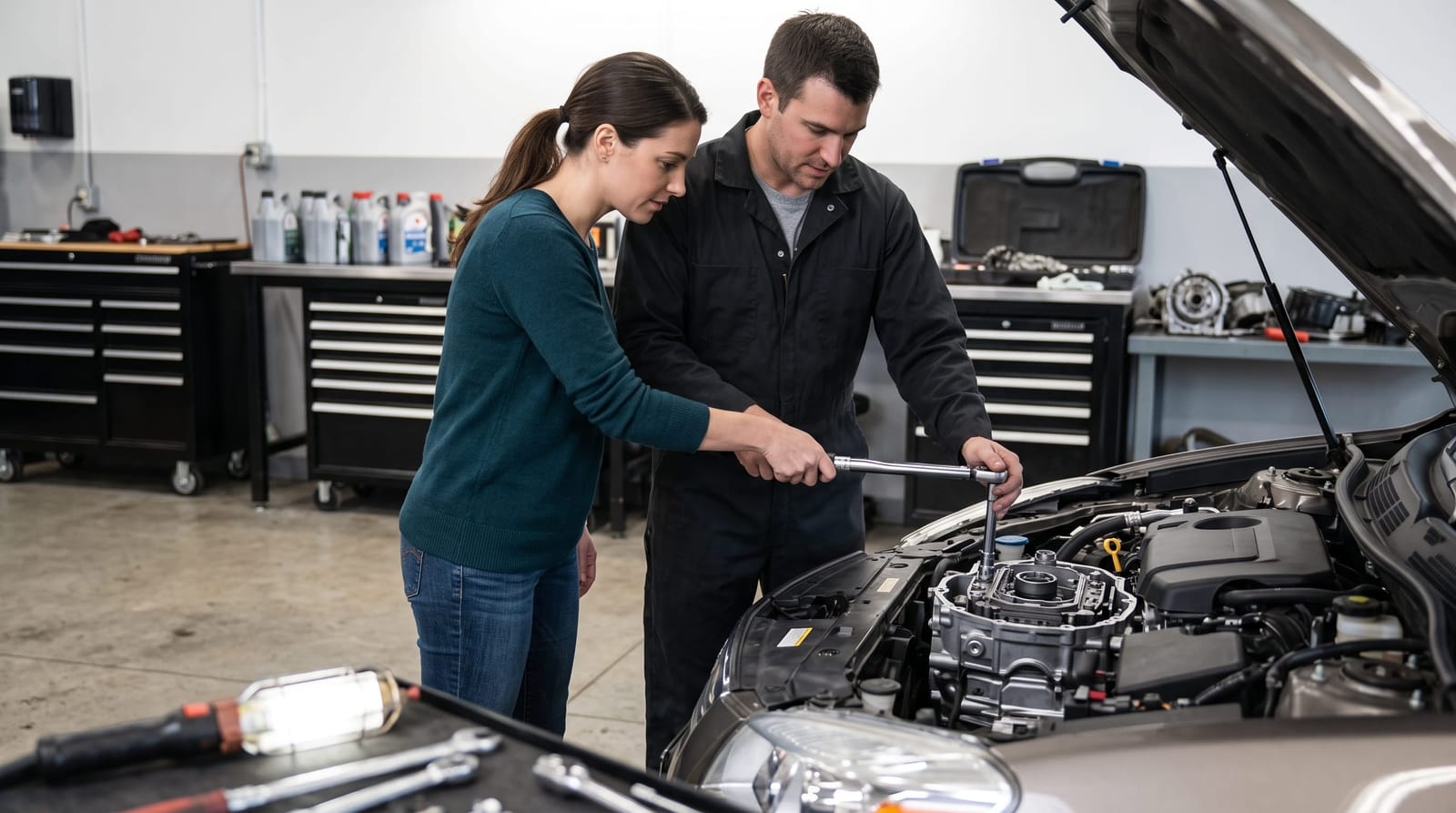
Ford CDF drum bushing failure repair is not a simple fluid change or software update: it requires a full transmission teardown, inspection, and rebuild using upgraded aftermarket components that exceed the original factory specification.
At CTDS, our 10R80 rebuild process for CDF drum failures follows a structured approach:
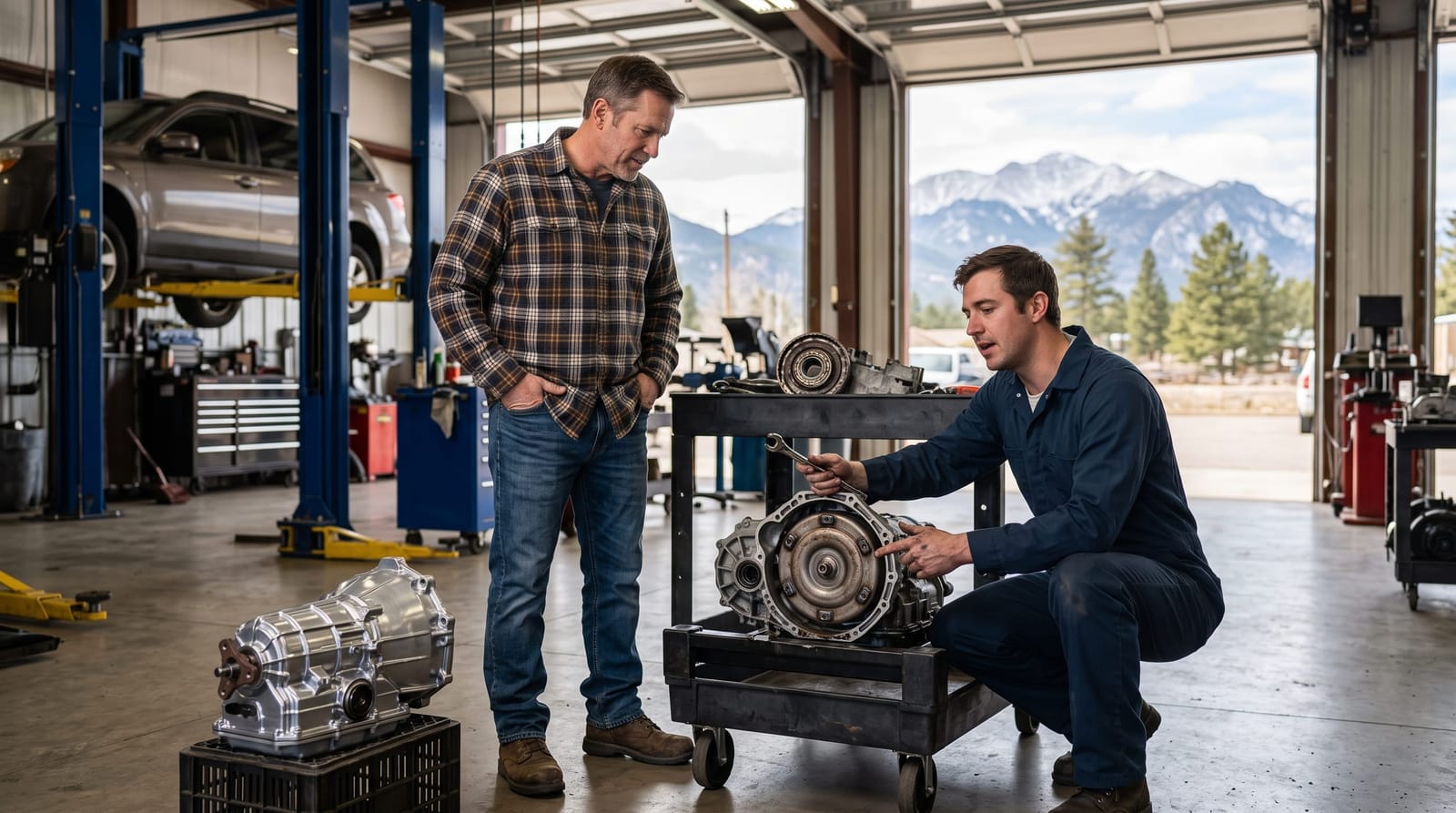
- Complete disassembly and inspection: The transmission is fully disassembled and every component is inspected individually. We document the extent of damage to the clutch packs, drum surfaces, center shaft, and valve body before any parts are ordered.
- CDF drum evaluation: If the drum itself has sustained scoring or warping beyond tolerance, a common outcome once the bushing fails, the drum is replaced entirely, not just the bushing.
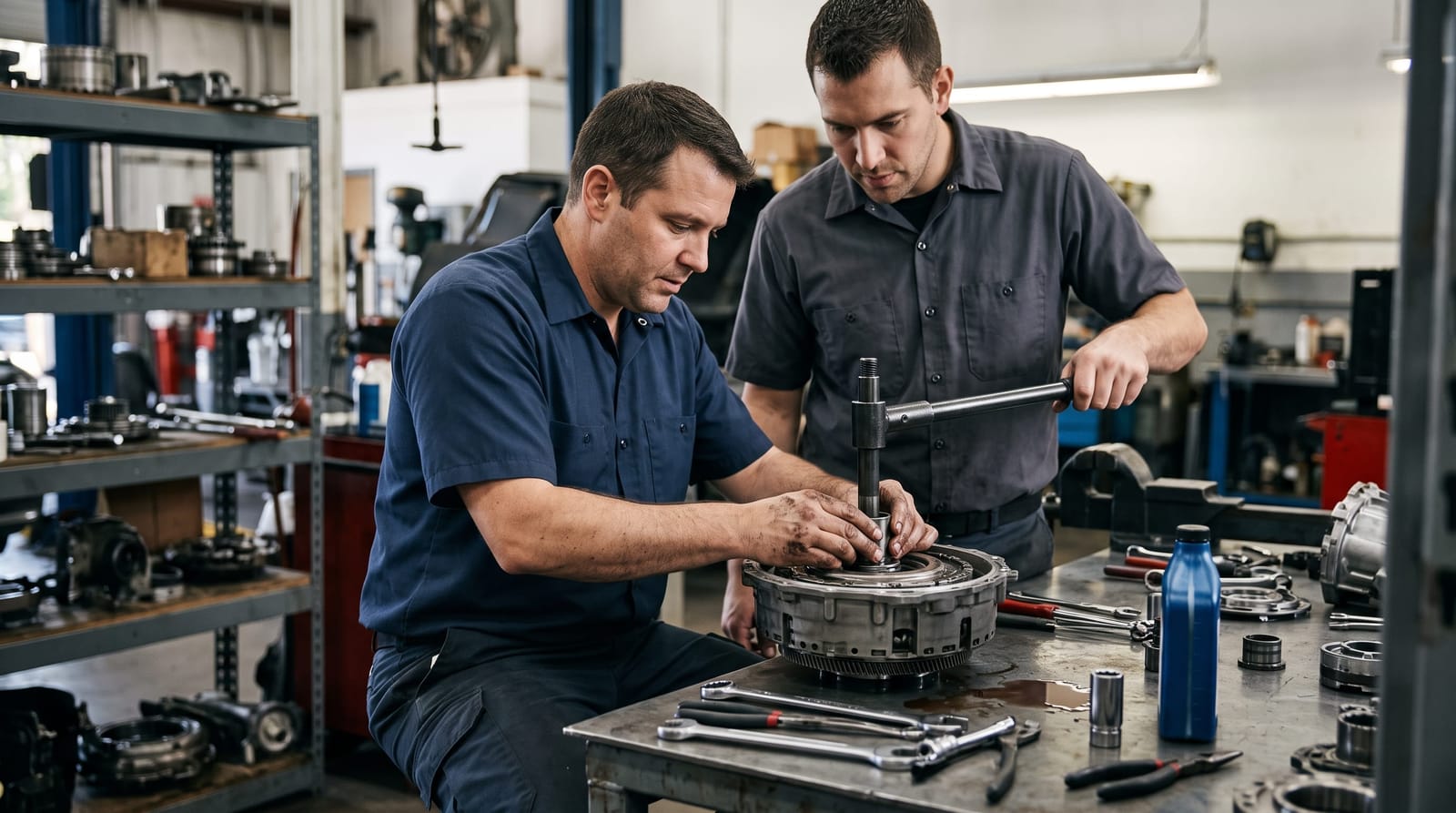
- Upgraded bushing installation: We install an upgraded, heavy-duty replacement bushing with tighter tolerances and improved material composition compared to the factory part. This is the single most important correction in the rebuild process.
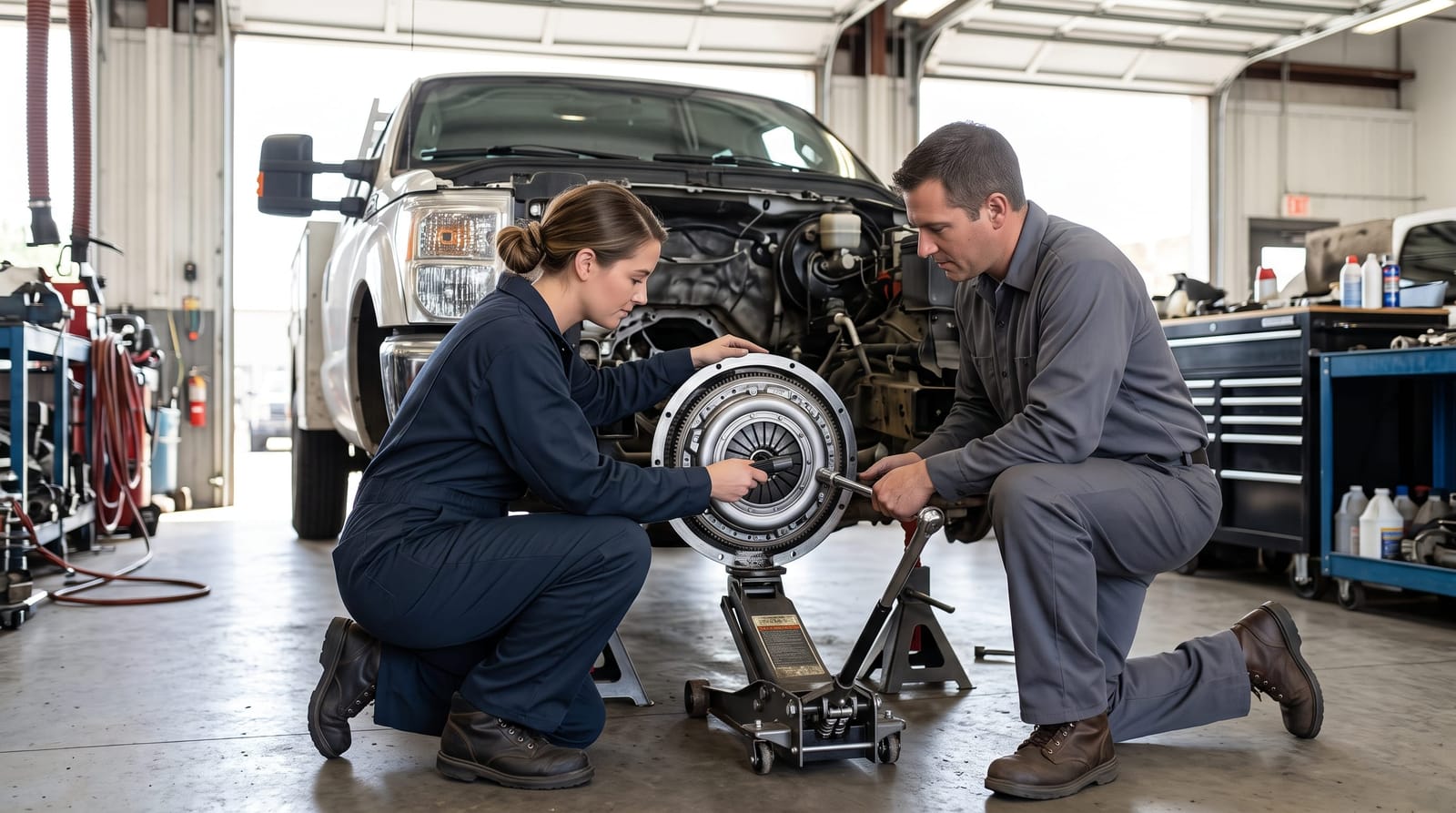
- Full clutch pack replacement: Any clutch packs that show friction material wear or heat damage are replaced with new high-performance friction and steel plates rated for towing applications.
- Valve body inspection and cleaning: Debris that circulated through the system is flushed from the valve body and all hydraulic passages. Solenoids are tested and replaced if needed.
- Reassembly and fluid fill: The transmission is reassembled with fresh high-quality transmission fluid and all new seals, gaskets, and filters.
The result is a transmission that not only corrects the original factory flaw but is built to handle the demands of Colorado's terrain and the real-world workload of diesel and gas-powered Ford trucks. Understanding the full scope of transmission repair and rebuild services in Fort Lupton, CO helps truck owners know what to expect when they bring their vehicle in for a diagnostic.
Can You Prevent CDF Drum Bushing Failure Before It Happens?
If your truck has not yet shown symptoms but you are concerned, especially if you tow regularly, there are proactive steps worth taking.
First, have your transmission fluid inspected every 30,000 miles, regardless of what your owner's manual recommends. Ford extended fluid change intervals on the 10R80 to 150,000 miles under normal conditions, but trucks used for towing are not operating under "normal" conditions. Fresh fluid with the correct additive package maintains viscosity under heat and gives the bushing the lubrication film it needs to survive.
Second, consider adding a transmission cooler if your truck is used for heavy towing. Keeping fluid temperatures below 200°F dramatically extends the life of every internal component, including the CDF drum bushing. A quality external cooler can reduce transmission temperatures by 30°F to 50°F under load.
Third, pay attention to how your truck shifts. The 10R80 is a smooth transmission when it is healthy. Any new roughness, hesitation, or unusual behavior during gear changes warrants a professional inspection before you make another long towing run. Early intervention is always less expensive than a full rebuild caused by delayed action.
Frequently Asked Questions
Is CDF drum bushing failure covered under Ford's factory warranty?
It depends on the vehicle's age and mileage. Ford's powertrain warranty covers 5 years or 60,000 miles on new vehicles. However, many CDF failures occur after the warranty period has expired, particularly in trucks used for towing. Some owners have had success filing warranty claims or obtaining goodwill assistance from Ford dealers, but this is not guaranteed. An independent transmission specialist can often rebuild the unit for less than dealer pricing regardless of warranty status.
How long does a 10R80 rebuild take at a shop like CTDS?
A complete 10R80 rebuild typically takes 3 to 5 business days depending on parts availability and the extent of internal damage. Shops that stock common 10R80 rebuild components can often complete the job faster than those who order parts after teardown. At CTDS, we inspect the transmission first and provide a detailed estimate before work begins.
Will the CDF drum bushing failure come back after a rebuild?
Not if the rebuild is done correctly. A rebuild using factory-spec replacement parts risks repeating the same failure. When the rebuild uses upgraded aftermarket bushings with improved tolerances and materials, combined with fresh clutch packs and a clean valve body, the repaired transmission is more durable than the original. The key is using components specifically designed to address this known deficiency.
Does this problem affect all Ford 10R80 trucks or just certain years?
The 10R80 was introduced in model year 2017 and has been used through the current generation of F-Series trucks. CDF drum bushing failures have been documented across multiple model years, with the most reports concentrated in 2018-2022 trucks that have accumulated towing miles. The issue is not specific to a single production year but is more closely linked to use patterns and accumulated heat cycles.
The Bottom Line on Ford CDF Drum Bushing Failure
Ford CDF drum bushing failure repair is one of the most important and specific transmission issues affecting F-Series truck owners across Colorado and the country. What starts as a small factory-spec bushing that cannot handle real towing loads quickly escalates into burnt fluid, contaminated clutch packs, and a transmission that requires a full rebuild. Knowing the symptoms early, harsh shifts, burnt fluid, low fluid level, gives you the window to address the problem before it compounds. At CTDS, we specialize in exactly this type of repair, using upgraded components built to outlast the original design. If your Ford truck is showing any of these signs, bring it in for a professional diagnostic before the next job or towing season.