What Should a Commercial Vehicle Inspection Cover? A Checklist for Fleet Managers
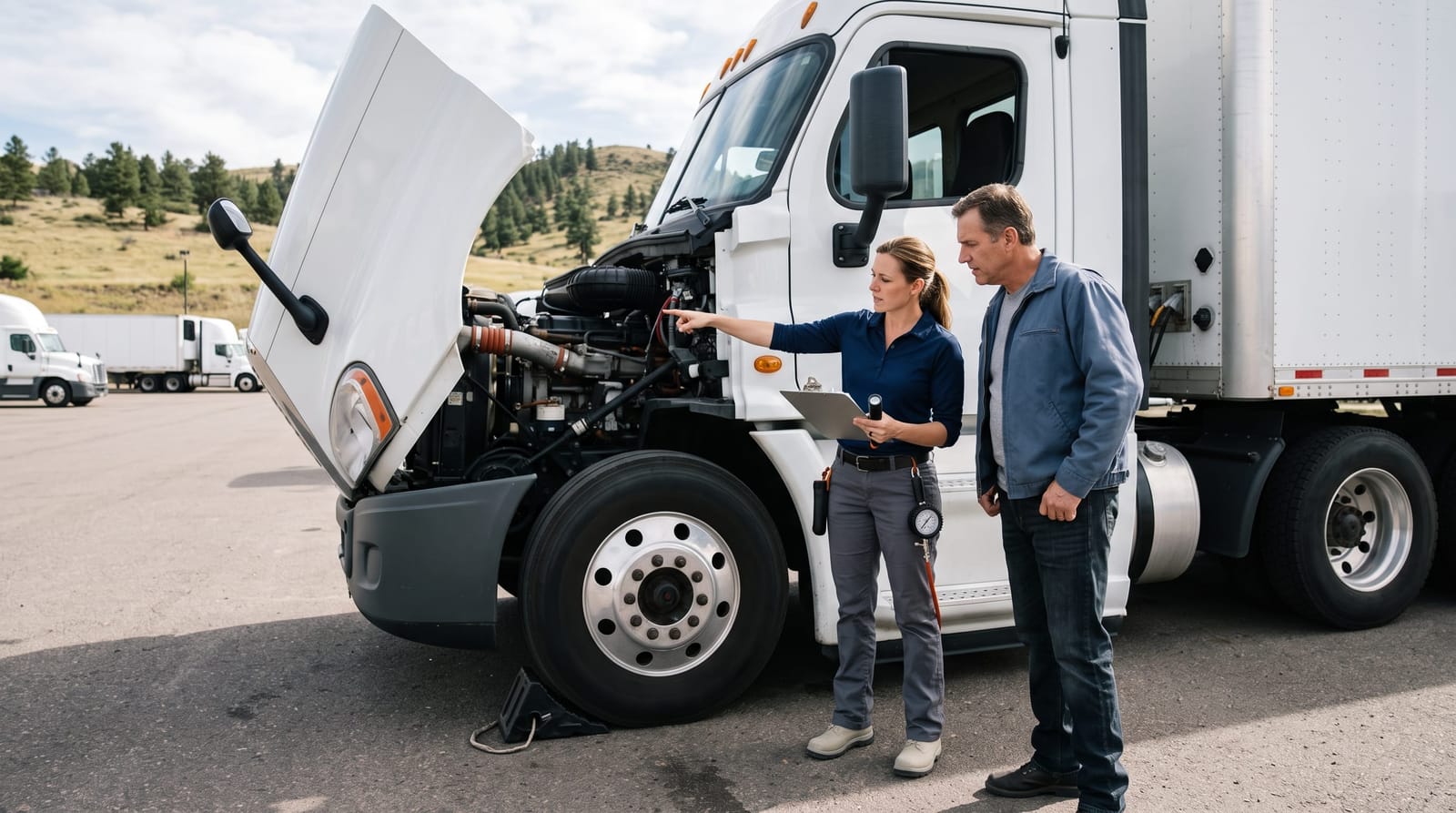
If your business runs on commercial vehicles, whether you're hauling materials across Weld County or managing a multi-truck operation out of Fort Lupton, keeping those vehicles roadworthy isn't optional. A thorough commercial vehicle inspection checklist is one of the most practical tools a fleet manager can have. Colorado requires annual inspections for commercial vehicles over 10,001 lbs GVWR, and drivers must maintain daily inspection reports and carry proof of those annual inspections. But staying compliant is only part of the picture. A well-structured inspection routine also protects your crew, your cargo, and your bottom line.
This guide breaks down exactly what a commercial vehicle inspection should cover, section by section, so fleet managers across Colorado have a clear, actionable reference to work from.
Why a Structured Inspection Checklist Matters for Colorado Fleet Operators
Random or informal walk-arounds aren't enough when you're managing vehicles that log thousands of miles per month on Colorado's highways and job-site roads. According to Federal Motor Carrier Safety Administration (FMCSA) data, brake-related violations are the single most common out-of-service condition found during roadside inspections: accounting for roughly 50% of all commercial vehicle out-of-service violations nationally. That's a significant risk that a consistent checklist can dramatically reduce.
For Colorado fleets specifically, inspection requirements go beyond federal minimums. Vehicles must display the carrier's legal name or registered trade name along with their USDOT number in a clearly visible location. Hazardous materials transporters face additional placarding requirements. Missing or incorrect markings can result in violations before an inspector even opens the hood.
A structured commercial vehicle inspection checklist Colorado fleet managers use regularly serves three purposes: it satisfies regulatory requirements, it catches developing problems before they become expensive failures, and it creates a documented maintenance history that protects your business if questions about vehicle condition ever arise.
The Core Commercial Vehicle Inspection Checklist: System by System
1. Brakes
Brake systems are the highest-priority inspection item on any commercial vehicle. Your checklist should cover:
- Brake pad and shoe thickness (most fleets replace at 3-4mm or less)
- Rotor and drum condition: look for scoring, cracking, or excessive wear
- Air brake lines and air pressure levels (air brake systems should hold pressure without significant loss over a timed test)
- Slack adjuster travel and brake chamber condition
- Brake hose condition: check for cracks, abrasions, or crimping
- Parking brake function
Given how frequently brake issues lead to out-of-service violations, brake inspection deserves its own dedicated attention in your maintenance program. Regular brake maintenance for work trucks is one of the most cost-effective investments a fleet can make: catching a worn rotor early is far cheaper than replacing an entire axle assembly after a failure.
2. Tires and Wheels
- Tread depth: federal minimums are 4/32" on steer axles, 2/32" on other axles, but many fleet managers set internal replacement thresholds higher
- Sidewall condition: look for bulges, cuts, or exposed cord
- Inflation pressure: underinflated tires account for a measurable percentage of blowouts and accelerated wear
- Lug nut torque and wheel seal condition
- Matching tire sizes across axles
3. Suspension System
Colorado's inspection process includes a thorough suspension evaluation. Inspectors and technicians look for:
- Leaking or faulty shock absorbers
- Broken or missing leaf springs
- Worn or damaged u-bolts and spring hangers
- Steering linkage wear: tie rod ends, drag links, and ball joints
- Frame cracks or damage near suspension mounting points
Suspension problems often develop gradually, making them easy to overlook until a vehicle is pulling, handling poorly, or causing tire wear, all signs of a problem that should have been caught earlier.
4. Electrical Systems and Lighting
- All required lighting: headlights, taillights, brake lights, turn signals, and hazard lights
- Clearance lights and reflectors (particularly important for vehicles over 80 inches wide)
- Battery condition and connections
- Alternator output and charging system performance
- Wiring harness condition: look for chafing, exposed wire, or improper splices
5. Drivetrain
- Drive shaft condition: check for u-joint wear, missing balance weights, or physical damage
- Differential and transfer case for leaks
- Transmission fluid level and condition
- Axle seals: leaking seals contaminate brake hardware and accelerate wear
- Clutch adjustment and operation (manual transmission vehicles)
6. Fluids
- Engine oil: level and condition (dark, gritty oil indicates an overdue change)
- Coolant level and freeze protection: critical for Colorado winters
- Power steering fluid
- Brake fluid level and moisture content
- Windshield washer fluid (a surprisingly common roadside citation)
- DEF (diesel exhaust fluid) on newer diesel vehicles
7. Belts, Hoses, and Engine Compartment
- Serpentine and accessory belts: check for fraying, glazing, or cracking
- Coolant hoses: look for swelling, softness, or cracks near clamps
- Air intake hoses and connections
- No visible fluid leaks on engine surfaces or ground beneath vehicle
- Air filter condition
8. Safety Equipment and Cab
- Fire extinguisher: present, charged, and within inspection date
- Emergency triangles or flares (3 required)
- Seat belts, all positions, check for fraying or latch failure
- Horn function
- Windshield condition: no cracks in the driver's critical viewing area
- Mirrors: properly positioned and free of damage
- USDOT number and carrier name markings: visible and correct
Daily Driver Inspections vs. Scheduled Shop Inspections
Colorado requires commercial vehicle drivers to complete daily pre-trip and post-trip inspection reports. These driver-level checks are not a substitute for scheduled shop inspections: they serve different purposes.
Daily driver inspections should cover: fluid levels, lights, tires, mirrors, wipers, and a walkaround for visible damage or leaks. Drivers are typically completing these in 10-15 minutes before a shift. They catch obvious, sudden problems.
Scheduled shop inspections, typically every 10,000-15,000 miles or quarterly depending on vehicle use, go deeper. A qualified technician uses lift equipment, diagnostic tools, and measured checks that a driver simply can't replicate on the road.
The best fleet maintenance programs in Weld County use daily driver logs to flag immediate concerns and rely on scheduled shop visits to catch the slower-developing issues that eventually cause the most expensive failures.
How Often Should Fleet Vehicles Be Inspected in Colorado?
Colorado mandates annual inspections for qualifying commercial vehicles, but responsible fleet managers treat that as a minimum, not a target. Here's a general framework many fleets follow:
- Pre-trip (daily): Driver walkaround and basic fluid check
- Monthly: Tire pressure, lights, basic fluid levels, visual brake check
- Quarterly: Full fluid service, belt and hose inspection, brake measurement, tire rotation
- Annually: Full Colorado-compliant inspection, plus any manufacturer-recommended major service
High-mileage or heavy-use vehicles, think dump trucks, water trucks, or vehicles operating on rough unpaved job sites, often need more frequent attention than this baseline schedule suggests. A fleet service provider familiar with Weld County's operating conditions can help you build a schedule that reflects how your vehicles actually work, not just how long they've been sitting in a lot.
Frequently Asked Questions
What vehicles are required to undergo commercial inspections in Colorado?
Colorado requires inspections for trucks and tractors with a GVWR over 10,001 lbs, trailers over 10,001 lbs GVWR, and vehicles transporting hazardous materials that require placards. If you're unsure whether your vehicle meets the threshold, a qualified commercial vehicle technician or the Colorado Department of Transportation can provide guidance for your specific situation.
Do drivers need to carry proof of inspection?
Yes. Colorado requires drivers to carry proof of annual inspection in the vehicle. Daily driver inspection reports must also be maintained and are subject to review during roadside inspections. Fleet managers should have a system in place for tracking and storing these documents, as missing records can result in violations even if the vehicle itself is mechanically sound.
What are the most common reasons commercial vehicles are placed out of service during inspections?
Brake violations are the leading cause of out-of-service orders nationally, making up approximately half of all violations found during roadside inspections. Tire issues, lighting deficiencies, and suspension problems are also frequently cited. These are all areas that a consistent inspection checklist and scheduled shop visits are designed to catch before they become compliance issues.
Can a fleet manager use the same checklist for all vehicle types?
The core inspection categories, brakes, tires, suspension, electrical, drivetrain, fluids, and safety equipment, apply across most commercial vehicles. However, specific inspection points will vary based on vehicle class, configuration (flatbed vs. tanker, for example), and powertrain type. A commercial vehicle service specialist familiar with your fleet's equipment can help you tailor your checklist to each vehicle type you operate.
Conclusion: A Checklist Is Only as Good as the Team Behind It
A solid commercial vehicle inspection checklist Colorado fleet managers can rely on covers every major system, brakes, suspension, electrical, drivetrain, fluids, belts and hoses, and safety equipment, on a consistent schedule. But the checklist is a tool, not a solution by itself. It works best when paired with trained drivers who take daily inspections seriously and a trusted shop that knows commercial vehicles inside and out.
At CTDS in Fort Lupton, we work with Weld County fleet operators to build maintenance programs that keep vehicles compliant, reliable, and on the road. Whether you need a full fleet inspection or help developing a schedule that fits your operation, we're here to support your business, not just your trucks. Contact us to learn more about our commercial fleet services.